Russian aircraft manufacturing companies continue to restructure the system of international cooperation. After severing ties with European and American suppliers, the industry has focused on working with states that maintain a neutral or friendly position. "Pervyi tekhnicheskii" examines exactly who Russia has the opportunity to establish joint airliner production with under the current conditions.
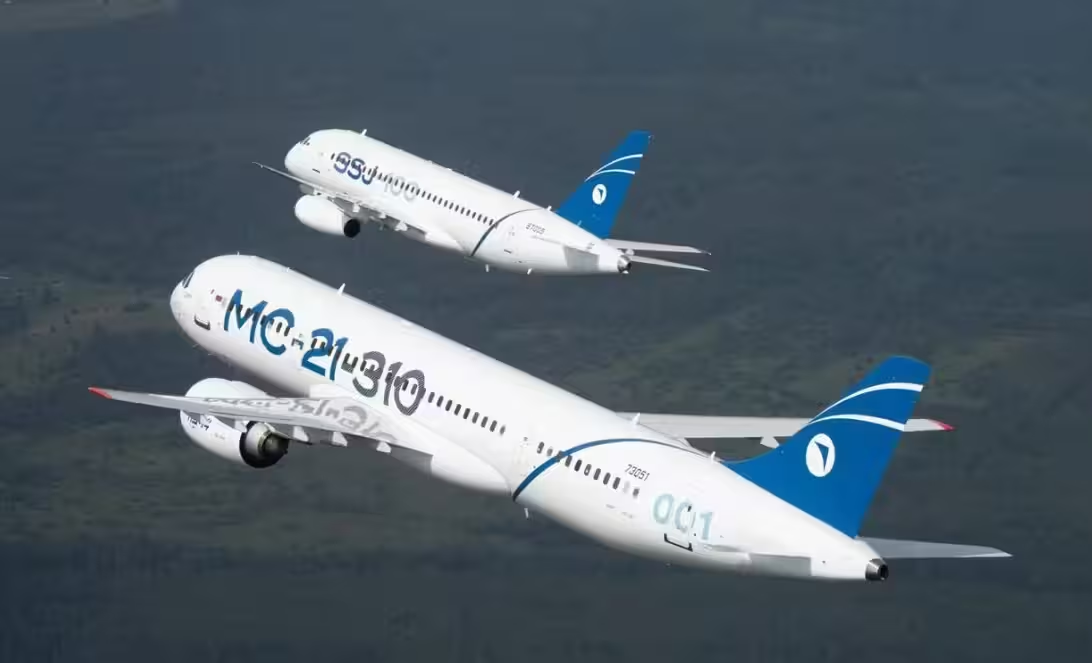
The main goal is to ensure stable supplies of electronics, avionics, materials, and components.
China will cover the electronics and avionics shortage
China may become the largest external partner of the Russian aviation industry. Under an optimistic scenario, companies from the PRC will begin supplying microchips, control systems, navigation equipment, and onboard electronics components.
At the same time, the sides are developing joint projects in composite materials and digital design. Chinese manufacturers are also participating in the localization of certain units at Russian sites.
India will expand industrial cooperation
India maintains cooperation with Russian aircraft manufacturers, but at the same time is interested in developing its own production. The country is considering participation in the assembly of regional aircraft, the creation of service centers, and personnel training.
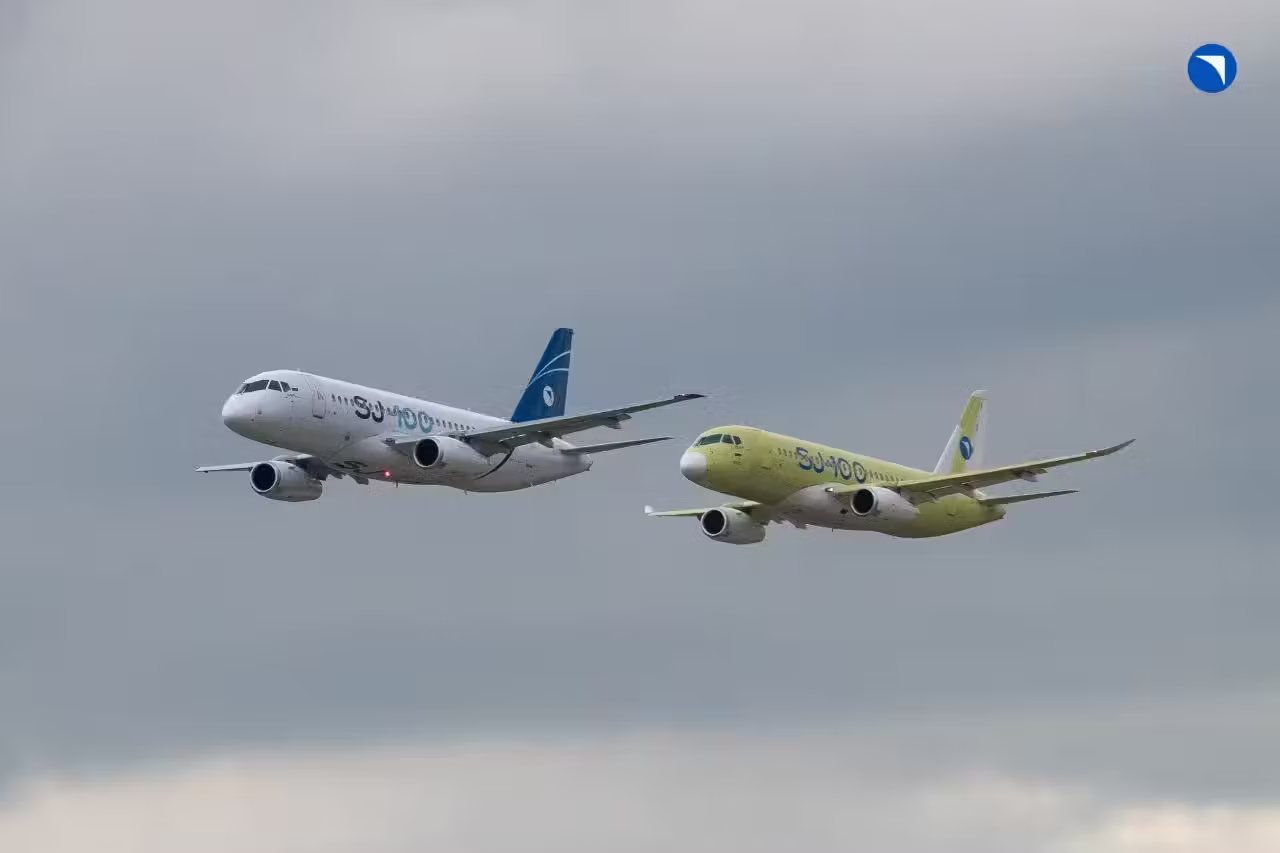
The first joint project will be the short-haul "Superjet"; on the sidelines of the Wings India exhibition, the sides have already signed a cooperation agreement. Indian enterprises are ready to join the production of individual assemblies, airframe elements, and life-support systems.
Incidentally, both countries are members of BRICS. It was precisely through this framework that, in a conversation with "Pervyi tekhnicheskii", Honored Pilot Oleg Smirnov proposed developing cooperation.
Iran shares experience of working under restrictions
Let us recall that Iran developed its aviation industry for decades under sanctions. During that time, the country created its own independent infrastructure for the repair, restoration, and modernization of aircraft.
Russian companies can quite possibly borrow Iranian expertise in aircraft life extension, reverse engineering, and engine maintenance.
Turkey and the Middle East will supply materials
Turkey, the UAE, and Saudi Arabia still maintain business contacts with Russia. Turkish enterprises are capable of producing composite panels, fuselage elements, and aviation alloys. Middle Eastern investors are participating in the creation of service hubs and logistics centers for regional transportation.
The CIS remains a base for assembly and service
Belarus, Kazakhstan, and Uzbekistan continue to participate in production chains. Repair plants and assembly sites operate on their territories.
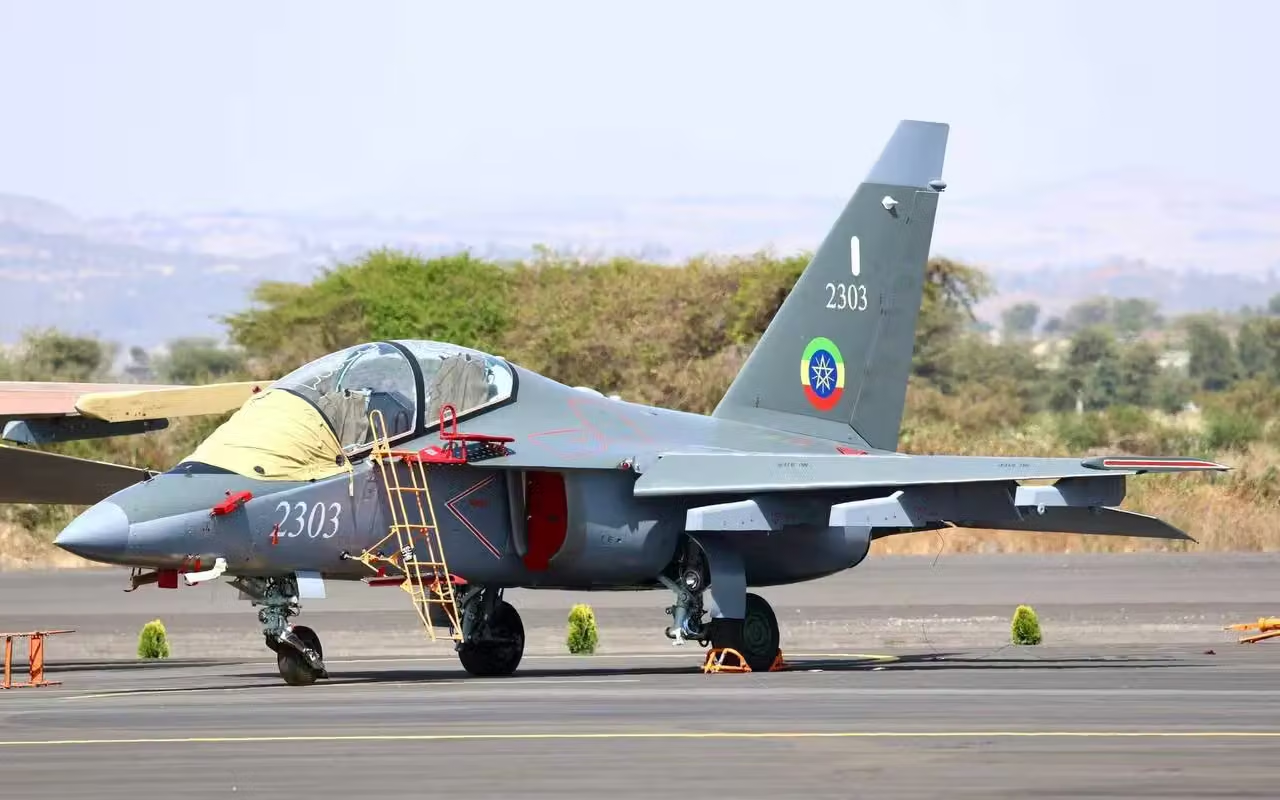
Cooperation covers the production of cable systems, assemblies, and fleet maintenance.
A bet on a distributed cooperation model
In 2026, the Russian aviation industry is forming a network of partners instead of depending on a single supplier. China provides electronics, India production capacity, Iran service, Turkey materials, and the CIS countries assembly. This model reduces risks and makes it possible to sustain serial production under sanctions.
Whatever way you look at it, the Russian aviation industry has now become a completely isolated sector, having set a course toward import substitution. However, such a course is unlikely to be viable in the long term, given the small air travel market. Aviation expert Andrei Velichko spoke about this earlier to "Pervomu tekhnicheskomu".
Read more materials on the topic:
- The Il-96 will have to be redesigned from scratch for the PD-35 engine: what Russia's aviation industry is preparing
- Production MS-21-310 sent for inspection of all electrical units
- A new foreign buyer of the Yak-130 has become known
Never miss our newsAdd this site to your preferred sources to see us more oftenAdd on Google

















