The efficiency of passenger airliners is correctly compared by specific fuel consumption per passenger-kilometer (g/pass-km). This indicator takes into account not only fuel burn, but also capacity: the more seats with the same engines, the lower the cost of transporting one passenger.
To make the comparison fair, the ranking by "Pervogo tekhnicheskogo" includes only medium-haul narrow-body aircraft with a 3+3 layout (it is in this class that the new Russian MC-21-310 competes).
5. Boeing 737 MAX 8 (USA)
Efficiency: ~14.5-15.5 g/pass-km. The most mass-produced version of the MAX family.

It demonstrates high fuel efficiency, but trails the longer versions because of its lower capacity, which affects the final per-passenger fuel consumption.
4. MC-21-310 (Russia)
Projected efficiency: ~14.5-15 g/pass-km. A Russian airliner with a composite wing and PD-14 engines.
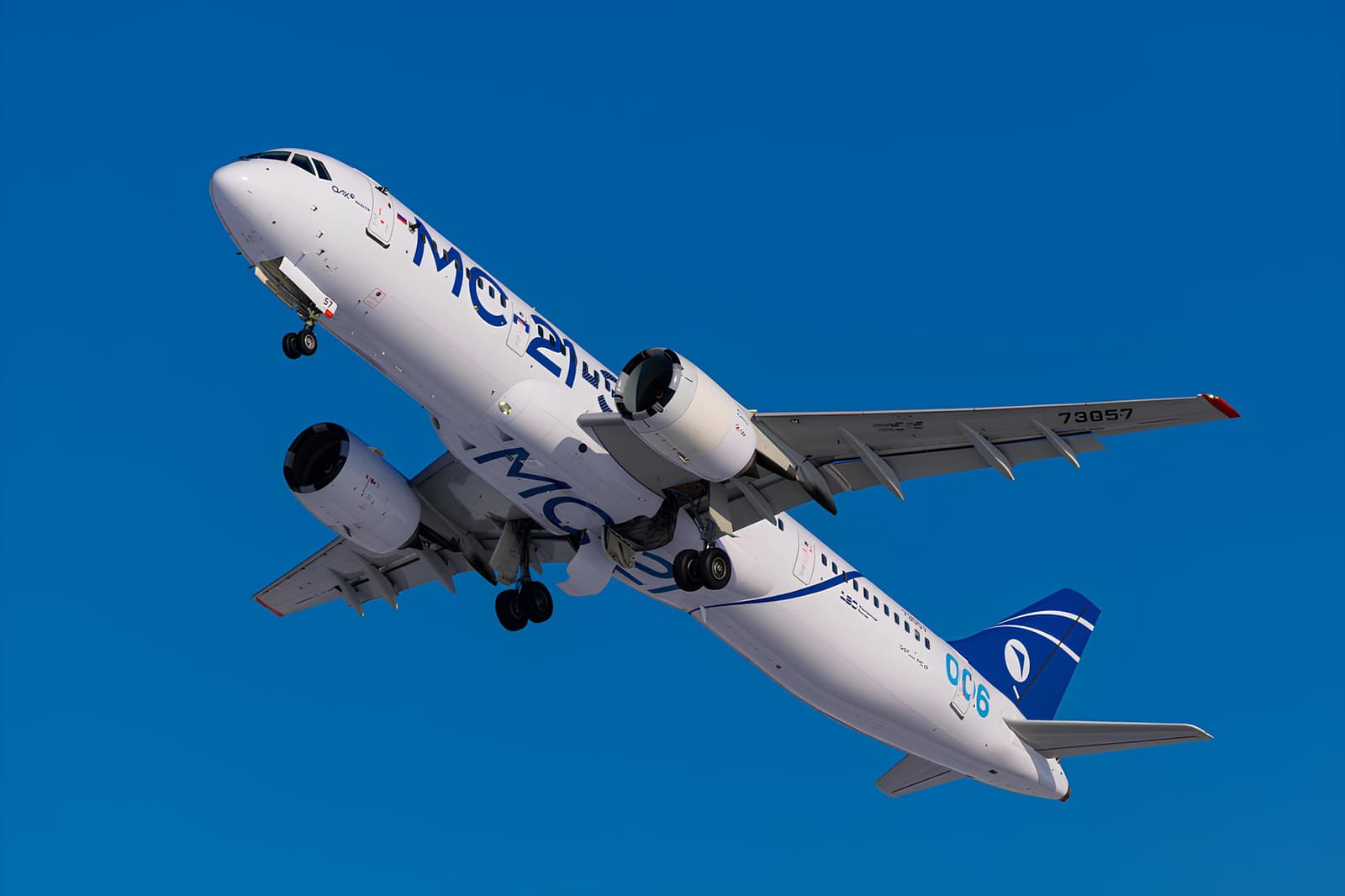
It was designed as a direct competitor to the A320neo, but its real economics are still confirmed only by calculations and will become clear in serial operation.
3. Airbus A320neo (Europe)
Efficiency: ~14-14.5 g/pass-km. The de facto benchmark of the segment.

New engines and aerodynamics reduced fuel consumption by about 15-20% compared with the previous generation, setting the benchmark for competitors.
2. Boeing 737 MAX 9 / MAX 10 (Europe)
Efficiency: ~12.5-13.5 g/pass-km. Extended versions of the MAX family.

Thanks to the increased number of seats and a relatively light structure, they provide very low fuel consumption per passenger.
1. Airbus A321neo (Europe)
Efficiency: ~12-13 g/pass-km. The absolute leader in its class.

The long fuselage (up to ~220-240 seats) with the same engines as the A320neo makes it possible to minimize fuel consumption per passenger.
The difference in efficiency is explained by simple physics: the longer the aircraft and the higher the load factor, the cheaper the transportation of one passenger. That is why the MC-21 competes confidently with the A320neo, but for now trails more capacious versions such as the A321neo.
Read more materials on the topic:
- Irkutsk Aviation Plant sped up MC-21 assembly with the help of a new panel technology
- The MC-21 might never have appeared because of the Tu-22M3 bomber
- The advantages of the Il-114-300 over the half-century-old Yak-40 have been named
Never miss our newsAdd this site to your preferred sources to see us more oftenAdd on Google