In Russia, a new invention in the field of helicopter engineering has been registered that makes it possible to control a helicopter in yaw without a classic tail rotor. The patent describes a jet system for compensating the reactive torque of the main rotor with a separate electric drive.
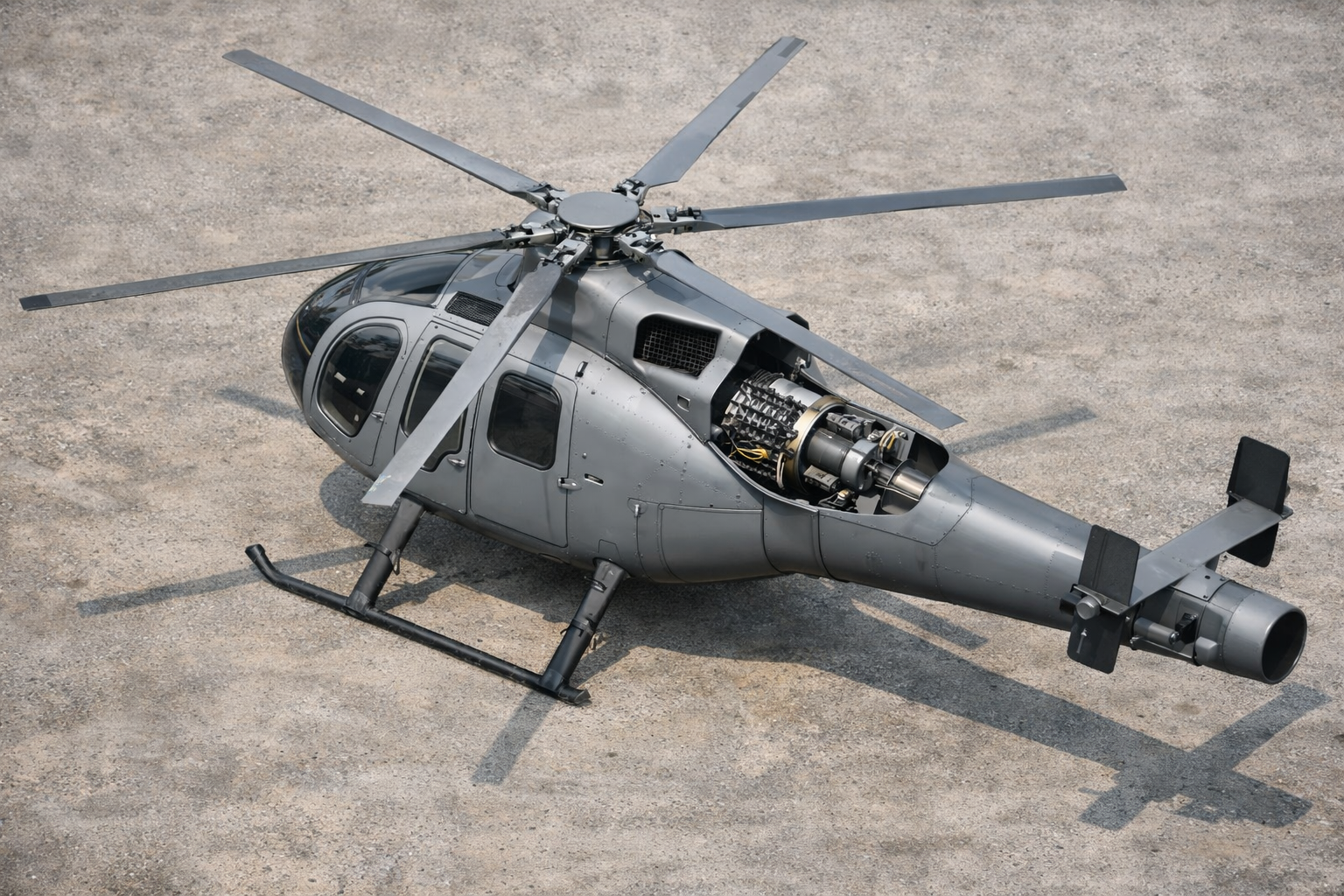
The developers came up with a system that draws air directly from the atmosphere through air intakes placed on the fuselage under the main rotor.
The flow moves through an air duct to a two-stage compressor driven by an electric motor installed in the tail section of the fuselage. The compressed air is then directed into the tail duct and expelled through controllable nozzles.
The key feature of the development is the complete preservation of the power of the main engine and main rotor. The compressor and nozzles operate from a separate electric motor rather than from the gearbox, as in traditional NOTAR schemes. This reduces the load on the powerplant and increases reliability during takeoff, landing, and hovering.
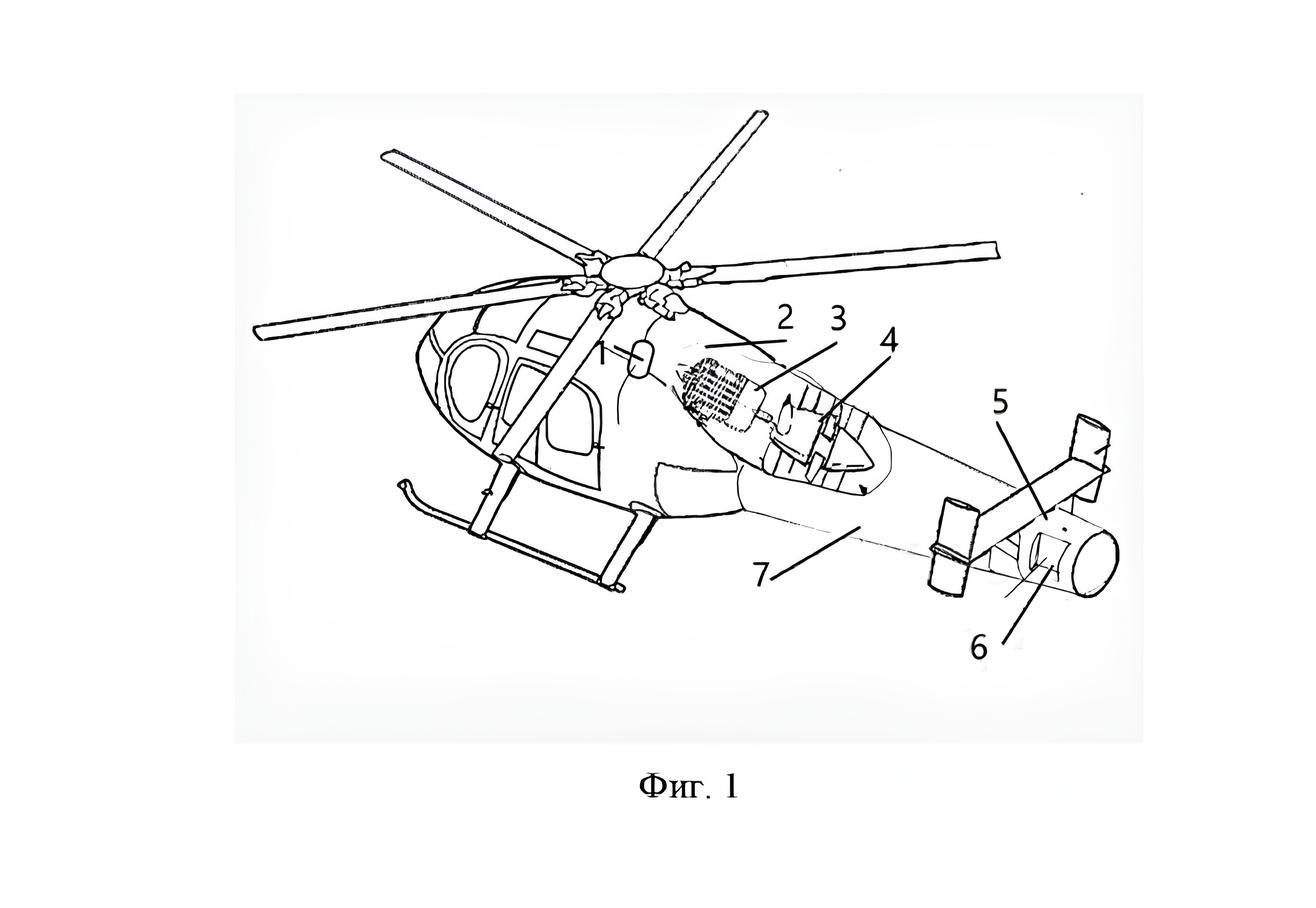
The distribution of the airflow between the nozzles changes depending on the flight mode. In cruise mode, the ratio is 0.7 to 0.3, and when performing a turn, 0.55 to 0.45, which ensures controlled yaw without sharp angular accelerations.
This is far from the first unusual domestic development in the field of helicopter engineering. Quite recently, it became known that in Russia they patented a helicopter design with a turbine-driven main rotor.
Read more materials on the topic:
- Fire control outside the vehicle: in Russia, a new module for armored vehicles has been patented
- A key element for a supersonic passenger aircraft was devised in Russia
- In Russia, they came up with a fighter jet with a double wing for short takeoff and landing
Never miss our newsAdd this site to your preferred sources to see us more oftenAdd on Google