The story with the development of a new light multi-purpose aircraft LMS-901 "Baikal" turned out to be a hostage of loud promises and critical statements taken out of context. Oleg Panteleev, Executive Director of the AviaPort agency, explained in an interview with"Perviy Technicheskiy" that the real state of affairs is in the middle - between marketing expectations and technical limitations.
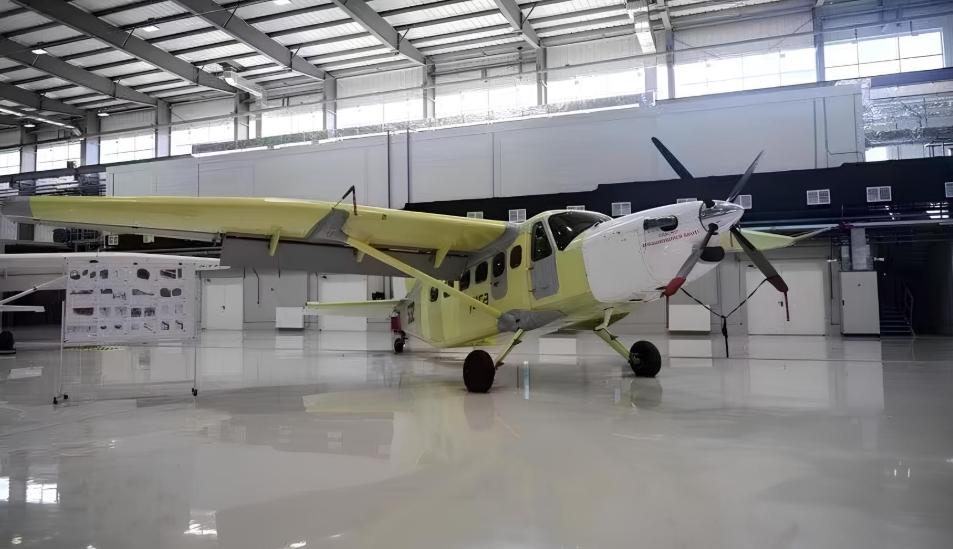
He recalled that the 2019 technical specifications for the "Baikal" contained only a few key points, including the wording that the take-off and landing characteristics "should not be inferior to the An-2". The aviation expert emphasized that such vagueness immediately created an "extremely difficult task" for the developers.
If you need to make an aircraft that will take a payload of 2000 kg, carry it for a range of 1500 km and at a speed of 300 km/h, as specified in the technical specifications, then you can make it undemanding to the runway only through unconventional aerodynamic schemes or power plant schemes, that is, at the cost of seriously complicating and increasing the cost of the design.
At the same time, if we compare the LMS-901 with the An-2 in real operating conditions, the situation changes. Panteleev noted that when placing a load in the "Baikal" comparable to the An-2, and flying the same distances, the aircraft is able to operate from the same types of runways.
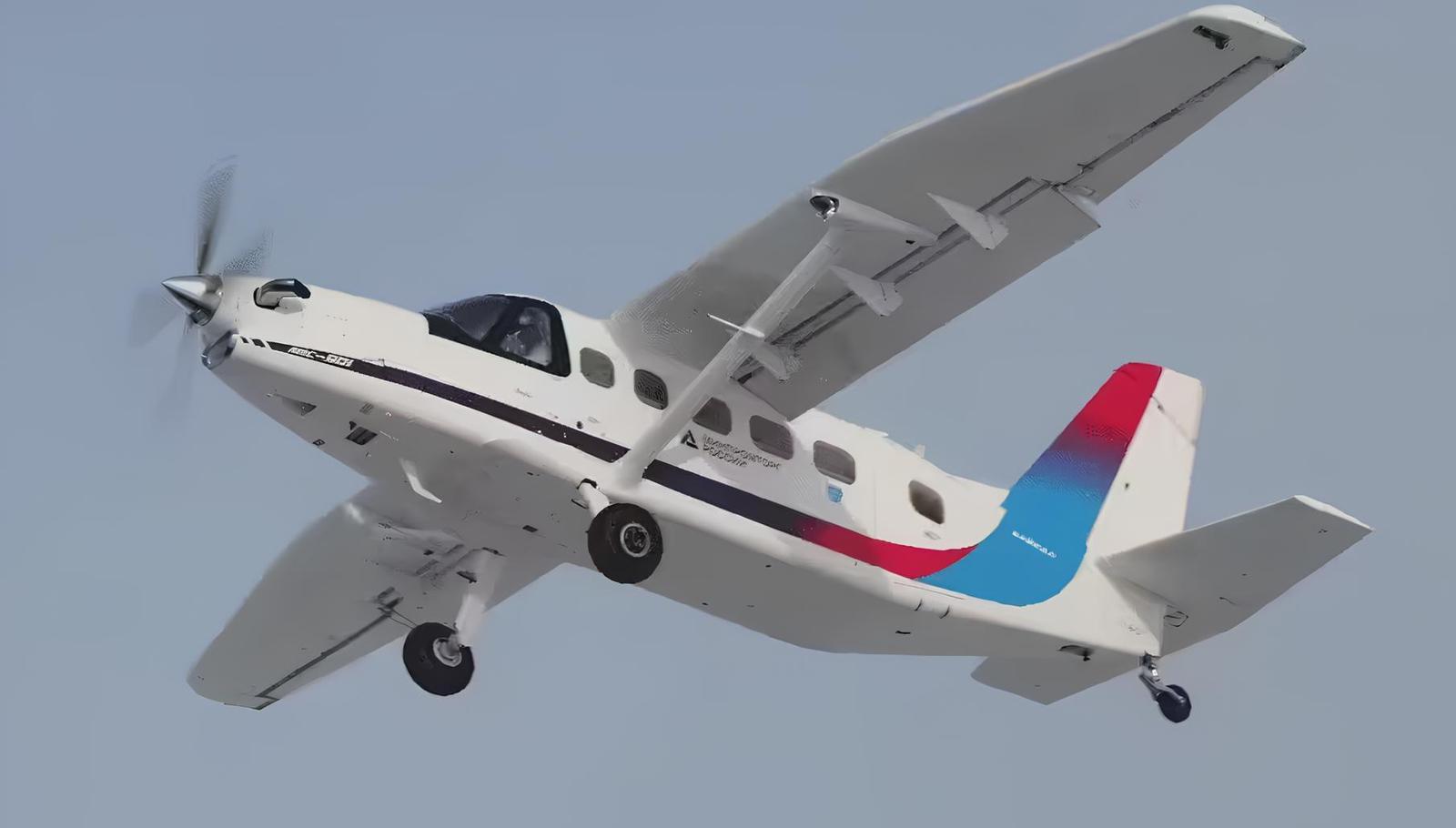
Moreover, when working from solid and long runways, the "Baikal" will take more cargo, more fuel and fly further than the An-2 - at a lower cost per flight hour. The main snag, according to the expert, is the impossibility of repeating the An-2 in modern flight safety rules.
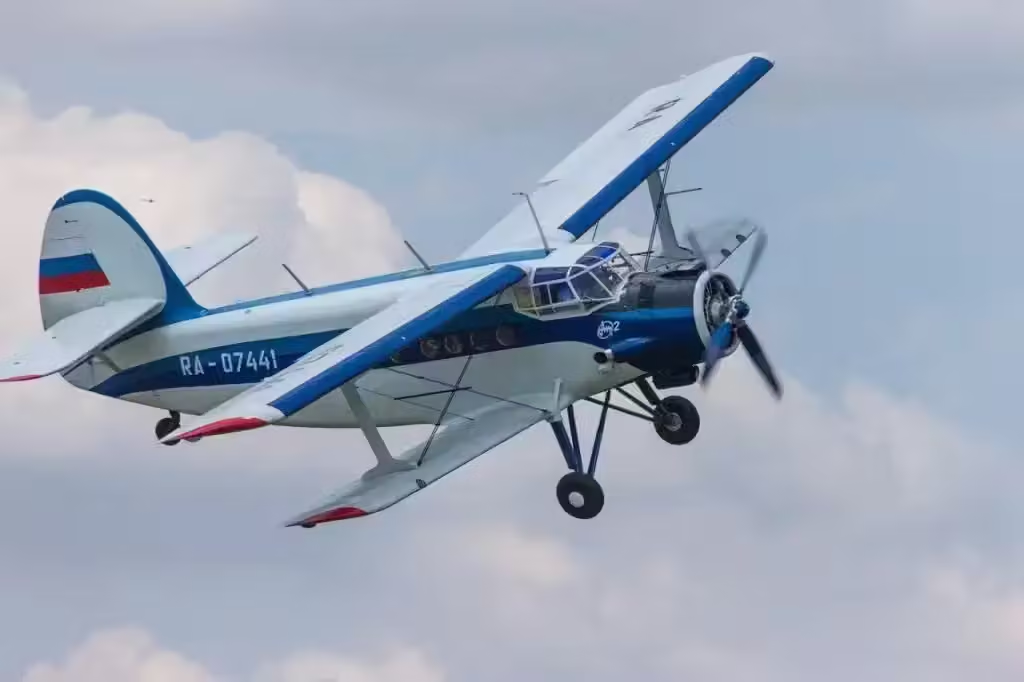
You can make a large biplane with excellent take-off and landing characteristics. However, it is impossible to accelerate it to 300 km/h and maintain fuel efficiency. You can't fool physics.
Panteleev clarified that installing a turboprop engine on the An-2 and increasing speed and range is a solvable task, as proved by the TBC-2MS project. But today it is impossible to certify such an aircraft, because a machine with 12-14 seats requires two engines.
It is possible to reduce the capacity of a large aircraft to nine passengers, but in this case the design will become overweight for the task being solved, and the costs per passenger-kilometer will become too high.
Panteleev summarized that without simplifying certification standards and switching to hybrid power plants, it will not be possible to create a harmonious machine that is both with good performance, efficiency and inexpensive.
Let us remind you that in October, the head of the Ministry of Industry and Trade, Anton Alikhanov, stated that the Baikal aircraft will take to the sky as early as 2025. There has been no news about this yet.
Read more materials on the topic:
UAC will take under its wing the projects of the LMS-901 Baikal manufacturer
Never miss our newsAdd this site to your preferred sources to see us more oftenAdd on Google

















