The legendary Soviet An-2 biplane unexpectedly ended up in the legal zone of the European aircraft concern Airbus. Because of this, Russia cannot simply take and re-launch the production of the \"corncob\", even despite the high demand for such aircraft in regional aviation.
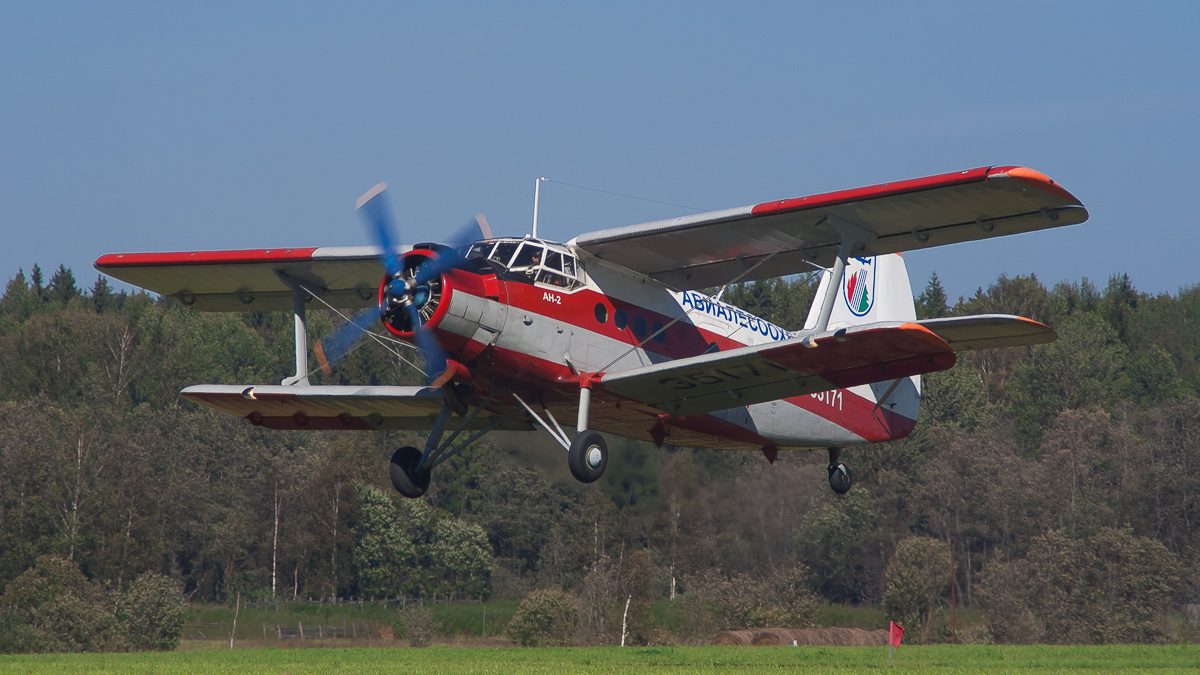
The paradox is that we are talking about one of the most mass-produced aircraft in history. According to various estimates, more than 18 thousand An-2s were produced in the world, and many of them still operate on local lines.
\"The First Technical\" tried to figure out how the rights to this aircraft ended up in Europe. We invite you to plunge into history with us.
How the documentation for the An-2 went to Europe
The An-2 aircraft first took to the air in 1947. In the late 1950s, the Soviet Union transferred mass production of the machine to Poland - to the PZL Mielec plant. The biplane was produced there for decades, and production continued until the early 2000s.
Together with the license, the Polish side received a complete set of design documentation. Later, the rights to it ended up with the European aviation industry.
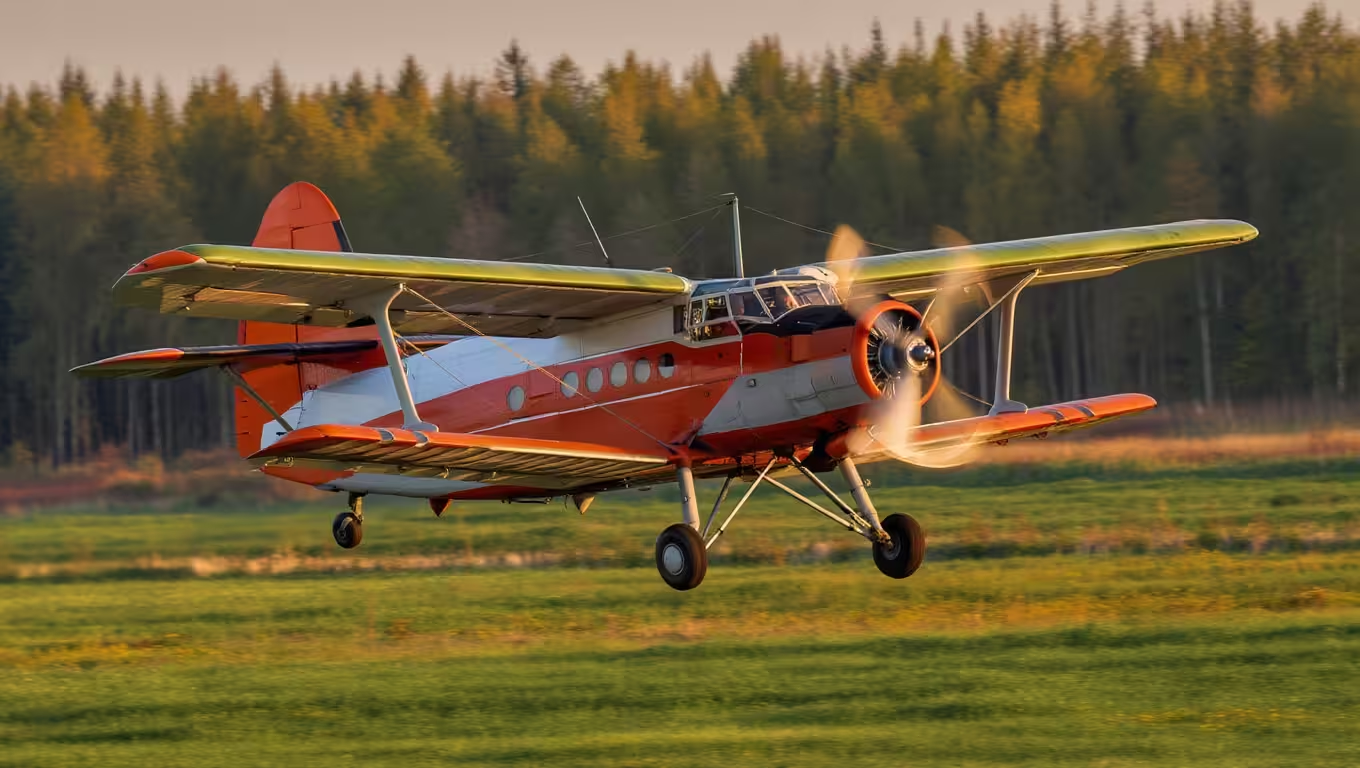
The former head of the aviation industry department of the Ministry of Industry and Trade, Andrei Boginsky, explained that after the investigation it turned out that the documentation for the An-2 was sold to the Polish side, and subsequently it ended up with the Airbus Military division.
We conducted our own investigation, if I may say so, and found out that in Soviet times the documentation for the An-2 was sold to Poland, and now, oddly enough, it belongs to Airbus Military.
As a result, the working drawings and intellectual rights to produce the aircraft were under the control of the European concern.
Why Russia cannot simply build a new An-2
The operation of existing aircraft is not limited in any way. But the release of an exact copy of the machine requires the consent of the copyright holder.
Therefore, Russian projects went the path of modernization. One of the well-known options is the TVS-2MS, which retains the An-2 airframe, but installs a new engine and modern avionics.
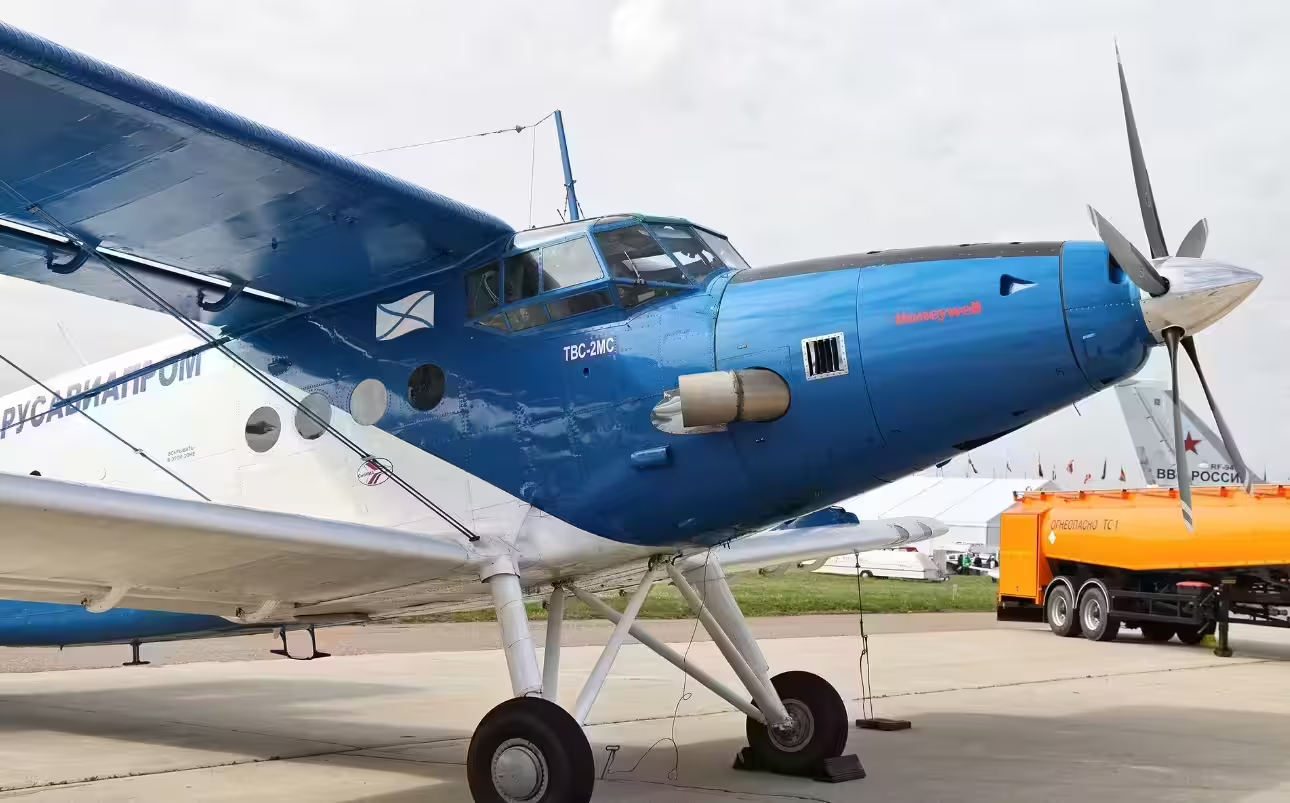
Kirill Alexandrov, General Director of PMI Aero, noted that modernization allows to preserve the key advantages of the aircraft: short take-off, the ability to work from unpaved runways and high payload.
Is it possible to get around this problem
Aviation expert Oleg Panteleev believes that the industry still needs a new aircraft, and not an exact copy of a mid-20th century machine.
If you need to make an aircraft that will take a payload of 2000 kg, carry it to a range of 1500 km and at a speed of 300 km / h, specified in the technical specifications, then you can make it unpretentious to the runway only through unconventional aerodynamic schemes or power plant schemes, that is, at the cost of serious complication and increase in the cost of the structure.
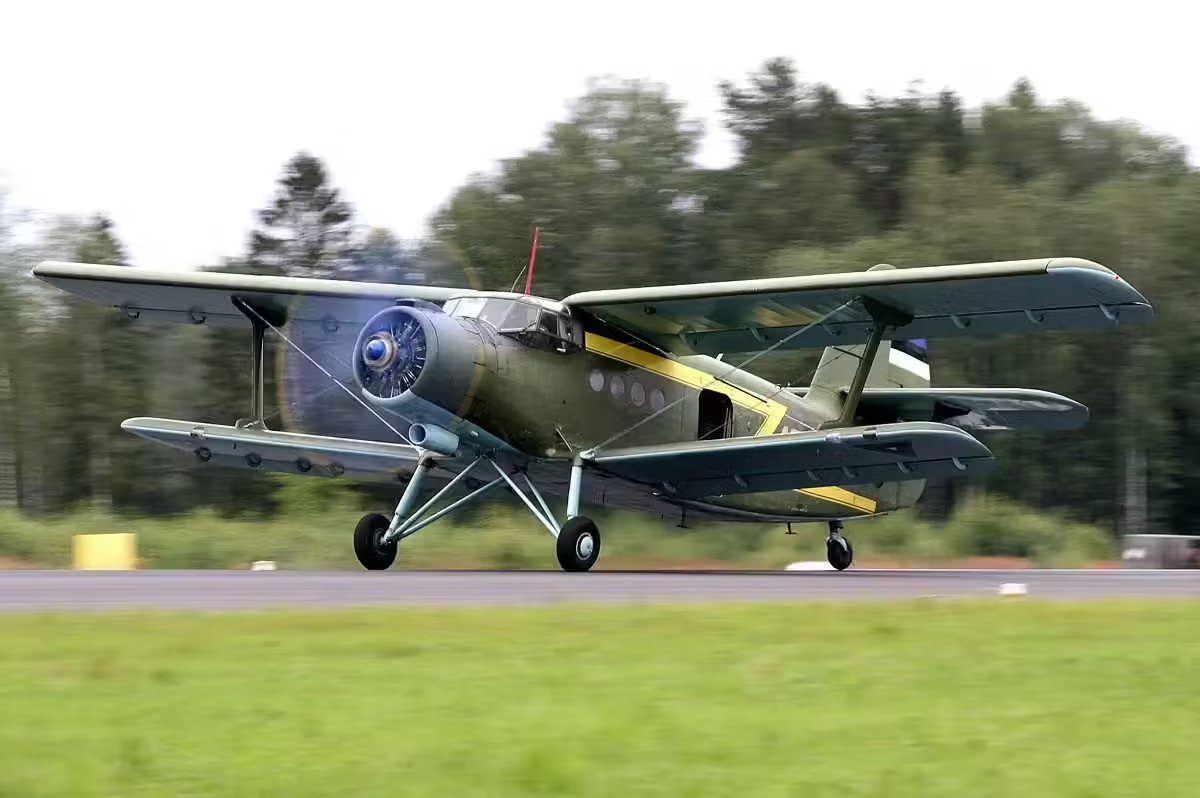
That is why in Russia are creating a new light aircraft - LMS-901 \"Baikal\". It should occupy the niche of regional transportation, where the An-2 has worked for decades.
This story remains one of the most unusual in world aviation. The aircraft, developed in the USSR and produced in tens of thousands of copies, in a legal sense turned out to be associated with the European aviation industry.
Read more materials on the topic:
- \"Little Giant\": Omsk engineers revived the legendary An-2
- Hundreds of Soviet An-2s were offered to be returned to flights: however, there is no aviation gasoline for them in Russia
- 3.38 billion rubles were allocated for the development of a new engine for the An-2: the aircraft is not mass-produced
Never miss our newsAdd this site to your preferred sources to see us more oftenAdd on Google

















