Destructive testing of a fan blade directly during the operation of an aircraft engine is one of the most important in the global aviation industry as part of certification. The United Engine Corporation (UEC) explained in detail why they were conducted on the new domestic power plant.
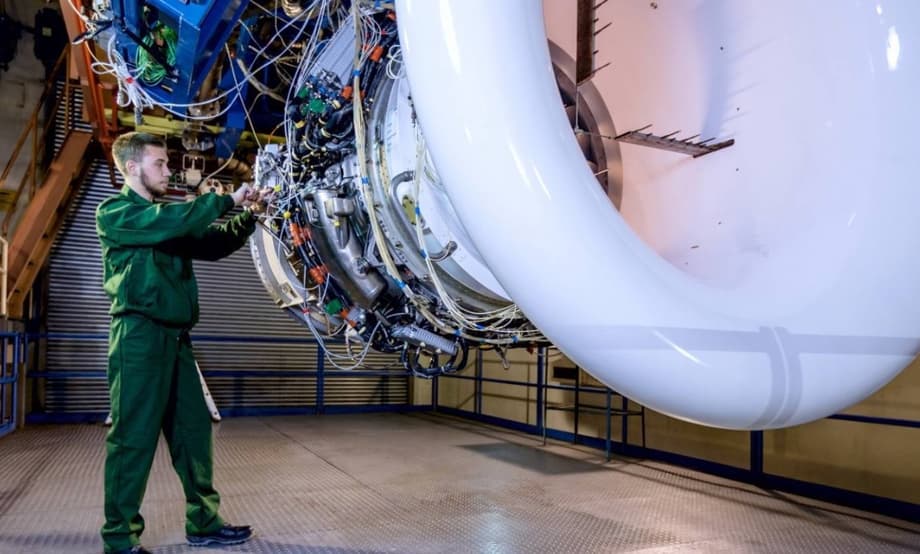
This engine test simulates the destruction of an element in takeoff mode at maximum loads. All blade fragments must be contained within the engine casing.
For this purpose, the corporation's engineers installed a special pyrotechnic charge and brought the engine to takeoff mode. Fragments of the blade did not penetrate the power plant casing.
Another successful test confirms the PD-8's compliance with international safety requirements, the correctness of design solutions, and the approach to the finish line for obtaining a type certificate.
Before the experiment, UEC specialists prepared a test bench, equipping it with a current collector, phasing system, and air sampling system. Measurements showed that even with this scenario, the level of oil vapor emissions into the air conditioning system remained within the normal range.
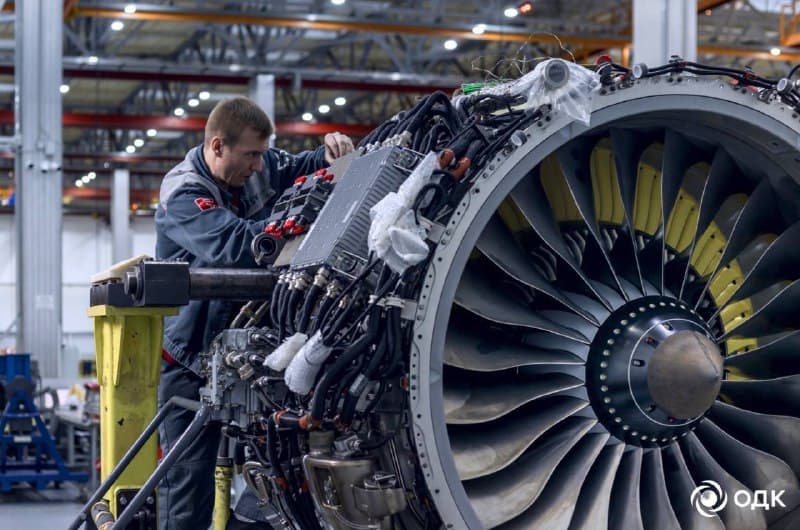
UEC also explained that the blades for the PD-8 are not stamped or machined from a blank, but literally grown. In a vacuum furnace, the metal is first melted, and a single-crystal seed is placed at the base of the mold. Then the mold is slowly pulled out of the hot zone, and the crystal begins to grow upward, forming the future blade. Thanks to this technology, the blades withstand enormous temperatures, up to 2000 K.
Read more materials on the topic:
Now on home

Start of deliveries scheduled for 2027

Over 51,000 new motorcycles were sold in Russia in 2025

The car will take at least a year to assemble

The application's audience has reached 20 million users

The model will be included in the list of cars for taxis, price - from 2.25 million rubles

All parking lots of the "Administrator of the Moscow Parking Space" are connected to the service

The cars will be supplied to the Moscow Transport Service Directorate

Deliveries to India may begin in 2028

The technology provides automated search for all types of defects in power units

The plane flew 500 km, accelerating to 425 km/h

The plant stated that the information about the termination of purchases for models 6 and 8 is not true

Scientists are using the "Ekran-M" installation
Articles
-
Russian An-124 "Ruslan" Stuck in Canada for 4 Years and Accrues Millions in Fines
26 Jan 2026
-
Coaxial Propellers: How Counter-Rotation Increases Turboprop Engine Efficiency
25 Jan 2026
-
Kazan Aviation Plant Breaks Old System: Tu-214 to be Assembled Like Cars
25 Jan 2026
-
How Engineers and Technicians Are Paid Today in the Russian Aviation Industry: An Overview with Figures
24 Jan 2026