Translated with AI from the Russian original.
The Kazan Aviation Plant (KAZ, part of Rostec's United Aircraft Corporation) is switching to flow-line assembly of the Tu-214 aircraft fuselage. Instead of jig-based technology, the enterprise is introducing a conveyor-style production principle. In its article, "Pervyi tekhnicheskii" explains why jigs in airliner manufacturing are a relic of the past.
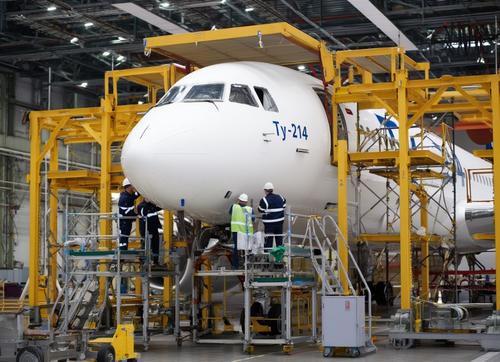
Why jig-based assembly was slowing aircraft production at KAZ
First, it is necessary to clarify the terminology. Jig-based technology remained the foundation of aircraft manufacturing in Russia for decades. The fuselage was assembled on stationary structures, where each operation was performed manually and sequentially.
This approach ensured precision, but sharply reduced production speed, since one airframe could remain on the jig for months. Any delay at one section blocked the work of the entire line. Reconfiguring equipment took weeks, so scaling up output under such a scheme was almost impossible.
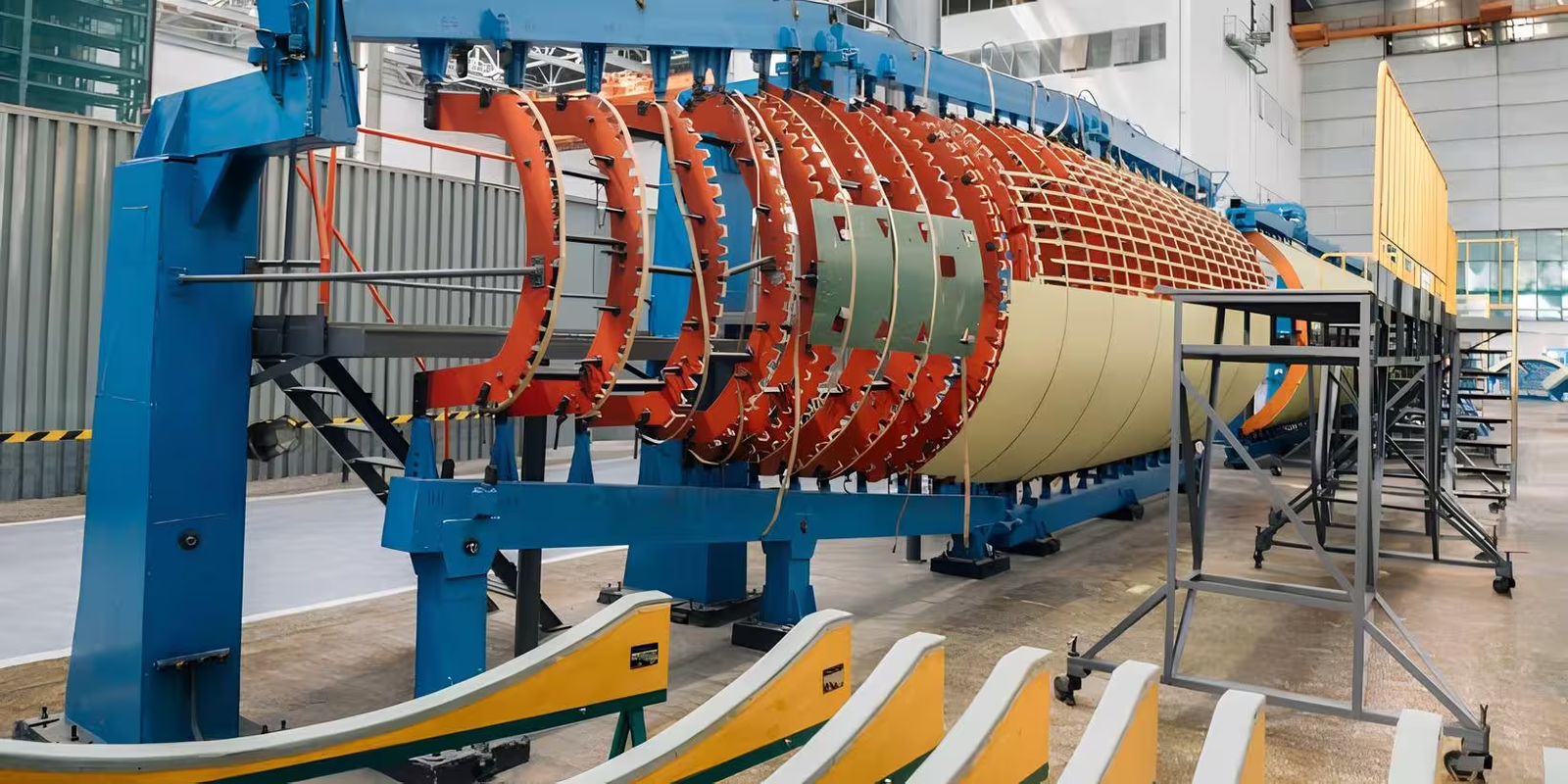
As a result, the plant produced a limited number of aircraft even when orders and serious financing were available.
How flow-line assembly works
Flow-line technology is built on the conveyor principle. The fuselage passes through several sections, where each team performs a strictly defined set of operations.
At each stage, unified standards, digital control, and synchronized delivery of components are in place. Work proceeds in parallel, without downtime or overlap. An analogy can even be drawn with car manufacturing.

The new line will make it possible to assemble the Tu-214 fuselage in 12 days. This is several times faster than the previous scheme. The project is being implemented with the support of the Agency for the Development of Professional Skills and the Competence Center in Labor Productivity.
What the transition to flow-line production gives the aviation industry
The transition to flow-line assembly instead of jigs significantly changes the economics of production. The plant gains predictable timelines, stable staff utilization, and reduced cost price.
Increasing output to 20 "Tushkas" per year makes it possible to meet airlines' needs without constant delivery disruptions.
Why this is being called a manufacturing revolution
Abandoning jigs means moving from one-off assembly to serial production. For Russian aviation, this is the key technological shift of recent decades.
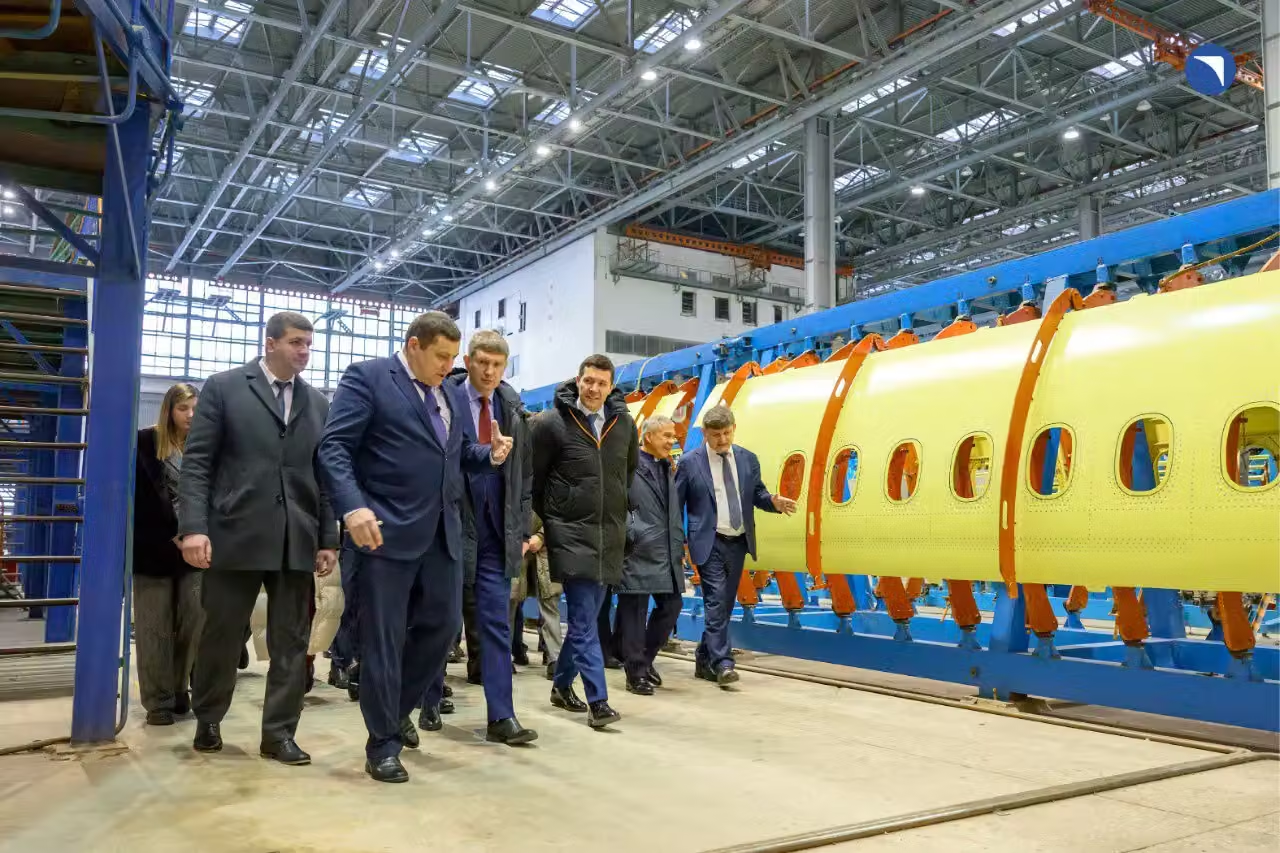
The flow-line scheme requires new competencies, digital management systems, and high supply discipline. If successfully implemented, the Kazan Aviation Plant will become the core site for large-scale production of domestic airliners.
Read more materials on the topic:
- Updated Tu-214 to enter production in 2026
- The new "Tushka" Tu-214 is not authorized to carry passengers
- It was proposed to revive the Tu-214 project while the MS-21 still does not meet range requirements
Never miss our newsAdd this site to your preferred sources to see us more oftenAdd on Google

















