The Russian corporation "VSMPO-Avisma" will allocate up to 3 billion rubles for the production of titanium products using high technologies by 2030. This was announced by the company's Director of Innovation and Development, Denis Stepanov.
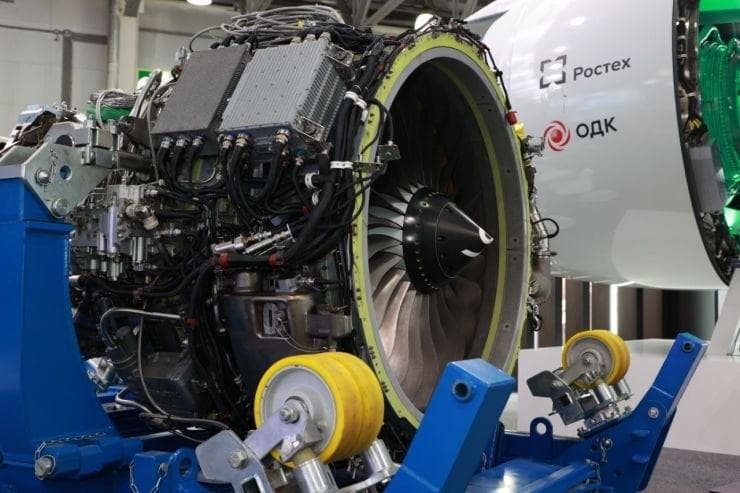
According to him, the funds will be used to expand the laboratory base and purchase main and auxiliary equipment. The investments are planned for the period up to 2030.
By December, the entire 3D printing production cycle will be fully ready, and the company will be able to produce both raw materials and parts, and from 2026 it will be able to produce up to 2,000 parts per year.
Stepanov added that the volume of production by additive method by 2030 could be about 10-15 thousand parts annually or 100-150 tons of parts.
Initially, we plan to meet the needs of the domestic market in the current situation, but potentially we can do this in the foreign market as well. If cooperation with Airbus or Boeing resumes, we will be ready, among other things, to provide foreign markets with this kind of products.
The director of the enterprise clarified that about 200 parts may be required for just one aircraft, for example, for the Chinese C919 airliner from Comac, the Russian MC-21, or similar Boeing 737, Airbus 320.
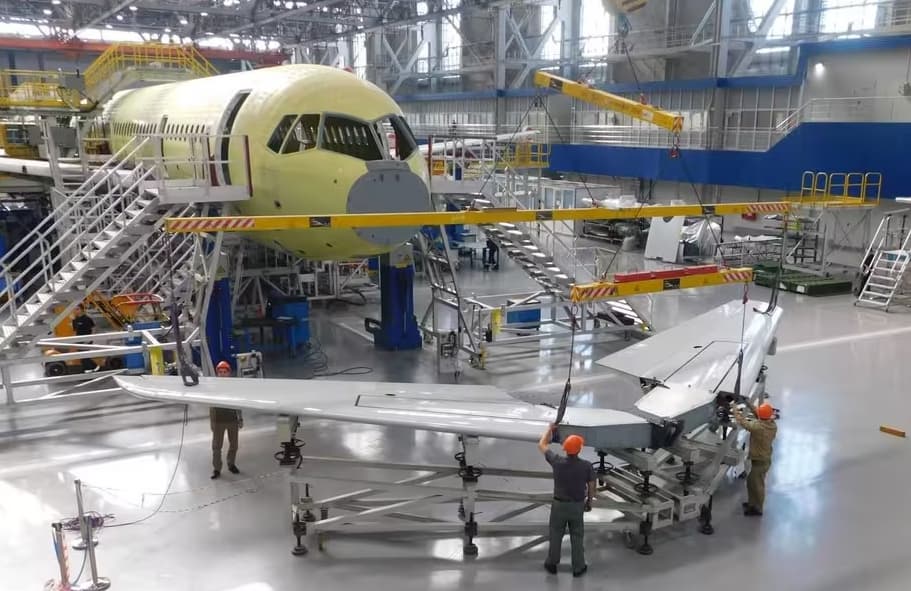
Titanium is used in the aviation industry in the production of the tail section, wing, chassis and fuselage of the aircraft. VSMPO-Avisma also produces titanium semi-finished products for domestic PD-8 and PD-14 engines for MC-21 and Superjet 100 aircraft.
Earlier, www1.ru reported that ODK has registered a regulator and protection unit for PD-8, PD-14 and PD-35 engines.
Read more materials:
Now on home

Start of deliveries scheduled for 2027

Over 51,000 new motorcycles were sold in Russia in 2025

The car will take at least a year to assemble

The application's audience has reached 20 million users

The model will be included in the list of cars for taxis, price - from 2.25 million rubles

All parking lots of the "Administrator of the Moscow Parking Space" are connected to the service

The cars will be supplied to the Moscow Transport Service Directorate
Deliveries to India may begin in 2028
The technology provides automated search for all types of defects in power units
The plane flew 500 km, accelerating to 425 km/h

The plant stated that the information about the termination of purchases for models 6 and 8 is not true
Scientists are using the "Ekran-M" installation
Articles
-
Russian An-124 "Ruslan" Stuck in Canada for 4 Years and Accrues Millions in Fines
26 Jan 2026
-
Coaxial Propellers: How Counter-Rotation Increases Turboprop Engine Efficiency
25 Jan 2026
-
Kazan Aviation Plant Breaks Old System: Tu-214 to be Assembled Like Cars
25 Jan 2026
-
How Engineers and Technicians Are Paid Today in the Russian Aviation Industry: An Overview with Figures
24 Jan 2026