Translated with AI from the Russian original.
The Russian project "Venera-D" will return the country to interplanetary exploration of Venus at a new technological level. According to NPO Lavochkin (part of Roscosmos), the landing module will, for the first time since the 1980s, receive images of the planet's surface and analyze its soil using modern equipment.
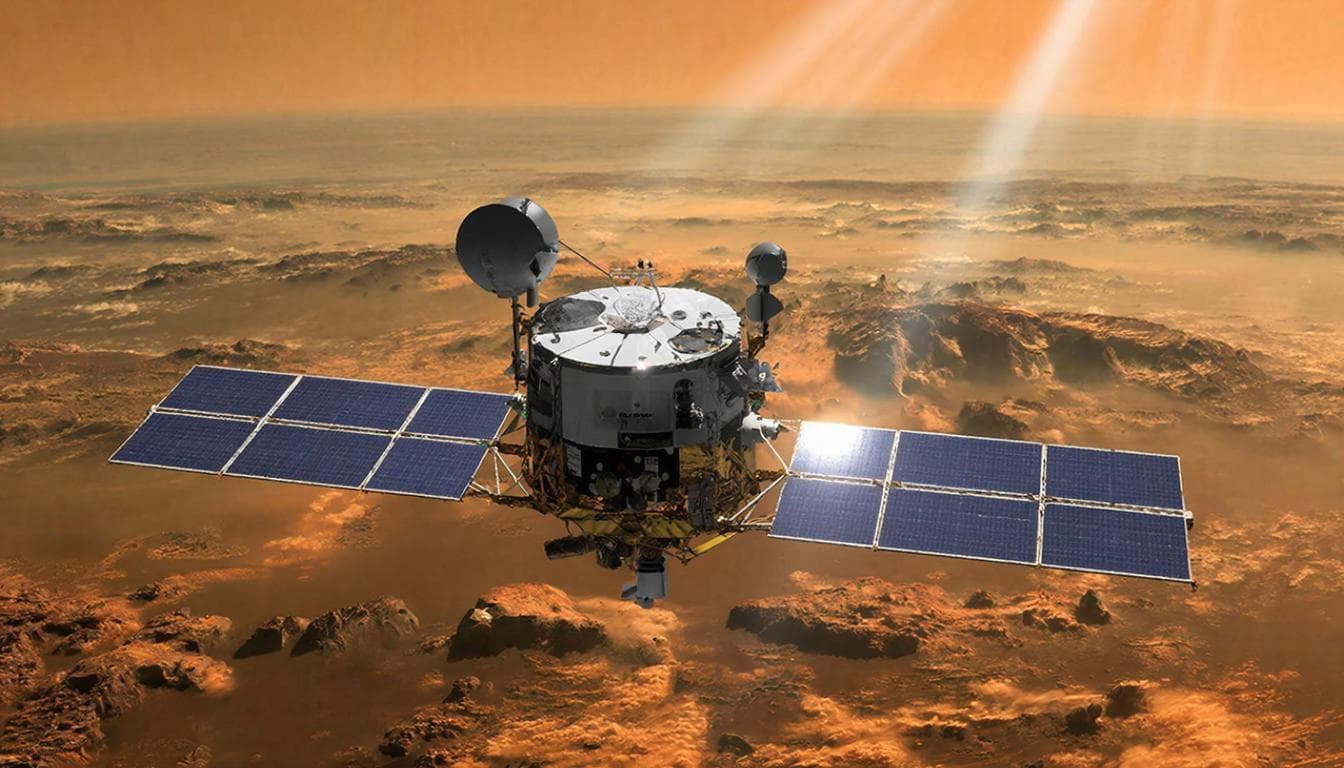
During one hour of descent into the atmosphere and two hours of operation on the surface in extreme conditions, this module will be able to solve tasks that are not achievable by the planned missions of other space agencies.
Data from the orbital vehicle will form the basis of a model of the global circulation of Venus' atmosphere, which has not yet been created. Scientists also hope to obtain new information about the planet's geology, penetrate its past, and even try to detect signs of life. Earlier, the scientific director of the Space Research Institute of the Russian Academy of Sciences, Academician Lev Zeleny, reported that the mission would check for biomarkers of primitive life in the cloud layers and on the surface of Venus.
The "Venera-D" mission includes a landing module, an aerostat probe, and an orbital vehicle. The launch is scheduled for before 2036. The project is included in the national plan for space exploration, and preliminary design began in January 2026.
Read more on the topic:
Never miss our newsAdd this site to your preferred sources to see us more oftenAdd on Google

















