Researchers re-analyzed archival images from the Magellan interplanetary station (NASA) and discovered a giant cavity on Venus — presumably a lava tube about a kilometer wide and almost 400 meters high. The Russian mission "Venera-D", scheduled for launch in 2036, will have to check the find, reports RIA Novosti.
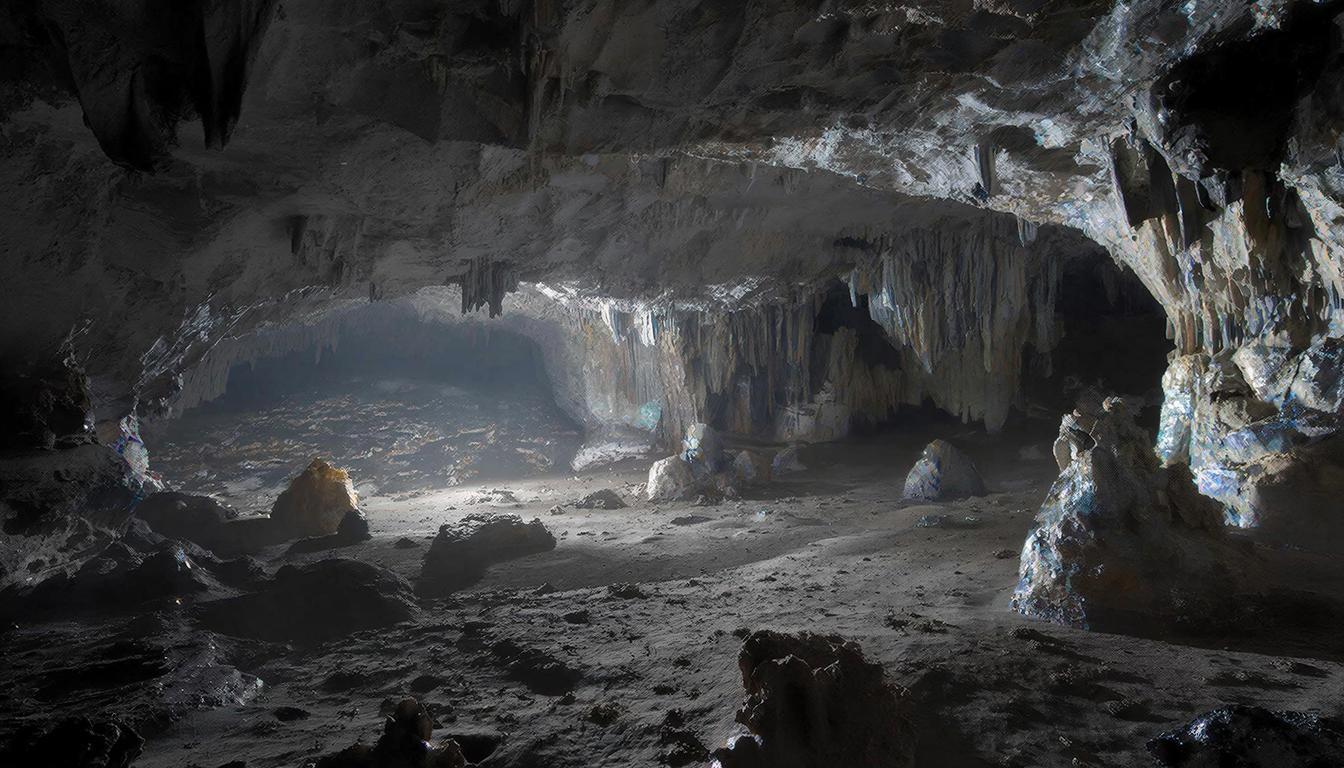
An unusual crater in the Nix Mons volcano area revealed itself with a radar signal indicating a void beneath the surface. This is the first time that the existence of lava tubes on Venus has been proven. On Earth, such formations are found in Iceland and Hawaii, and they have also been found on the Moon and Mars.
Venus has long remained a "blank spot" — its dense atmosphere does not allow us to see the surface with optical instruments. New methods of processing radar data helped make the discovery. The length of the discovered tunnel is at least 45 kilometers. Lava tubes can become natural shelters for future researchers: there is a stable temperature under the surface and no harsh radiation.
The Institute for Space Research of the Russian Academy of Sciences explained that such structures are not uncommon on Venus. The planet is replete with shield volcanoes, and lava tubes arise from uneven cooling of lava flows.
It is quite obvious that Venus was a volcanically active planet in the recent past. And what about now — future space missions will be able to find out.
The Russian mission "Venera-D" will verify the find, search for traces of life, and study the nature of the greenhouse effect. Scientists hope to understand why the evolution of Venus and Earth took different paths.
Read more materials on the topic:
- Space in the long box: Russian missions to the Moon and Venus have been postponed
- "Venera-D": the first domestic mission to the hottest planet in the solar system will go as part of a national project
- Course to Venus: a probe for landing on the hottest planet in the solar system was developed in Russia
Never miss our newsAdd this site to your preferred sources to see us more oftenAdd on Google

















