Translated with AI from the Russian original.
Students of Tyumen Industrial University (TIU) have developed the TorfWatch ecosystem for ultra-early detection of peat fires. As RIA Novosti reported in the university's press service, the startup has already passed laboratory testing in a thermal chamber and is preparing for field trials. The system is based on a network of autonomous sensors, buried up to two meters deep, which measure temperature, humidity, CO and CO₂ concentration, as well as meteorological parameters. Machine learning algorithms calculate the fire hazard index and issue a warning 24 hours before ignition.
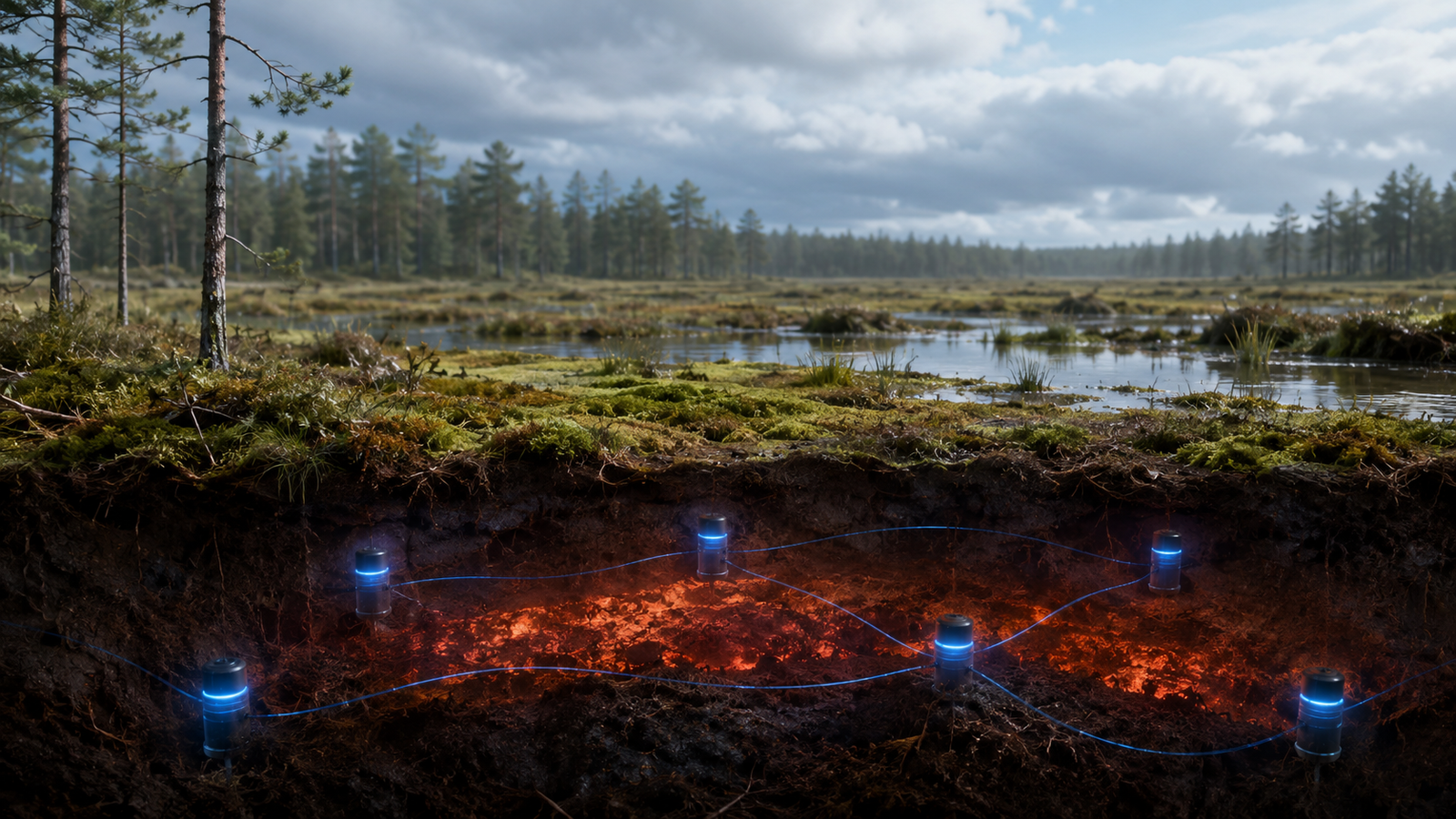
The connection between sensors is provided by the LoRaWAN protocol, capable of covering up to 90% of marshlands and agricultural areas where there is no cellular communication. This architecture allows the system to be easily scaled to any peat-fire-prone region. According to the developers' calculations, the implementation of TorfWatch can reduce the burnt area by 40–60%, which directly affects the reduction of mortality from smoke inhalation among people with cardiovascular diseases. A patent search confirmed the novelty of the solution, and initial consultations with the Department of Agro-Industrial Complex and the Ministry of Emergency Situations of the Tyumen region showed market interest.
The problem of peat fires is acute for the Ural Federal District and especially for the Tyumen region. Peatlands here occupy vast areas, and in dry seasons, they turn into foci of prolonged smoldering. A peat fire goes deep, where it is practically impossible to extinguish with water — it requires mixing the soil and drenching with additives. At the same time, burning peat releases huge volumes of carbon monoxide and fine dust, which covers cities with dense smog. In 2023, Yekaterinburg and neighboring cities were suffocating from smoke precisely because of peatlands burning south of the city.
Read more on the topic:
Never miss our newsAdd this site to your preferred sources to see us more oftenAdd on Google

















