St. Petersburg will put into operation ten new metro stations by 2030 — such obligations were taken by the city as part of the development program until 2030. Governor Alexander Beglov said this in an interview with RIA Novosti. Three stations have already been opened: «Gorny Institute», «Yugo-Zapadnaya» and «Putilovskaya». Seven remain under construction. In 2029, «Bogatyrskaya» and «Kamenka» will start operating on the green — Nevsko-Vasileostrovskaya — line. In 2030, four stations will open at once on the Krasnoselsko-Kalinin line: «Borovaya», «Bronevaya», «Zastavskaya» and «Karetnaya». Beglov called the development of the metro one of the ten priorities of the city program.
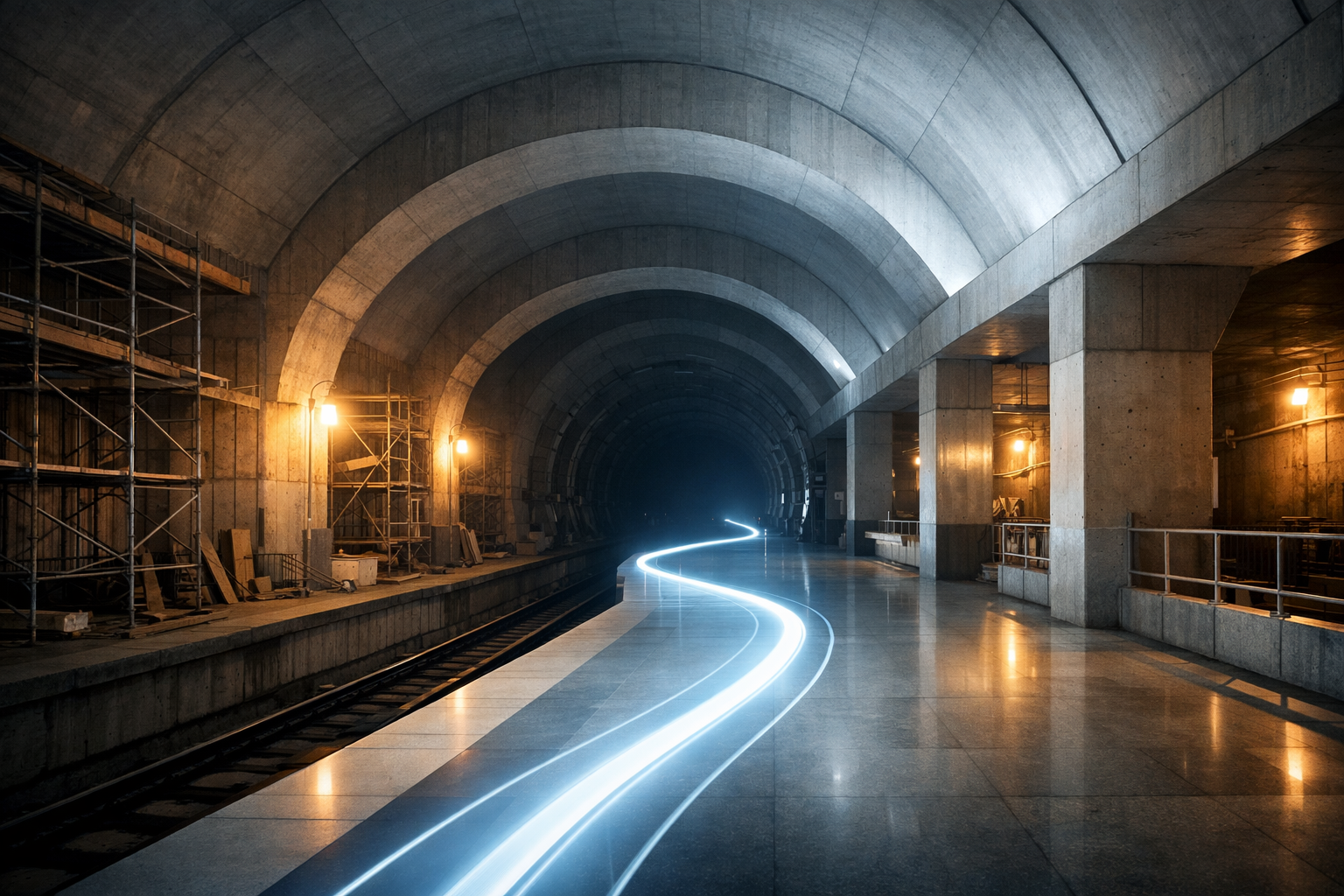
What is being built on the green line of the St. Petersburg Metro
The «Bogatyrskaya» and «Kamenka» stations will continue the Nevsko-Vasileostrovskaya line to the north of the city — towards the Primorsky district. Commissioning date — 2029. Beglov did not provide other technical details on these facilities.
Four stations of the brown line of the St. Petersburg Metro by 2030
The Krasnoselsko-Kalinin line is the youngest in the St. Petersburg metro. The first section with «Yugo-Zapadnaya» and «Putilovskaya» opened at the end of 2024 and connected the Krasnoselsky district with the Kirovsko-Vyborgskaya — red — line. Now the branch will continue towards the center.
By 2030, four new stations will appear here. The key one is «Zastavskaya»: it will receive a transfer to the blue line, to the «Moskovskiye Vorota» station, which will create a new transfer hub in the southern part of the city. The remaining stations are «Borovaya», «Bronevaya» and «Karetnaya».
The St. Petersburg Metro is the second busiest in Russia after Moscow, but for many years it lagged behind the capital in terms of construction rates. From the 1990s to the 2010s, the city introduced an average of one station every few years. Ten stations in six years is a fundamentally different pace. For comparison: Moscow opened 10–15 stations per year during the peak years of BCL construction, but St. Petersburg's geology — quicksand and complex soils — makes construction here much more expensive and slower.
The Krasnoselsko-Kalinin line closes the transport debt to two districts — Krasnoselsky and Kalininsky — which for decades remained cut off from the metro. The transfer hub at «Zastavskaya» will relieve the overloaded «Moskovskiye Vorota» and redistribute traffic on the blue line. Separately, Beglov outlined negotiations with the federal government on the construction of a branch to Pulkovo Airport with an extension to «Expoforum» and Tsarskoye Selo — this project is not included in the program until 2030 and has not yet been officially approved.
Read more on the topic:
- Face instead of a card: from 2026, you can pay for travel in the St. Petersburg metro using biometrics
- New «Baltiets» train is being tested in the St. Petersburg metro
- With a modernized drive: the assembly of the «Baltiets-2» metro train has been successfully completed
Never miss our newsAdd this site to your preferred sources to see us more oftenAdd on Google