The technologies of "Venera-9" are once again being used to prepare future interplanetary missions, including the Russian expedition "Venera-D," scheduled for launch in the 2030s. On October 22, 1975, the Soviet station transmitted the first photographs of the surface of Venus to Earth, revealing a view of the neighboring planet to humanity and testing the possibility of operating spacecraft in extreme conditions with a temperature of 465 °C and a pressure 92 times higher than Earth's.
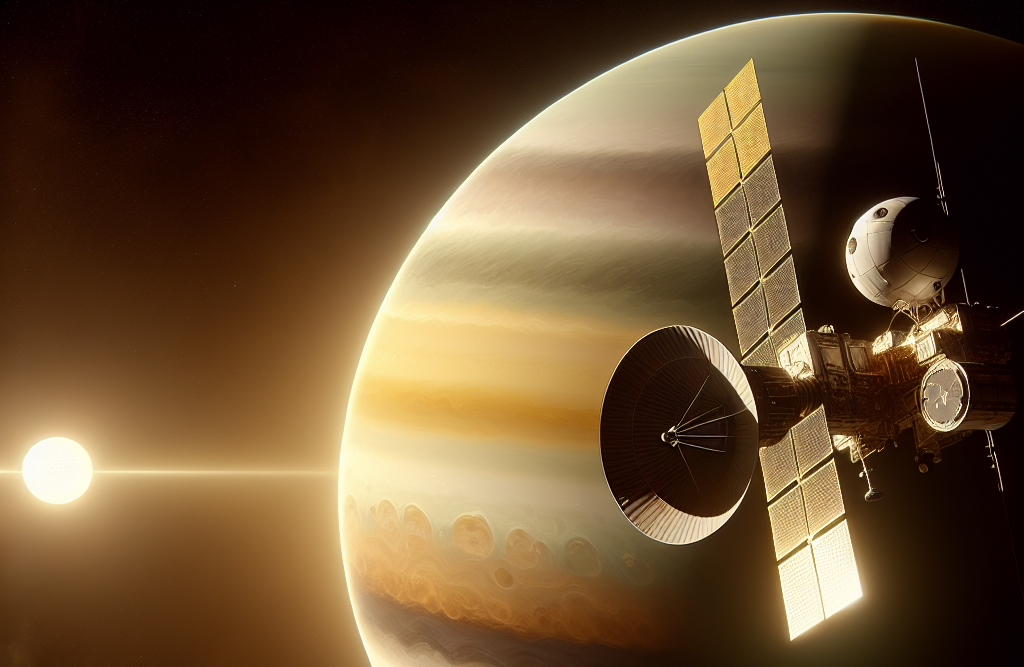
Oleg Sedykh, Chief Designer of Venus exploration projects at JSC "NPO Lavochkina," stated that many technical solutions used on "Venera-9" and "Venera-10" are still relevant today. The spacecraft were equipped with spheres for protection against overloads, braking shields, and periscopes with quartz illuminators, which allowed the cameras to transmit panoramic images of the planet's surface. Orbital modules were also used for the first time as repeaters to accelerate data transmission to Earth.
The data obtained in 1975 on the composition of the atmosphere, pressure, temperature, and cloud cover of Venus became the basis for designing new spacecraft and instruments. The data helped refine the design of modern video equipment and the scientific modules being created, which will allow the future mission to study the evolution of Venus's atmosphere and possible analogies with Earth.
An important outcome of the "Venera-9" and "Venera-10" missions is that the ability to transmit a "picture" even in the most extreme conditions was demonstrated
These achievements show that half a century of experience is still critically important for modern and future interplanetary research.
Read more on this topic:
- "Venera-D": the first domestic mission to the hottest planet in the solar system will be sent as part of the national project
- To be launched in ten years: the Russian mission "Venera-D" is postponed
- Space in the long drawer: Russian missions to the Moon and Venus have been postponed
Never miss our newsAdd this site to your preferred sources to see us more oftenAdd on Google

















