Roscosmos cosmonauts Sergey Kud-Sverchkov and Sergey Mikaev, during a spacewalk, dismantled a cassette from the "Ekran-M" experiment equipment on the "Nauka" module. The device is designed to utilize the advantages of space vacuum in creating high-purity semiconductors, said the project's chief designer, head of the laboratory at the A.V. Rzhanov Institute of Semiconductor Physics SB RAS, Alexander Nikiforov.
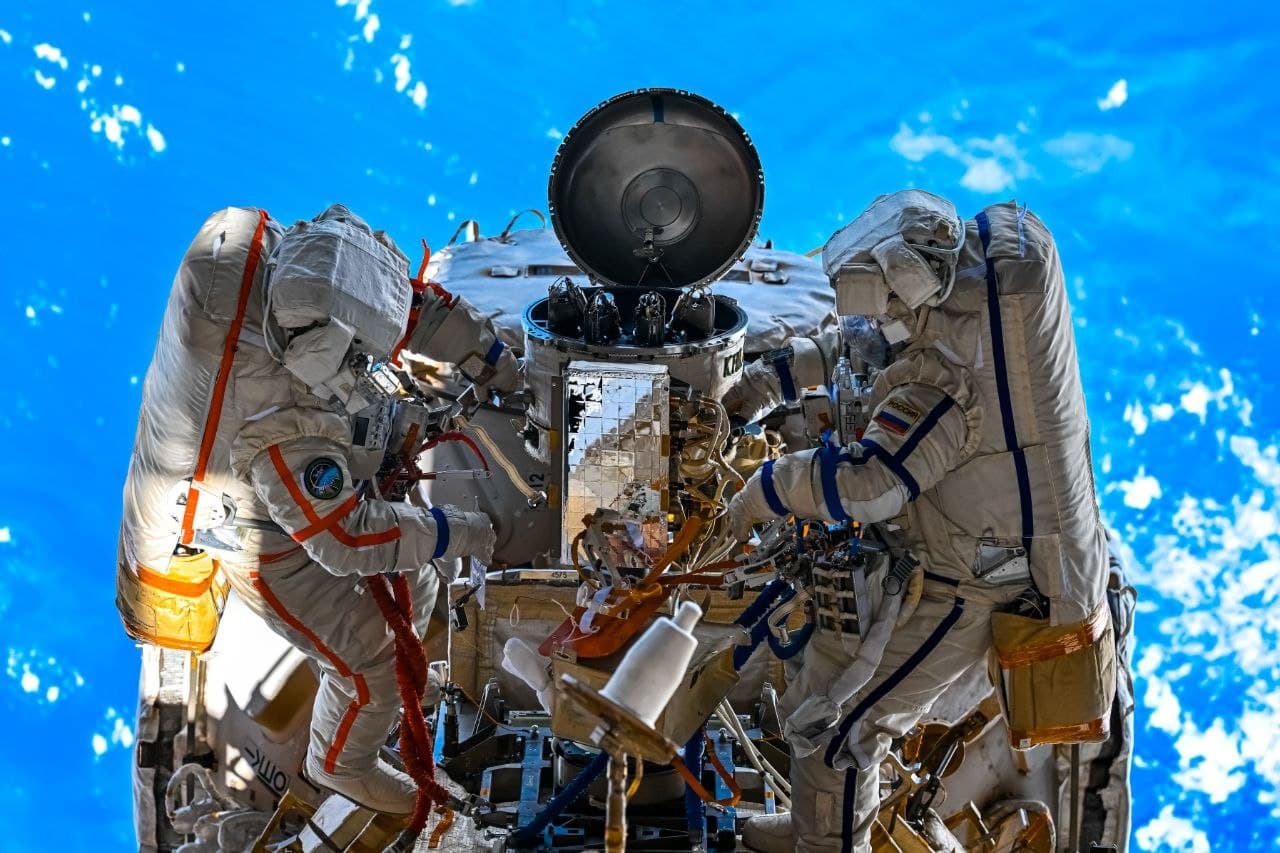
According to Nikiforov, the initially planned stages of the experiment can now be considered complete. The cassettes with the obtained materials will return to Earth with the cosmonauts in July 2026. After that, scientists will begin analyzing the grown structures. Diagnostics, processing, and analysis of the data will take about six months.
In Russia, this was the first time the molecular beam epitaxy method was tested in open space. The results will provide new data for the development of condensed matter physics and the synthesis of semiconductor heterostructures.
Negotiations are currently underway regarding a possible continuation of the project. According to Nikiforov, documentation is being prepared for the production of two more cassettes – this time with germanium substrates. However, this is still just a project, and a final decision on its implementation has not yet been made.
Read more on the topic:
Never miss our newsAdd this site to your preferred sources to see us more oftenAdd on Google