Translated with AI from the Russian original.
Specialists from Tomsk Polytechnic University, together with colleagues from institutes of the Siberian Branch of the Russian Academy of Sciences and Novosibirsk State University, have developed a new method for producing thermal protective coatings for aircraft engine parts and gas turbines. The technology is designed to extend the service life of components operating in extreme temperature conditions.
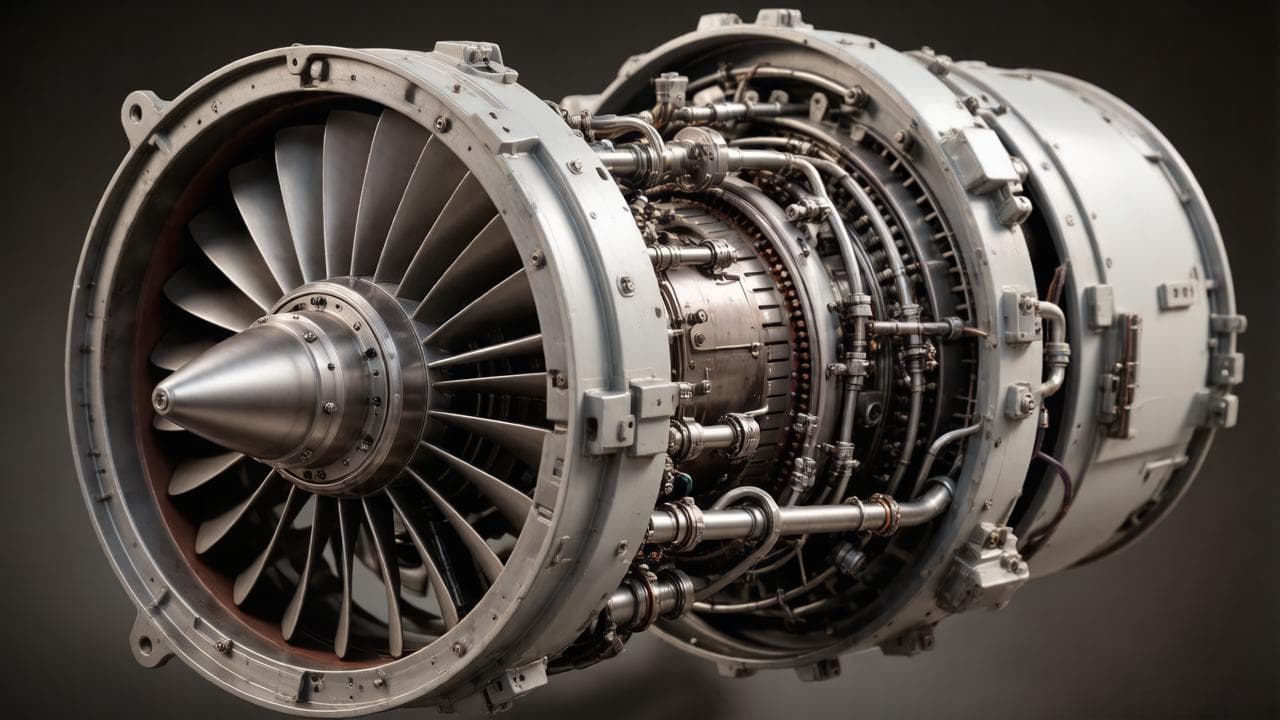
The most common protective material today, zirconium dioxide stabilized with yttrium oxide, is effective only up to 1200 degrees Celsius. Over time, it cracks and peels off. Siberian scientists have proposed a replacement: a complex oxide based on strontium, aluminum, niobium, and oxygen (SAN material).
The coating is applied by plasma spraying without prior synthesis of solid powder. This allows for the production of thin and uniform layers. By adjusting the balance of metals in the solution, the properties of the coating can be controlled. The more SAN material, the higher the strength and thermal insulation. The more amorphous phase, the more the thermal stress and wear behavior change.
Tests have shown that the new coatings have a high coefficient of thermal expansion, as well as increased corrosion and wear resistance. The researchers plan to further optimize the technology to achieve maximum coating uniformity and improve their performance in real engines and turbines. The development is being carried out within the framework of the Ministry of Education and Science's "Priority-2030" program (national project "Youth and Science").
Read more on the topic:
Never miss our newsAdd this site to your preferred sources to see us more oftenAdd on Google

















