The total capacity of all trains in the Moscow Metro and the Moscow Central Circle has exceeded 18 million passengers per day. For comparison: in 2010, this figure was 12.5 million. This reserve of carrying capacity is ensured by three factors: the growth of the metro network, a large-scale renewal of rolling stock, and a reduction in the interval of movement to 90 seconds on popular lines during peak hours. This was reported by the capital's Department of Transport. Since 2010, the share of new trains has increased from 13 to 80%. The fleet has been updated on the largest lines, and new branches, including the Big Circle Line and the Troitskaya Line, are fully equipped with modern trains.
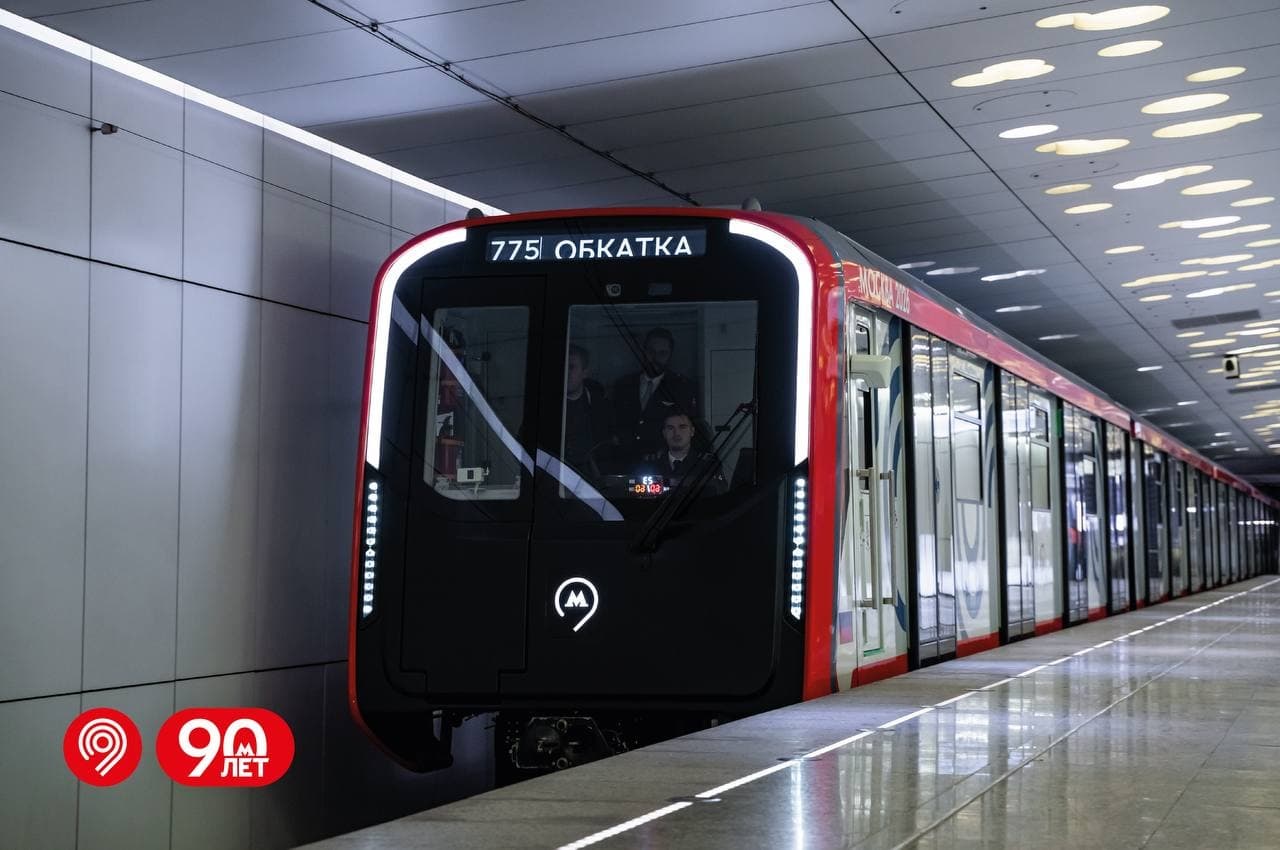
New Moscow-2024 and Moscow-2026 Trains: Capacity up to 1500 People
A key contribution to the increase in carrying capacity is made by Russian-made trains of the latest generations. The Moscow-2024 and Moscow-2026 models can accommodate up to 1500 passengers. This was made possible thanks to the through passage throughout the train, the increased width of the doorways, and the optimized layout of the cabin. The new trains use asynchronous traction motors, which provide smoother acceleration and regenerative braking, which reduces energy consumption by 30–35% compared to previous generation trains.
Technical parameters of Moscow-2024/2026 trains:
- Passenger capacity of one train — up to 1500 people;
- Doorway width — 1600 mm (20% wider than in older models);
- Through passage throughout the train;
- Asynchronous traction drive with recuperation;
- Climate control system with air disinfection;
- USB-chargers and information screens in each car.
Network Growth and 90 Second Interval
Since 2010, the Moscow Metro has grown by more than 150 km of new lines. The opening of the Big Circle Line (BCL) with a length of 70 km made it possible to redistribute passenger flows and relieve the central radial directions. On popular sections (Sokolnicheskaya, Zamoskvoretskaya, Kaluzhsko-Rizhskaya lines, BCL), the interval of movement during peak hours is reduced to 90 seconds — this is the minimum time provided by modern interval control systems.
The share of new trains has reached 80%, which means that out of 10 trains on the line, 8 are modern, with high reliability and energy efficiency. The fleet has been completely updated on all major lines, including the Circle, Kaluzhsko-Rizhskaya, and Tagansko-Krasnopresnenskaya lines. New branches (BCL, Troitskaya) are initially equipped exclusively with Moscow-2024 and Moscow-2026 trains.
Read more materials on the topic:
- Mini-robots for the first time in the Moscow Metro: the right bypass tunnel was completed at the Dostoevskaya Circle Line
- "Eternal" batteries for trains are being tested in the Moscow Metro by Transmashholding
- The first domestic unmanned metro train "Moscow-2026" has started test runs
Never miss our newsAdd this site to your preferred sources to see us more oftenAdd on Google