Translated with AI from the Russian original.
Military personnel of the electronic warfare (EW) units of the Baltic Fleet practiced tactics and methods of covering military facilities from drone attacks in the Kaliningrad region during exercises. This was reported by the press service of the Ministry of Defense.

EW units stationed in the Kaliningrad region practiced covering military infrastructure facilities from attacks by unmanned aerial vehicles of the "enemy" during exercises.
EW crews also practiced the use of anti-drone guns.
The Baltic Fleet emphasized that the soldiers fully completed the training tasks to cover command posts and control points from UAV attacks by a mock enemy.
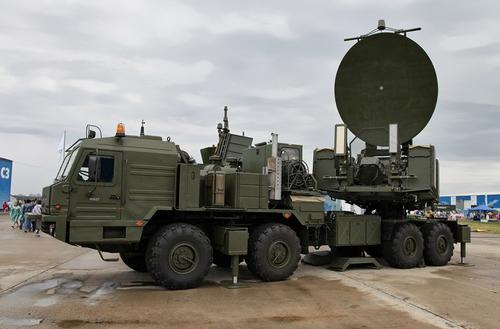
Military expert Andrei Mitrofanov noted that the emergence of FPV drones controlled via fiber optic cable"zeroed out" existing EW equipment.
Earlierwww1.ru wrote that Russia has developed a unique version of the EW system "Tarakan". The system is equipped with an automatic control unit "Dronoskop-4R" to suppress UAVs on approach.
Read on the topic:
The Russian Navy received 30 warships and submarines in 2024
Unique footage of the process of hardening aircraft propellers has appeared: it takes up to 30 hours
Not afraid of dirt: the capabilities of the latest T-72B3M with a V-92S2F diesel engine have been revealed
Never miss our newsAdd this site to your preferred sources to see us more oftenAdd on Google

















