Exactly 55 years ago, on April 19, 1971, the USSR launched the world's first long-term habitable orbital station "Salyut-1", but the crew of "Soyuz-10" could not get inside due to the jamming of the docking mechanism: the maneuvering engines were not turned off before contact, the rod was skewed, and the locks did not close.
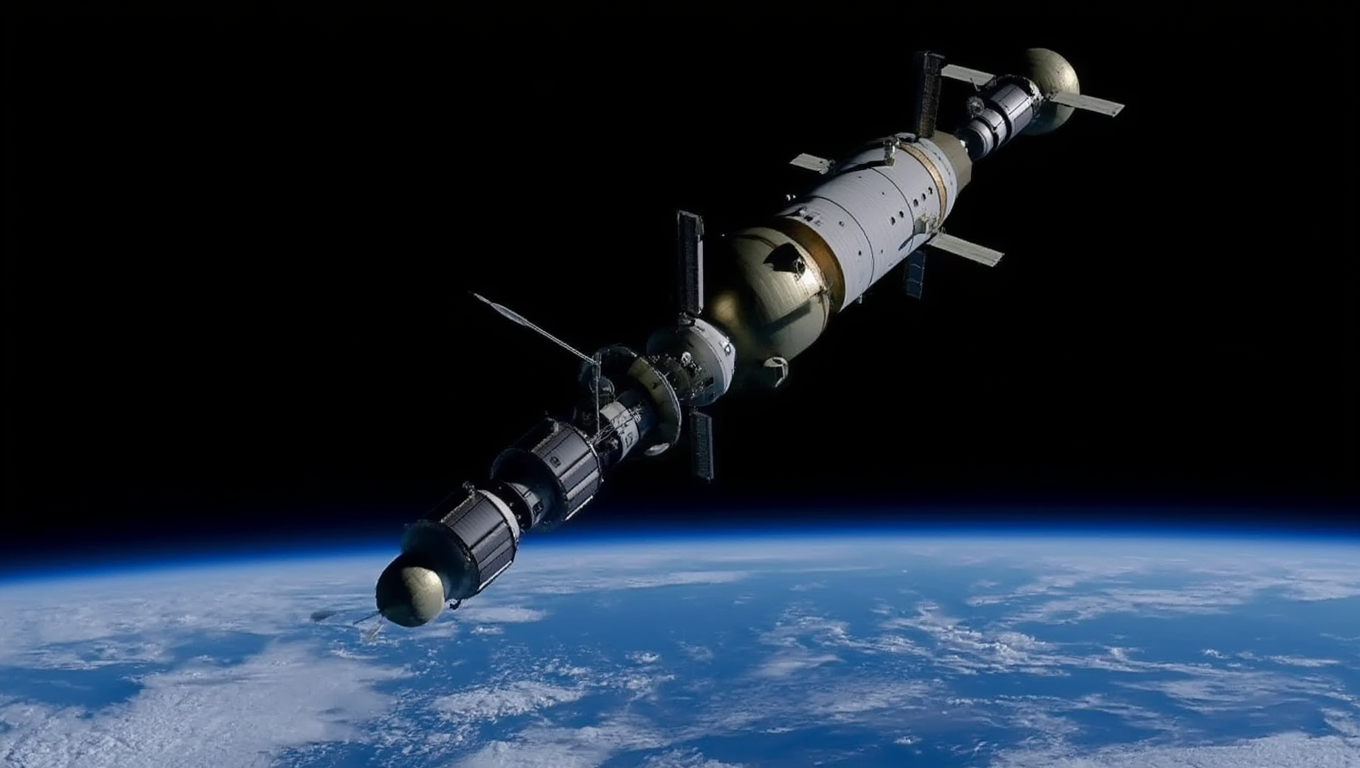
This launch was the result of many years of work by Soviet designers, who adapted the frame of the military station "Almaz" for civilian scientific tasks. The development was carried out in a highly competitive environment with the American "Skylab" program, so engineers had to quickly refine the docking, life support and scientific equipment.
The station began to be assembled in early 1970, and the final adjustments were made at the cosmodrome - this made it possible to meet the schedule and launch the object by the tenth anniversary of Gagarin's flight, although due to technical delays, the launch was postponed by a week.
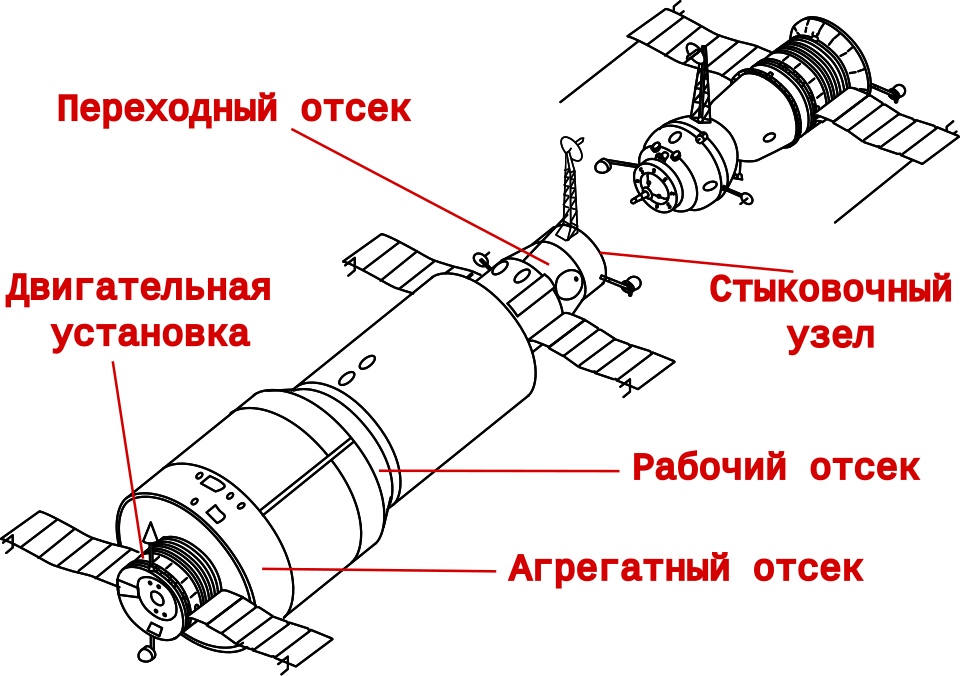
The design of "Salyut-1" included five main compartments: a transfer node with a single docking port, a main working compartment four meters in diameter, two auxiliary modules, and a scientific unit with the "Orion-1" ultraviolet telescope.
Inside the sealed zone with a volume of almost 100 cubic meters, control panels, air and water regeneration systems, chemical batteries and thermal control radiators were placed. Outside - four unfolding panels of solar batteries with a total area of 28 square meters.
The program was managed by Kerim Kerimov, and key decisions on the layout were made by specialists from TsKBM.
The station, weighing more than 18 tons, became the base for all subsequent Soviet orbital complexes, including "Mir" and the "Zvezda" module of the ISS.
On April 23, 1971, "Soyuz-10" with Vladimir Shatalov, Alexei Yeliseyev and Nikolai Rukavishnikov went to it.

Docking was planned for the 83rd-84th orbit around the Earth, but the approach process took place in a tense atmosphere: the "Igla" automatic guidance system was unstable, the distance readings "jumped", and there was chaos in the control center due to the presence of high-ranking guests and urgent instructions from Moscow. The designers recorded contradictory telemetry data, but could not quickly intervene in the automatic mode.
By 4:47 a.m., the crew had completed manual mooring, but the screw mechanism of the docking unit stopped without bringing the locks into full contact - there was a gap of 90 millimeters. According to the most likely version, the failure occurred due to a defect in the flight algorithm: the control system did not turn off in time, the maneuvering engines jerked the ship sharply, and the rod was jammed by a large lever. The mechanism was fully automatic, so the astronauts could not manually fix the malfunction.
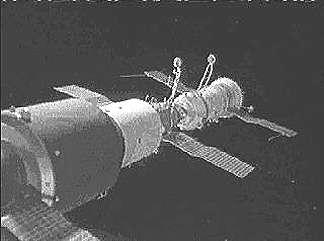
The emergency scenario involved shooting the rod with pyrotechnic cartridges, but this would make it impossible for other ships to dock with "Salyut" in the future.
Engineer Vsevolod Zhivoglotov suggested an unconventional solution: find a device with a Ш28/201 connector in the living compartment and close the 30th and 34th contacts to disrupt the operation of the automation and release the grip. After four hours of manipulation, the crew managed to undock, but they never managed to enter the station. The astronauts began preparing for an unscheduled return to Earth.
Despite the failure, the launch of "Salyut-1" became the start of the Soviet orbital station program. Just a month and a half later, the crew of "Soyuz-11" successfully docked with the station and spent a record 23 days on board.
The unsuccessful experience of the first docking made it possible to refine the approach algorithms, increase the reliability of docking units and practice actions in emergency situations.
Read more on the topic:
Never miss our newsAdd this site to your preferred sources to see us more oftenAdd on Google