Translated with AI from the Russian original.
In the late 1980s, the Tupolev Design Bureau began work on a project that was to become a symbol of a new era in Russian civil aviation. The first drawings of the Tu-334 were shown in 1989. The aircraft was positioned as a narrow-body short- and medium-range airliner, created based on the larger twin-engine Tu-204.
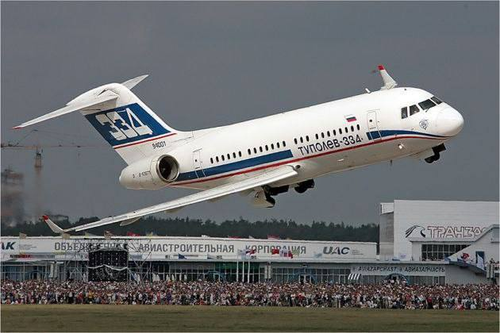
The aircraft was conceived as a modern replacement for the outdated Tu-134 and Yak-42, which by that time had already exhausted a significant portion of their service life and were morally behind world trends.
The collapse of the Soviet Union and the ensuing financial crisis seriously complicated the development. Work progressed slowly, but the project was not curtailed thanks to the persistence of the Design Bureau team. In 1995, a full-size model was presented at the Moscow Air Show, which aroused great interest.
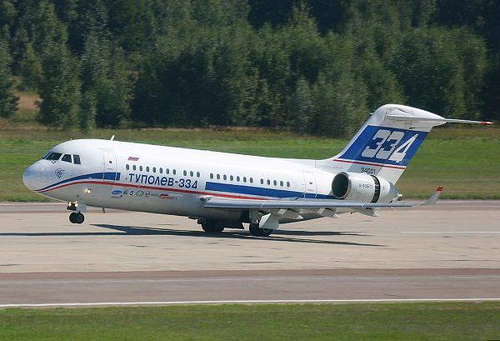
Four years later, in February 1999, the first experimental Tu-334 made its successful flight and confirmed the correctness of the chosen engineering solutions.
The aircraft's design combined elements borrowed from the Tu-204 and new solutions adapted to a more compact format. The characteristic T-tail, the rear location of two D-436T1 engines, and updated avionics made the Tu-334 modern and promising for its time. It was designed to carry up to one hundred passengers, had a cruising speed of about 820 kilometers per hour, and a range of about three thousand kilometers. It received certification in Russia in 2003, significantly later than the first flight - a delay that turned out to be one of the key factors in the future failure.
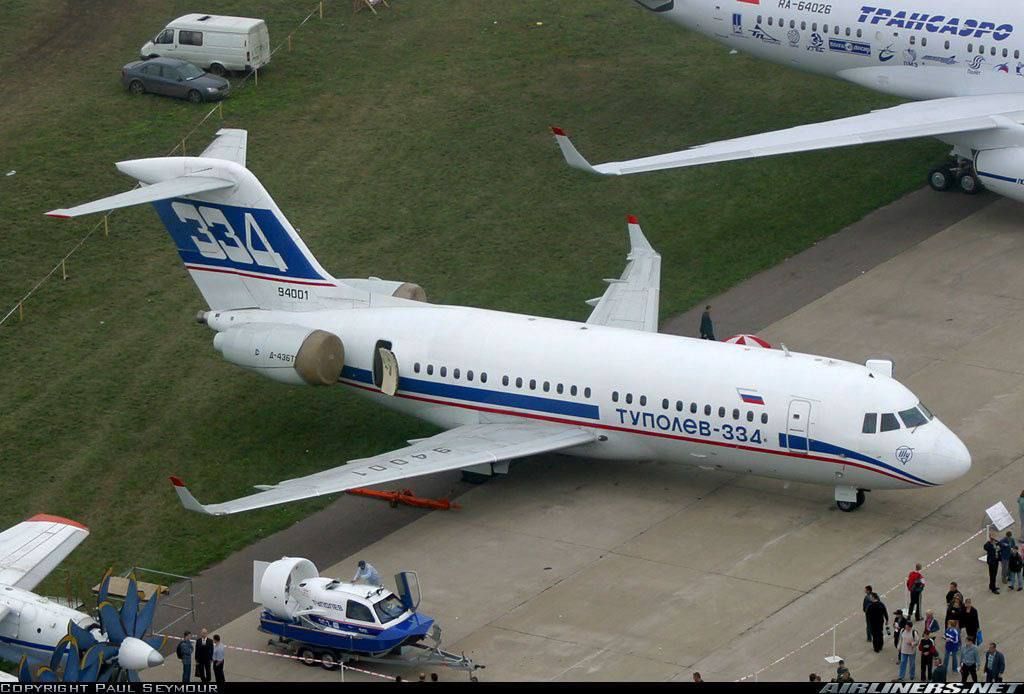
In the process of development, several modifications were proposed: from the basic passenger version to extended, cargo-passenger, and even a project for an aircraft operating on natural gas. According to industry representatives, by the mid-2000s, many Russian and foreign carriers expressed interest in the aircraft, and the total portfolio of intentions was estimated at hundreds of potential aircraft.
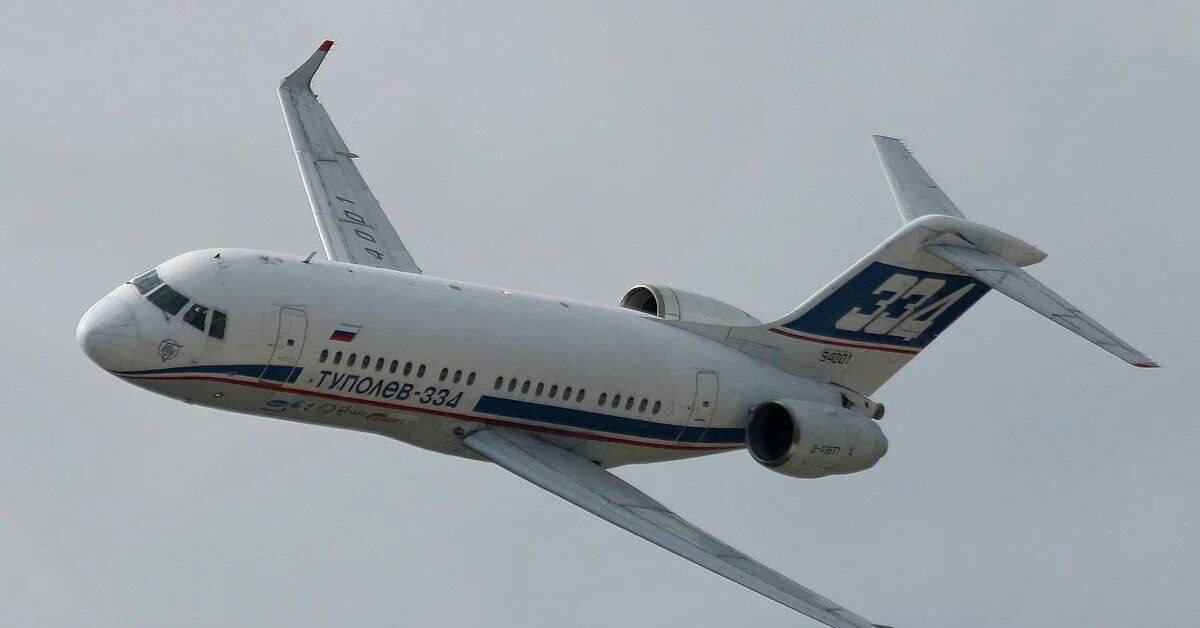
However, the fate of the project changed dramatically after the formation of the United Aircraft Corporation. The new industry strategy focused on the Sukhoi Superjet 100 and the future MC-21, while the Tu-334 was recognized as structurally outdated and less promising compared to competitors. As a result, mass production was never launched: factories did not receive firm orders, and project funding was gradually reduced to nothing. In total, two flight copies were built - and both remained at the level of experimental operation.
The story of the Tu-334 is an example of how a combination of economic shocks, protracted certification, and strategic restructuring of the aviation industry can negate the fate of a technically sound aircraft.
Earlier,www1.rureported thatcivil aviation in Russia is awaiting "Ilyushins", the fleet of cargo aircraft is under threat of complete disappearance.
Read also materials on the topic:
- Transition to "digital": the process of bringing Russian aircraft MC-21 and SSJ 100 to the market will be faster
- Il-114-300 is undergoing tests on schedule: preparations are underway for deliveries in 2026
- Russian flight schools plan to accept the Tango aircraft in 2027
Never miss our newsAdd this site to your preferred sources to see us more oftenAdd on Google

















