In the Primorsky Territory, the crews of the Bastion coastal missile systems repelled a training attack by a mock enemy from the sea. The maneuvers were organized by units of the Pacific Fleet as part of the planned combat training of coastal troops.
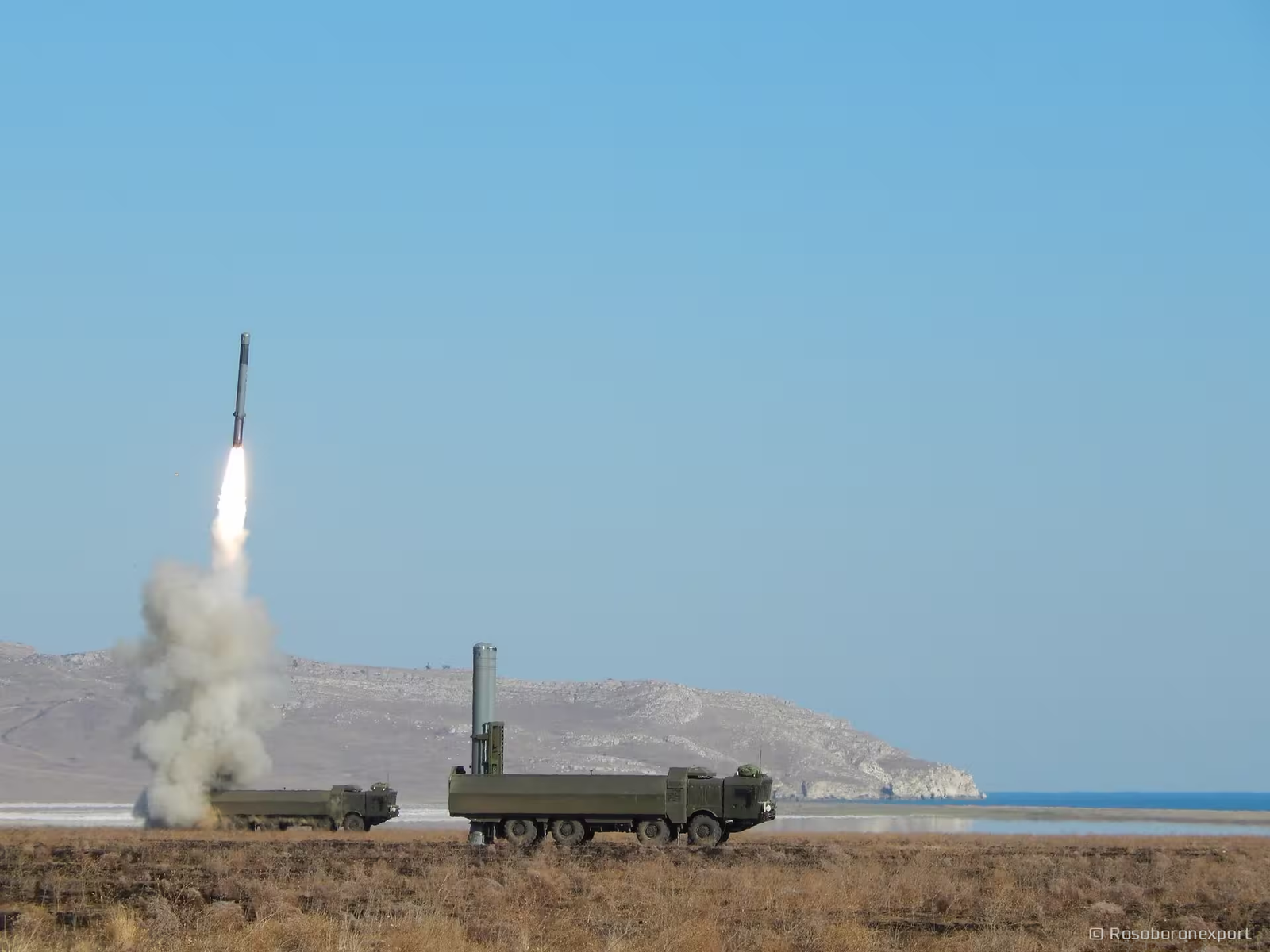
According to the scenario of the exercises, a group of mock enemy sent landing ships to the coast of Primorye to land marines and seize a bridgehead. The "Bastion" crews practiced reaching the starting positions, target detection algorithms, and performing electronic missile launches at surface targets in the Sea of Japan. After simulating a missile strike, the crews quickly changed firing positions - this allowed them to practice evading a retaliatory strike and maintain the complex's combat readiness.
The press service of the Pacific Fleet noted that the event was held in accordance with the combat training plan, and all stages of the exercise were completed as normal.
Electronic launches used during training allow simulating real combat scenarios without expending missile ammunition, but with full preservation of the tactical logic of the complex's use.
"Bastion" is a Russian coastal missile system (CMS) created to protect the coast from surface ships of various types: from aircraft carriers to landing ships. The main armament of the complex is the P-800 Onyx anti-ship supersonic missile, which in the export version is known as Yakhont (SS-N-26 Strobile in the NATO classification).
Main characteristics of the complex:
- Launch range: along a combined trajectory — up to 300 km, along a mixed trajectory — up to 120 km
- Maximum missile flight speed: 750 m/s
- Missile flight altitude: on the cruise section — up to 14,000 m, on a low-altitude trajectory — 10–15 m
- Missile launch weight: 3000 kg, with a transport and launch canister (TLC) — 3900 kg
- Warhead weight: 200 kg
- TLC dimensions: length — 8900 mm, diameter — 720 mm
- Control system: inertial navigation system, radio altimeter, radar homing head
- Engines: launch-acceleration stage — solid propellant, cruise engine — ramjet engine on T-6 kerosene
- Interval between missile launches during salvo firing from one launcher: 2.5 s
- Time to bring the complex into combat readiness from the stowed position: less than 5 minutes
- Maximum distance of the launcher from the coast: 200 km
- Autonomous combat duty: up to 5 days
- Assigned service life: 10 years.
Read more on the topic:
Never miss our newsAdd this site to your preferred sources to see us more oftenAdd on Google

















