Specialists at the Moscow Aviation Institute (MAI) have devised a new technology for designing and manufacturing the skin, empennage, and fuselage of a drone. Thanks to it, the weight of the product can be reduced by one third without any loss of strength. This was reported by the university's press service.
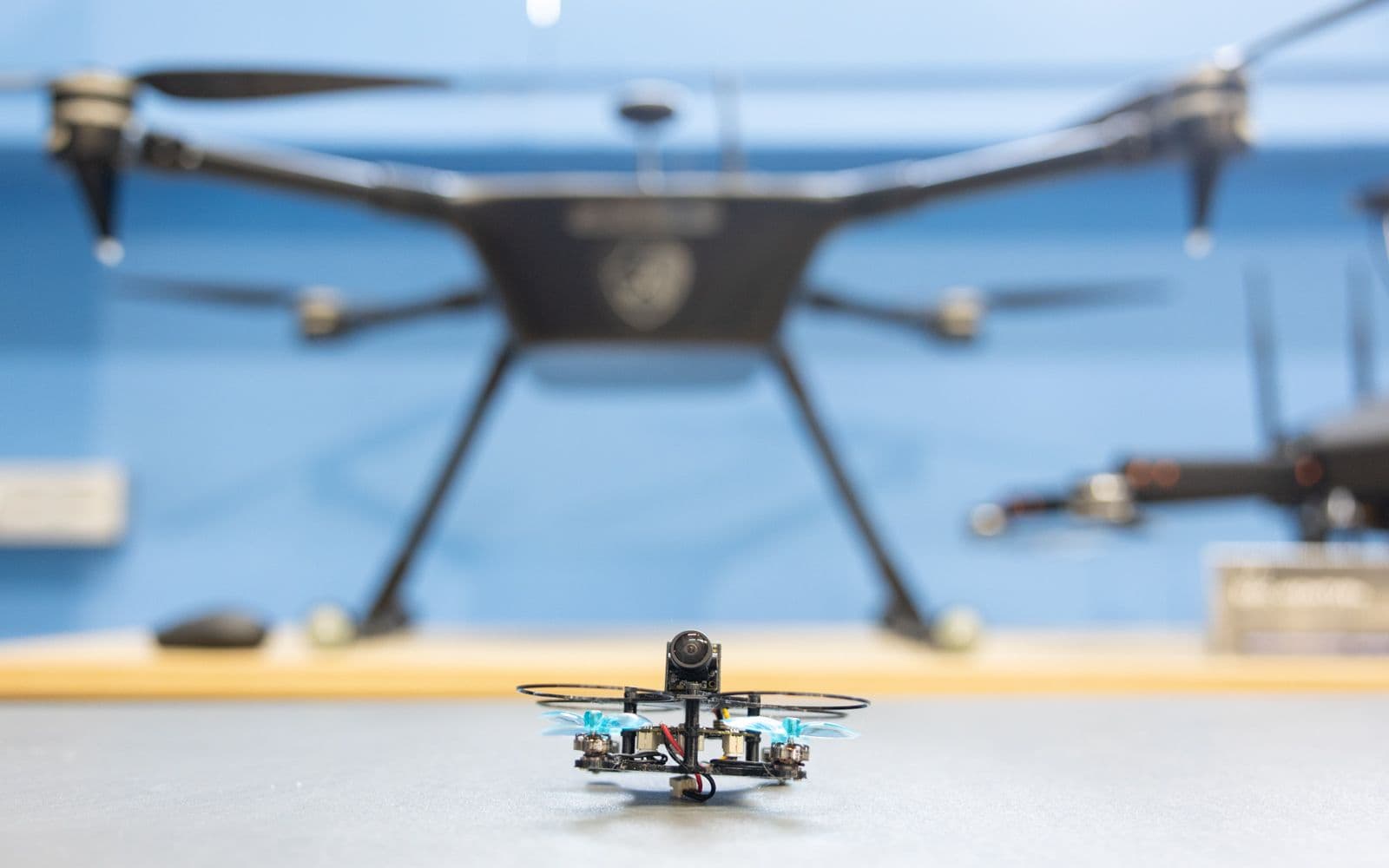
One of the project's authors, Ilya Kotovich, explained that traditional design uses a uniform honeycomb core filler for three-layer panels (the material is used in the skin and other UAV elements). It fills the entire part, resulting in \"overengineering\", and the resulting structure turns out heavier than necessary.
We propose adapting the filler so that the size of each cell corresponds to the load acting on it.
This makes it possible to reduce the weight of the finished product.
The MAI project includes:
- software package with calculations
- optimization of the filler in sandwich panels
- production of a prototype using a 3D printer
The technology was tested on a photopolymer composite (it hardens under UV radiation). MAI engineers were able to reduce the structure's weight by 20-30%.
In addition, their development reduces the time needed to create the finished product. The technology can be used not only in the UAS field, but also in the aviation and rocket and space industries.
Read more materials on the topic:
- A \"smart\" swarm of drones is being created at MAI: unmanned aircraft will distribute roles themselves and replace those that drop out
- The service life of spinal implants made of titanium nickelide has been increased by MAI engineers
- Has no analogues in the world: an automatic machine for wire laying has been created at MAI
Never miss our newsAdd this site to your preferred sources to see us more oftenAdd on Google