Translated with AI from the Russian original.
According to Military Watch Magazine, the Russian Su-34 fighter-bomber has the greatest range among modern tactical combat aircraft, approaching strategic bombers in endurance.
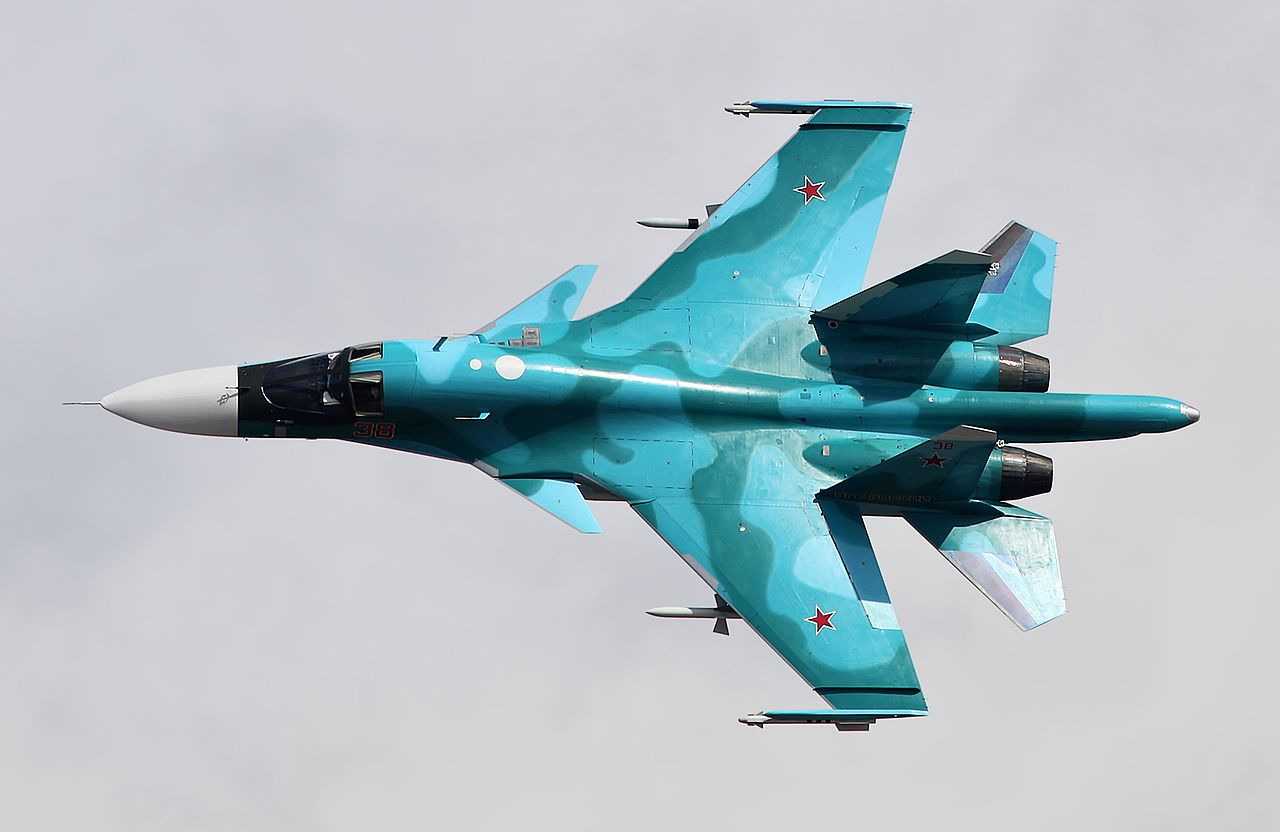
The Su-34 was developed from the Soviet Su-27 air superiority fighter, which throughout the 20th century was the longest-range fighter in the air forces of the USSR and other countries. The new fighter is about 50 percent heavier than the Su-27, which was already the largest fighter in service with Russia.
On internal fuel, the Su-34’s ferry range is about 4,800–5,000 km (versus 4,000 km for the Su-27). This almost reaches the intercontinental threshold of 5,500 km.
When using three PTB-3000 external fuel tanks (3,000 liters each), the range increases to about 8,000 km — enough for a nonstop flight from Moscow to Washington. The calculation was made for an optimal flight profile without weapons and maneuvers, taking into account the additional fuel consumption caused by the weight and drag of the tanks.
The publication emphasizes the advantage of Russian aircraft: a large internal fuel volume allows them to avoid external tanks in most missions, preserving aerodynamics, thrust-to-weight ratio, and the number of weapon hardpoints.
In a combat configuration with a full payload, intercontinental flights are impossible, the publication notes, but the Su-34 retains operational value at long distances thanks to the integration of reconnaissance, electronic warfare, and targeting pods.
The prospect of installing the AL-51F engine (from the Su-57) could significantly improve fuel efficiency and bring the Su-34 closer to full-fledged strategic missions with intercontinental range.
Read more on the topic:
- FAB-500T aerial bombs for the Su-34 and Su-35S were seriously modernized
- \"Fantastic batch.\" Russian Aerospace Forces received a huge number of Su-34 and Su-57 fighters
- The Su-34 and Su-35S warned of a new threat: Mirage received new MICA missiles
Never miss our newsAdd this site to your preferred sources to see us more oftenAdd on Google

















