Translated with AI from the Russian original.
The American military publication The War Zone drew attention to a little-known feature of the Russian Mi-28 attack helicopter — the presence of a small internal compartment in the tail section of the fuselage, which may be intended primarily for rescuing downed pilots.
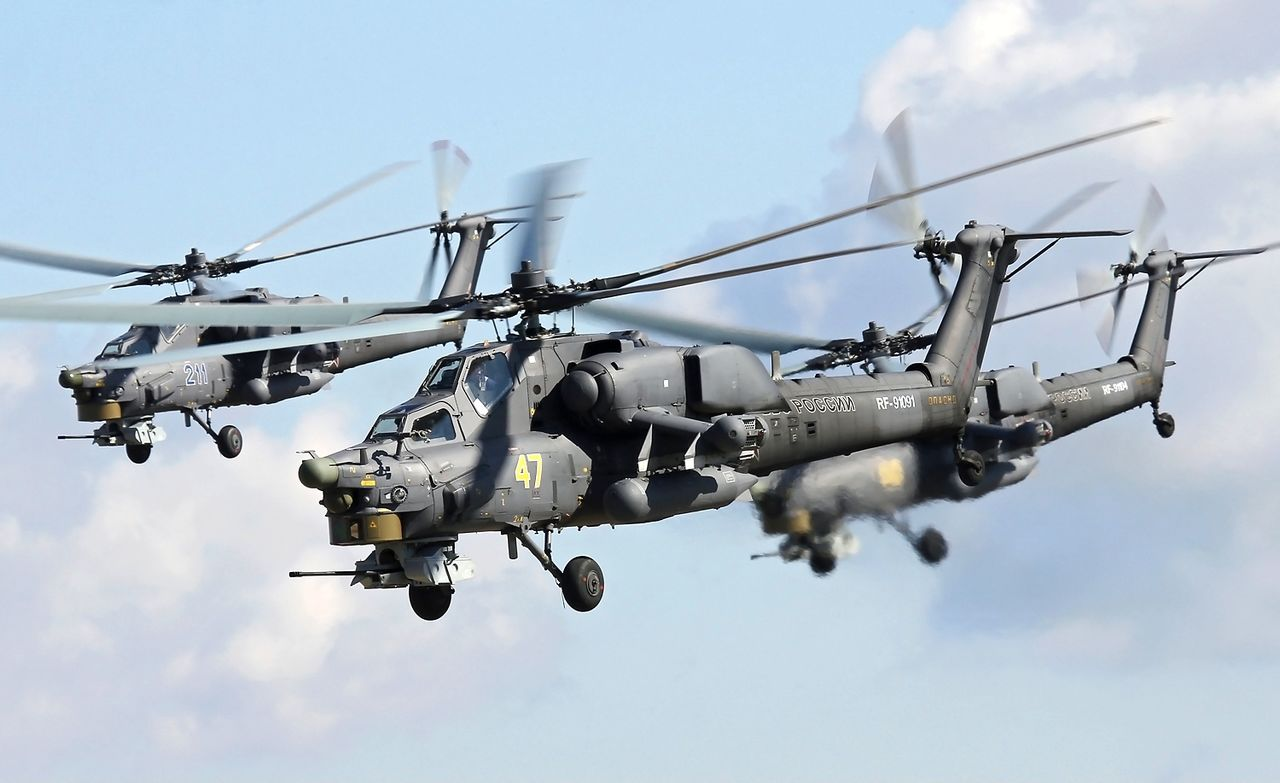
Unlike the multipurpose Mi-24 "Crocodile," which has a full-fledged cargo-passenger cabin in the middle section of the fuselage capable of accommodating up to 8–10 troops or several wounded personnel, the Mi-28 was originally designed as a purely attack aircraft without transport functions.
Nevertheless, the designers provided a compact auxiliary space in the tail section. It is accessed through a small door less than one meter high. The compartment is cramped, partially occupied by equipment, and not comfortable, but it can accommodate 2–3 people with minimal convenience. In combat conditions, when the priority is saving lives, such limitations are not considered critical, the publication notes.
Thanks to this solution, any Mi-28 is capable of independently carrying out search-and-rescue missions without involving additional aircraft. In addition, the compartment could theoretically be used for the covert delivery or evacuation of a small number of saboteurs behind enemy lines.
Read more materials on the topic:
- Mi-28 \"Night Hunter\": unique maneuverability helps deceive air defense systems
- Russia delivered Mi-28 \"Night Hunter\" combat helicopters to Iran for the first time
- Russia's aviation has been reinforced with the latest-version \"Alligators\" and \"Night Hunters\"
Never miss our newsAdd this site to your preferred sources to see us more oftenAdd on Google

















