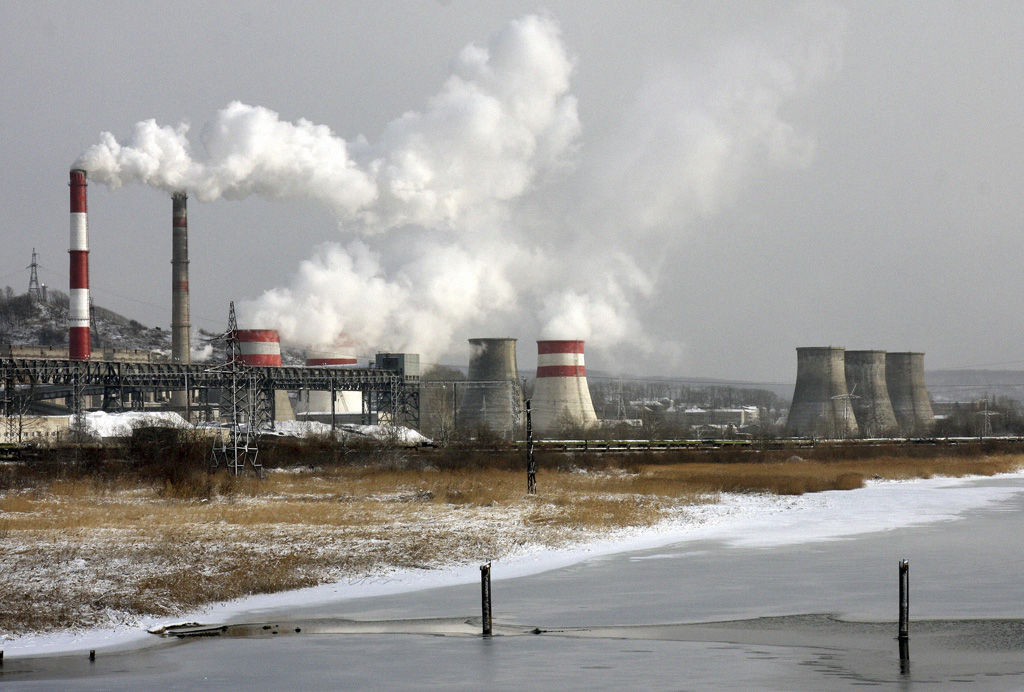
A Russian-Chinese team of scientists has developed a technology for producing a "green coagulant" — polyaluminum chloride — from fly ash generated by coal-fired power plants. The development by specialists from GEOKHI RAN, UrFU, MSU, and Shanghai's Tongji University solves two problems at once: the disposal of hazardous waste and the production of a high-demand reagent for water treatment.
The essence of the method is simple. The ash is first ground for 60 minutes, destroying the strong structure of the mineral mullite, then calcined with ammonium sulfate at 450 °C for 30 minutes. This makes it possible to extract 78.6% of the aluminum — the basis of the future coagulant. Calcium, which interferes with purification, is removed by adding calcium hydroxide. More than 95% of the calcium precipitates as anhydrite, which can be used for the production of construction materials.
A nanopowder of aluminum hydroxide is obtained from the purified solution, then treated with hydrochloric acid and converted into polyaluminum chloride (PAC). This is a modern coagulant: in water, it "collects" small dirt particles into large flocs that are easily removed by filters. PAC is more effective than traditional reagents, forms less sludge, and is safer for health.
More than 20 million tons of fly ash are generated annually in Russia. The new method turns an environmental problem into a resource, reducing dependence on primary aluminum raw materials and making water treatment more sustainable.
Read more articles:
- Modernization of thermal power plants and state district power plants in Russia: capacity growth of 474 MW will occur by 2029
- Engineers developed a "pipe-crawling" robot for diagnosing and repairing old utility lines
- A competitor to the metallurgical company Mechel will be built in Bashkiria for 10 billion rubles
Never miss our newsAdd this site to your preferred sources to see us more oftenAdd on Google