Translated with AI from the Russian original.
This last weekend of May, the second full moon of the month, known as the "blue" Moon, will be visible. It can be seen with the naked eye, but ordinary binoculars will help to distinguish large dark plains, known as lunar maria, as well as craters on the surface of Earth's satellite.
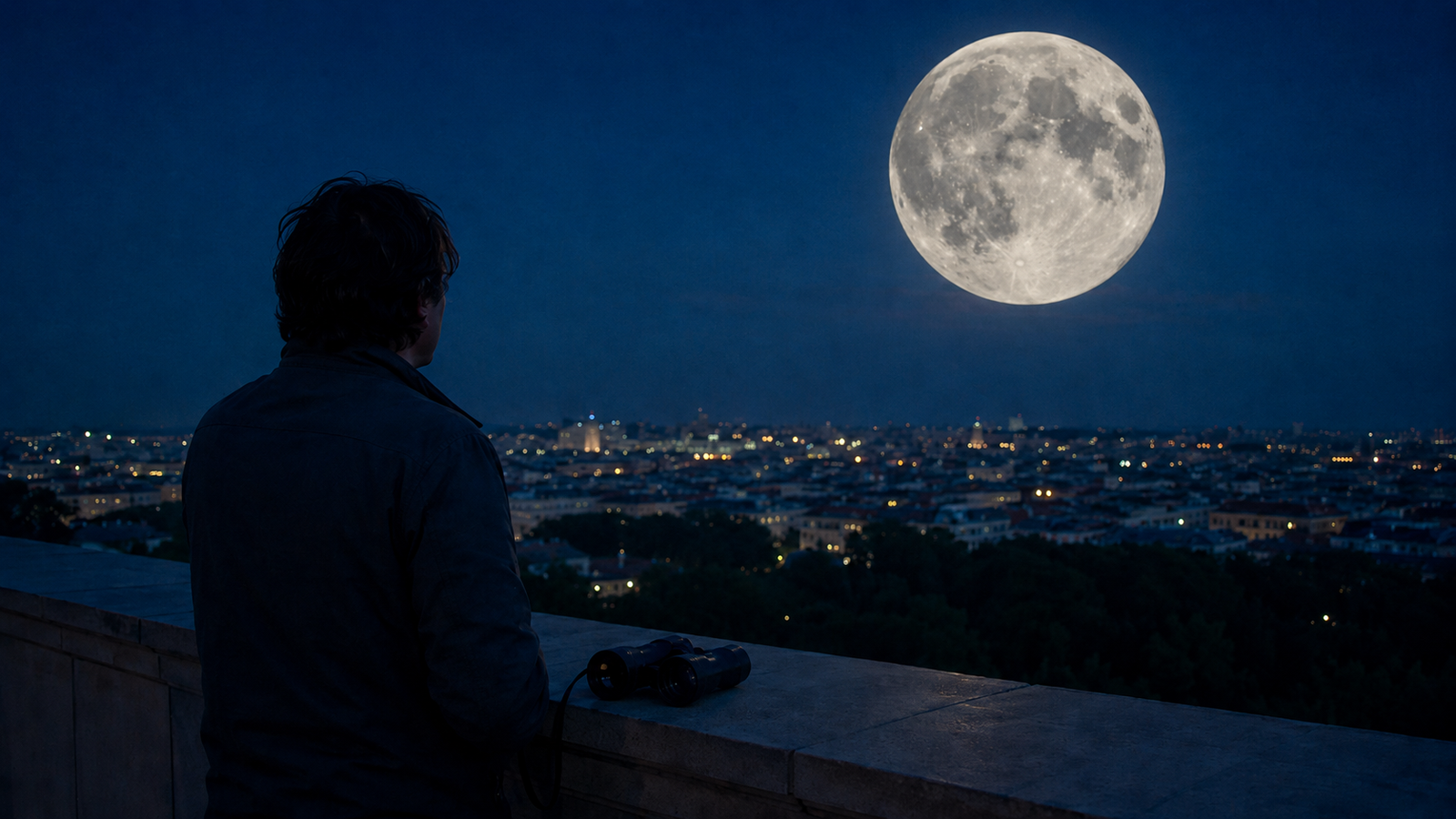
According to Yevgeny Burmistrov, an astronomy expert from Perm Polytechnic University, the full moon on May 31 will coincide with the Moon passing through the farthest point of its orbit from Earth. Because of this, the lunar disk will appear approximately 5–5.5% smaller than usual and about 10.5% dimmer.
The best viewing conditions will be over two nights – from May 30 to May 31 and from May 31 to June 1. The specialist advises against using a telescope: during the full moon phase, sunlight falls almost vertically on the Moon's surface, so shadows are barely formed, and the relief appears flatter. Additionally, high brightness can cause discomfort to the eyes.
The name "blue" Moon is not related to the color of the satellite. This term refers to the second full moon in a single calendar month. This happens because a lunar month lasts about 29.53 days, while a calendar month has 30 or 31 days. Therefore, once every few years, an "extra" full Moon appears in one month.
Read more on the topic:
Never miss our newsAdd this site to your preferred sources to see us more oftenAdd on Google

















