The single-crystal blades of modern Russian aircraft engines PD-8 and PD-14 are not stamped or machined from a blank, but literally grown. The secret of the production process of the most important parts was revealed at the United Engine Corporation (part of Rostec).

Turbine blades can operate in temperatures above 2000 K. Previously, the metal for them was forged and stamped, then they began to cast them, but such blades collapsed.
The breakthrough came when engineers learned to control the growth of the crystal, creating a part with a single crystal lattice, UEC noted.
The process resembles high-tech "gardening". In a vacuum furnace, the metal is first melted, and a single-crystal seed is placed at the base of the mold. Then the mold is slowly pulled out of the hot zone, and the crystal begins to grow upward, forming the future blade.
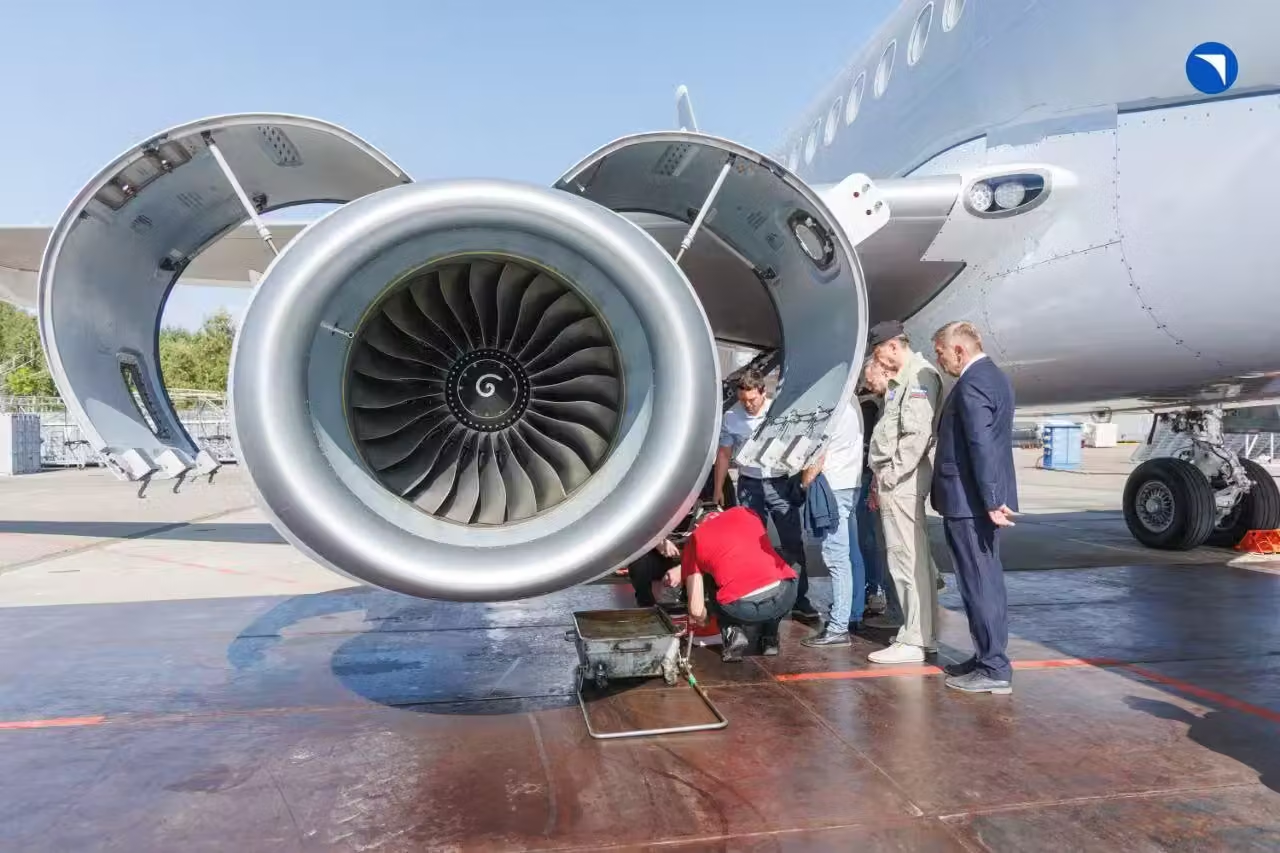
The "UEC-Saturn" enterprise uses an accelerated version of the technology - the mold is additionally immersed in a bath with liquid aluminum, which dramatically increases cooling and allows more precise control over crystal growth.
The result is a blade that is one large crystal. No weak spots, huge resource and the ability to work in the heart of the most modern PD-14 and PD-8 engines.
Earlier, UEC conductedan experiment on blade failure in the PD-8. The power plant housing withstood the impact of the part and proved its integrity.
Read more materials on the topic:
- PD-8 engine for SJ-100 was filled with tons of water: it continued to work
- Honored pilot criticized the re-equipment of Superjet with PD-8 engines: a new aircraft needs to be built
- Former Sukhoi designer urged not to pass off the PD-8 engine as technological progress
Never miss our newsAdd this site to your preferred sources to see us more oftenAdd on Google

















