Translated with AI from the Russian original.
What was considered practically eternal waste may be able to be recycled with the help of living organisms. Russian scientists at the A. N. Severtsov Institute of Ecology and Evolution (IPEE RAS) have discovered that the larvae of the darkling beetle Ulomoides dermestoides are able to literally eat polystyrene - the plastic from which packaging, containers and disposable tableware are made.
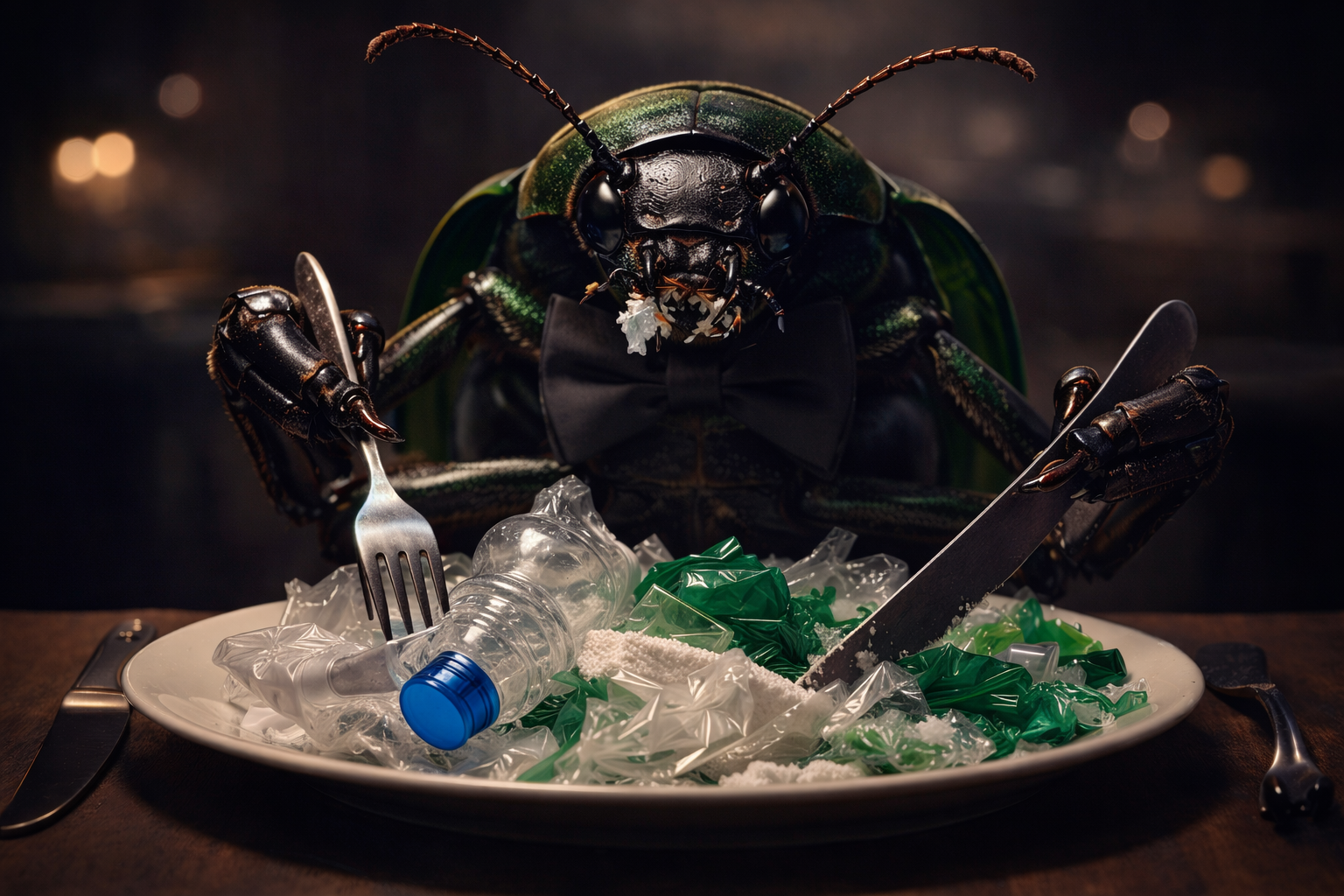
In the laboratory, scientists offered insects pieces of expanded polystyrene of various sizes. The result was unexpected: the larvae began to actively damage and destroy the material.
During the experiment, some plastic samples lost up to 68% of their mass.
The smaller the piece of polystyrene, the faster it was destroyed. However, the most noticeable effect appeared only after four weeks, when the larvae reached the older stage of development.
Plastic damage occurs due to the work of powerful insect jaws, which literally gnaw at the surface of the material.
Some of the plastic is processed inside the body, and undigested fragments are excreted in the form of microplastics.
At the same time, scientists did not find a toxic effect of polystyrene on the larvae themselves.
Researchers believe that such mechanisms could form the basis of new plastic recycling biotechnologies that will help reduce the scale of plastic pollution on the planet.
The work was supported by the Russian Science Foundation.
Read more on the topic:
Never miss our newsAdd this site to your preferred sources to see us more oftenAdd on Google

















