Major players in the cargo transportation market - PEK and Evocargo - have analyzed the economic impact of implementing autonomous cargo transportation. According to their research, a complete transition to unmanned technologies will reduce fuel costs by up to 7%, shorten delivery times by at least 10%, and increase the continuous operation time of trucks to seven hours per day.
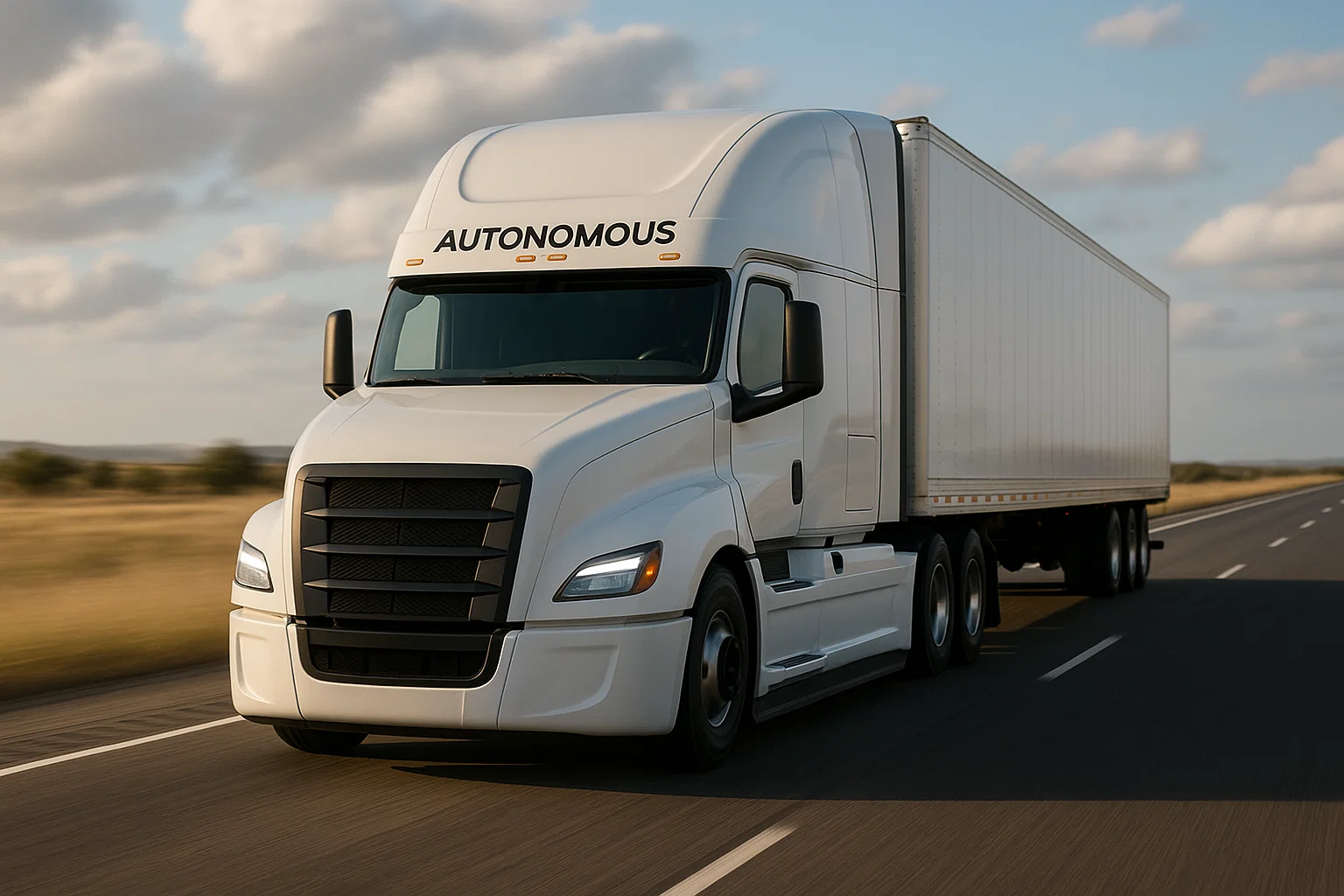
Modern autonomous control systems take into account many factors: from speed and weather conditions to road conditions and the approach of special vehicles. According to Alexander Dyakonov, Director of Transport Logistics at PEK, algorithms independently select the optimal driving mode, minimizing unnecessary costs. Currently, there is still a test driver in the cabin, but in the future, when the need for it disappears, companies will be able to additionally save 2-7% on heating and ventilation of the cabin. In addition, unlike conventional vehicles, a robotic truck does not need to take a break every 4.5 hours in accordance with the requirements for work and rest.
Companies highlight several key advantages:
- Reduced wear of parts (up to 5%) due to smoother control.
- Increased travel time (44% more than the 16-18 hours of ordinary drivers).
- Reduced delivery times (for example, the journey from Moscow to Yekaterinburg can be reduced from two days to one).
Evocargo provides specific figures: a diesel truck on the Moscow - St. Petersburg route (700 km) spends about 310 liters of fuel, which at current prices costs about 22 thousand rubles. An electric truck on the same distance consumes energy for 14 thousand rubles, which makes it a more profitable option.
Vasily Zhukov from Evocargo notes that the term "unmanned transport" is not entirely accurate - it is more correct to speak of "highly automated vehicles" (HAV), since the current wording does not reflect the real level of autonomy.
For the development of autonomous transportation, it is important to come to an understanding of the terms. A more correct name seems to be "highly automated vehicle" (HAV). At the moment, the concept of "unmanned transport" does not take into account the level of automation and may imply remote control.
Currently, autonomous transportation in Russia operates in an experimental mode, regulated by government decrees. However, for the mass implementation of technology, a full-fledged federal law is needed that clearly defines areas of responsibility, algorithms for actions in emergency situations, and insurance mechanisms.
Read more materials on the topic:
Aeroflot Sets Course for 80 Million: Revised Company Strategy Aims to Increase Passenger Traffic by 2030
The Road to Automation: KAMAZ Introduces Robotic Systems for the Production of Key Parts
Artificial Intelligence Smart Engines Will Check the Reliability of Counterparties for Cargo Transportation
Never miss our newsAdd this site to your preferred sources to see us more oftenAdd on Google

















