The Russian military has a new target – the "Flamingo" cruise missile. In a comprehensive article, "The First Technical" discusses which anti-aircraft missile systems (SAM) are capable of effectively combating this target and what characteristics enable them to achieve this result.

What is the "Flamingo"?
According to open sources, the "Flamingo" is a long-range cruise missile with a range of up to 3000 km. It is capable of flying at extremely low altitudes – from 50 m, carries a warhead weighing up to one ton, with a wingspan of about 5 m.
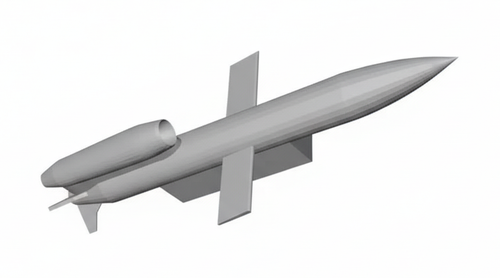
Of course, flying at such an altitude complicates detection, but the dimensions and aerodynamic design make the "Flamingo" noticeable to modern medium and long-range radar stations.
The product has an impressive reflecting surface of about 0.7 – 1 sq. m, which facilitates its detection against the ground by the onboard "Zaslon-AM" complexes of MiG-31BM interceptors at a distance of 170 – 180 km and by the N035 "Irbis-E" radars of Su-35S fighters at a distance of up to 210 km.
S-300 and S-400 "Triumph" – Long-Range Echelon
The S-300 and S-400 complexes mainly form the long-range air defense contour, and they are capable of tracking dozens of objects simultaneously.
Depending on the version, the complexes engage aerodynamic targets at a distance of up to 150–200 km and at altitudes from minimum to tens of kilometers.

For the "Flamingo", such systems pose a threat even on approach to the defended area. Powerful long-range detection radars identify the target in advance, after which the crews select the optimal missile – depending on the altitude and speed of flight.
S-350 "Vityaz" – Focus on Fire Density
The S-350 "Vityaz" is designed to replace part of the previous generation of complexes and focuses on multi-channel capability. One battery is capable of simultaneously engaging a large number of targets, including cruise missiles.

The complex is equipped with modern missiles with active homing heads. This increases the probability of hitting low-flying objects, especially in complex jamming environments.
That Same Soviet "Buk" – Mobile Medium-Range Interceptor
The first confirmed interception of the "Flamingo" was achieved by the "Buk" SAM system. The complex belongs to medium-range systems and was created to engage aircraft, helicopters, cruise and ballistic missiles.

The main advantage of the "Buk" is complete autonomy. The fire unit crew is capable of independently detecting a target, tracking it, and launching a salvo without a command post. In the context of a massive raid, this will reduce reaction time.
The "Buk" was created with real combat conditions in mind, where every second decides the outcome of the battle. Today, it remains one of the most reliable elements of Russian air defense.
Modern modifications fix targets at a distance of up to 140 km and engage them at a distance of 45–70 km. The time from detection to launch is about 20 seconds. The anti-aircraft missile of the complex develops a speed of up to 1200 m/s, which allows intercepting maneuvering objects and targets moving at low altitude.
"Tor-M2" and "Pantsir" – Close Range
At short distances, "Tor-M2" and "Pantsir" operate. These systems cover the positions of more long-range complexes and infrastructure objects.
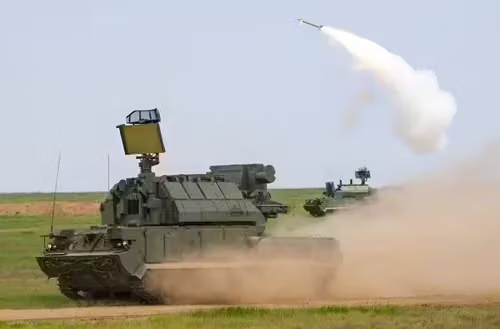
The "Tor-M2" effectively intercepts low-flying targets due to its high reaction speed and ability to track several objects simultaneously. The "Pantsir" combines missiles and artillery, which allows engaging targets at a minimum distance.
Echeloned Defense
The "Flamingo" falls into the area of responsibility of several air defense echelons at once. The long-range contour detects and takes the target for tracking, the medium-range performs the main interception, and the close-range insures the result.
Read more materials:
- Russia has supplied air defense launchers abroad
- Large comparison of S-400 "Triumph" and Patriot: how the Russian system surpasses the American one
- Foreigners will not receive the latest S-500 "Prometheus" SAM system
Never miss our newsAdd this site to your preferred sources to see us more oftenAdd on Google

















