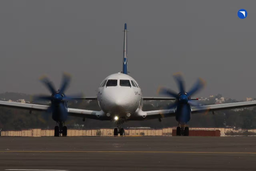
Frequency tests are the last stage before the aircraft takes to the air. They are needed to avoid flutter - dangerous aeroelastic resonant vibrations.
The tests are carried out in three stages:
- study of aircraft vibrations in free flight conditions, with special attention to the connections of units, the quality of assembly, the operation of rudders and ailerons;
- testing of the remote control system, including checking all control paths, sensors, drives and other units;
- testing of the chassis, aimed at preventing the shimmy effect during takeoff and landing, that is, automatic wheel vibrations due to the instability of straight rolling.
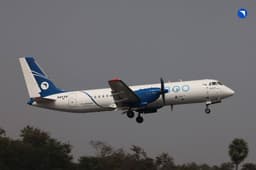
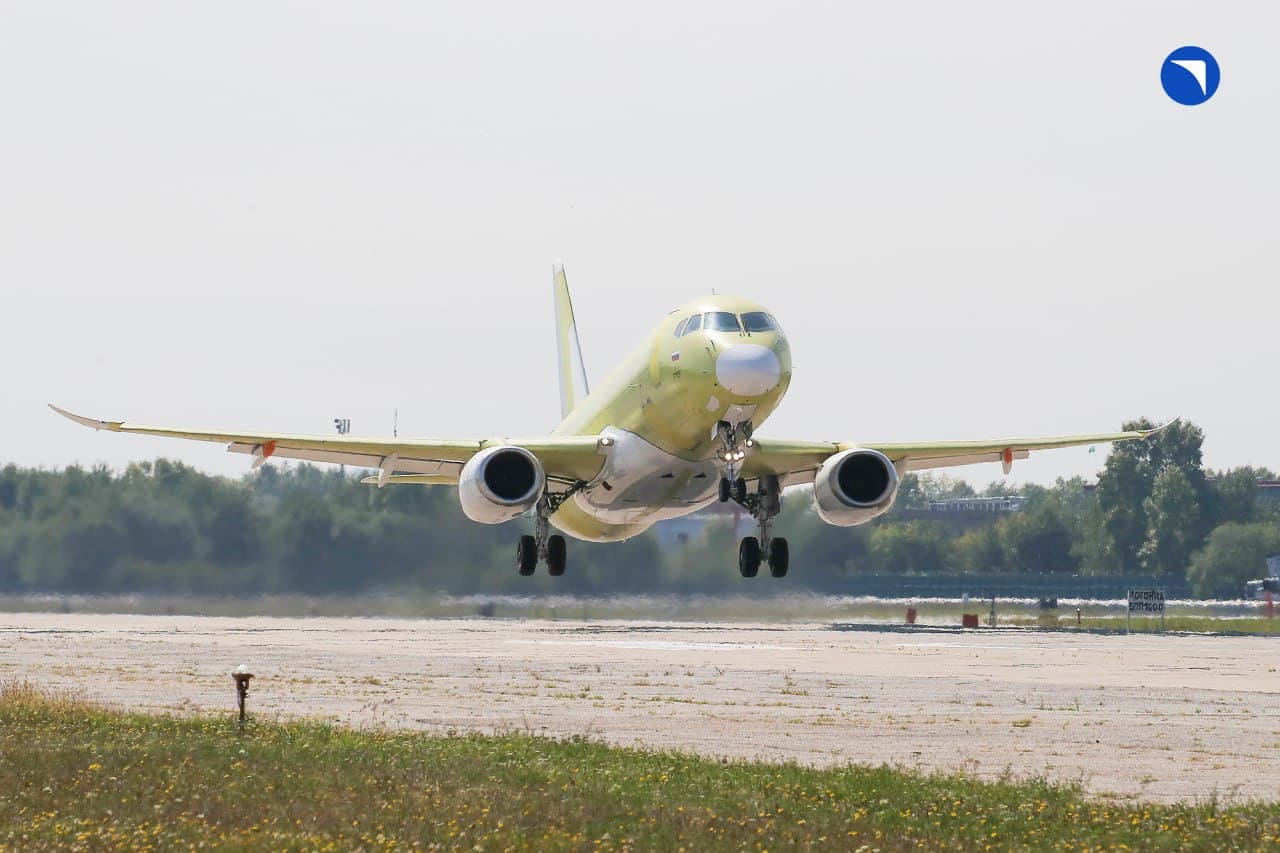
Frequency tests are a prerequisite for aircraft type certification. They guarantee the safety and reliability of the machine in the air - in this case, the import-substituted SJ-100 - in operation. Their prototype of a fully domestic regional aircraft passed in the workshops of the Yakovlev production complex in Komsomolsk-on-Amur by the forces of TsAGI specialists.
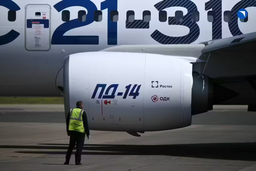
Now the plane is waiting to be sent to the flight test complex of the enterprise, from where it will make its first flight. However, it is currently in standby mode: Russian PD-8 engines are being refined. Certification of the import-substituted SJ-100 has been postponed, it is now scheduled for 2025, and the first deliveries to customers are scheduled for February 2026.
These engines passed bench tests perfectly. But, assaid in June 2024, Konstantin Timofeev, Managing Director of Tupolev JSC, at the stage of testing engines in a flying laboratory,"processes that could not be foreseen on the stand" arose.
Now in Zhukovsky, since the beginning of June, the first sample of the SJ-100 with import-substituted componentsis undergoing certification tests. However, it performs flights on Franco-Russian SaM-146 engines to speed up certification. About thirty flights have already been successfully carried out, the last of whichtested new Russian equipment providing radio communications.
Read materials on the topic:
For aircraft seats and not only: super-strong epoxy resin developed in Russia
Will create aircraft parts weighing up to 20 tons - how the largest gasostatic in Russia works