In mid-June, it became known that Russiaovertook the EU in robotization. Robots have already been introduced at 19% of manufacturing enterprises in the country, while for the EU this figure is slightly less: 16.3%. Anthropomorphic and zoomorphic robots can already be found in Russia in other areas:medicine,trade, the entertainment industry, inscience and education.
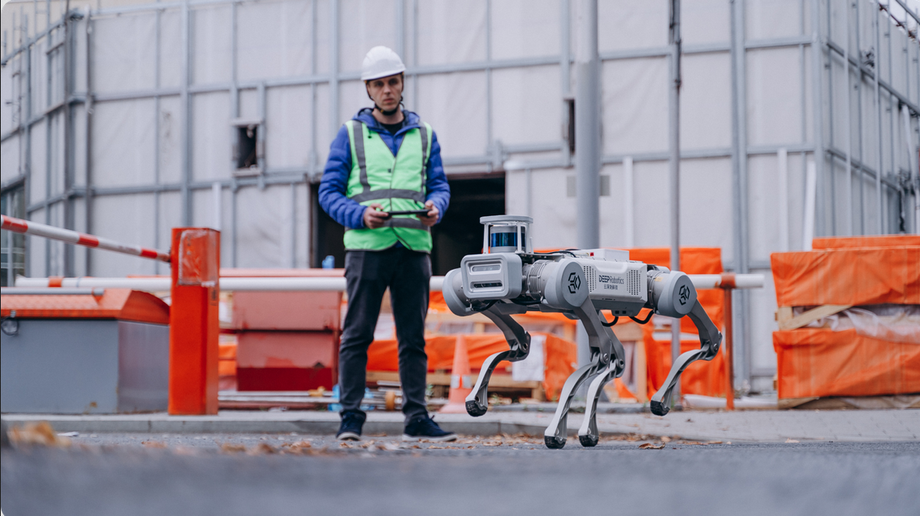
The most famous type of them, perhaps, are robot dogs - they are also called robot dogs or quadrupeds, that is, moving on four limbs. Their finest hour came at the beginning of the year, when they were instructed to perform at the opening and closing of the first KazanGames of the Future.

During the dance at the opening ceremony, one robot dog suddenly turned off, "got tired", which generated many memes and discussions on the Web. He was given the opportunity to show himself again: at the closing, the mechanical friend of man, after much request, danced to Klava Koka.
Where do robot dogs work in Russia?
First of all, they are used in universities and schools for the development of walking robotics. The first quadruped robot developed in Russia appeared in the fall of 2021 at the Moscow State University named after M.V. Lomonosov in partnership with the "Brothers Volt" project. In the fall of 2023, animproved version of this robot dog was presented.
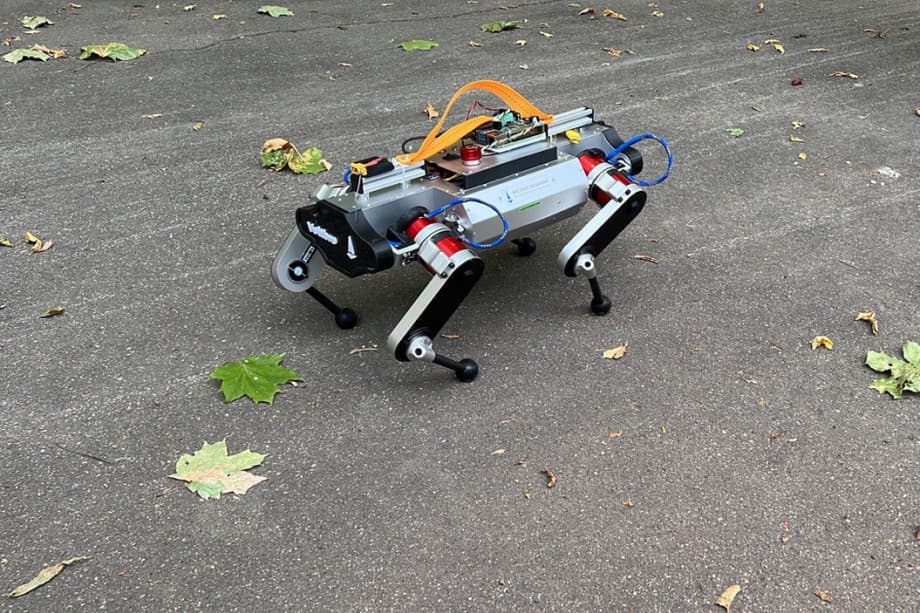
It is controlled by a joystick, can work for 60 minutes without recharging, moves at a trot at a speed of 3.5 kilometers per hour. The Moscow scientist robot dog can give a paw, lie down and get up from any position, recognize walls and obstacles, go up and down stairs, ride an elevator and escalator, and carry the necessary equipment.
Robot dogs are also used on construction sites. Thus, a robot dog with domestic software "Vector", developed by 3Logic Group, can perform geodetic works. Equipment weighing 2.5 kg is hung on the machine. It walks around the construction site, and at this time the equipment continuously scans the space. A 3D model of an object with an area of 2000 square meters can be assembled in just 12 minutes, while a human surveyor will spend about five hours on this. At the same time, the robot dog can work both day and night, and in the conditions of the polar night.
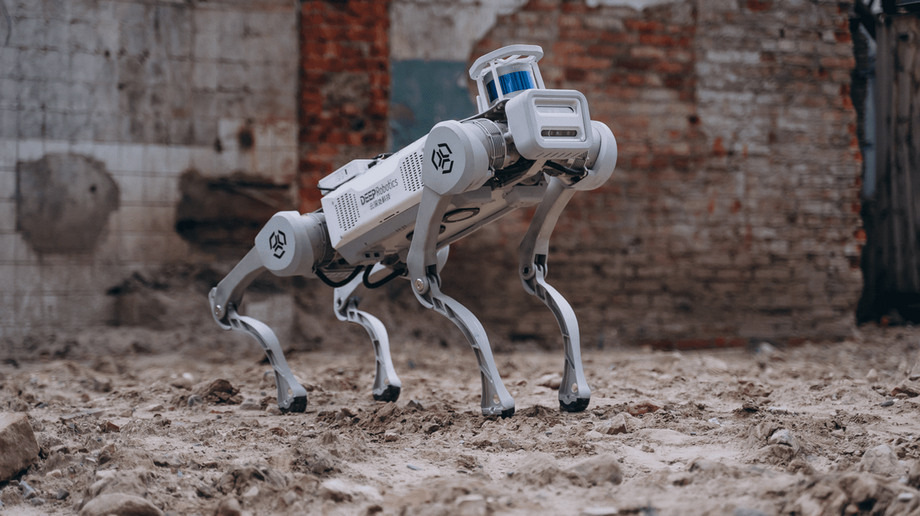
There are also robot dogs that have several specializations at once. In particular, at some Russian refineries, the robot walks around the territory, guards it, detects methane leaks with a gas analyzer, and monitors employees who violate the order and do not wear special clothing. Violations are recorded through sensors and video analytics, and data about them is transmitted to the operator.
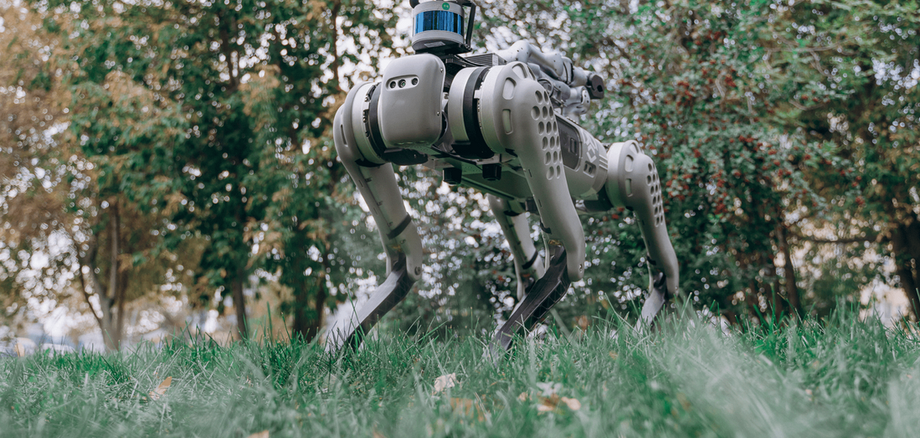
Finally, there is also a robot dog-controller from the same 3Logic Group. It is equipped with a manipulator arm and a camera in order to take readings from sensors and devices at large enterprises and transmit them to the operator. The robot walks around the premises along a given route, and if access to any device is difficult, the operator will find out about it and will be able to correct the situation.
However, in world practice, robot dogs have been considered for almost twenty years for other purposes: as full-fledged participants in military operations and security measures. A number of robot dog manufacturers opposed the use of their products for non-peaceful purposes, but this was unsuccessful.
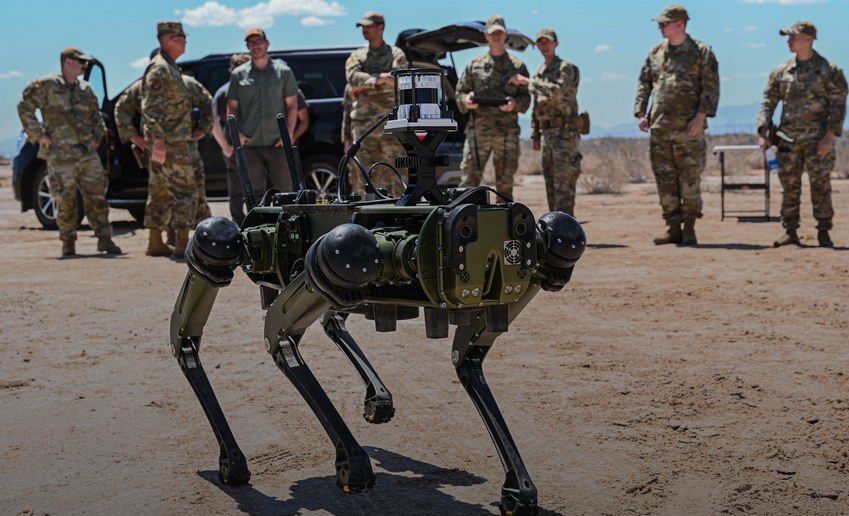
As a result, according to data from open sources, it is known that:
- in the USA - work on creating military robot dogs has been underway since the early 2000s. By order of the US Department of Defense, Boston Dynamics has developed two types of gasoline robot dogs under the BigDog project from 2005. BigDog, and then Aplha Dog LS3, were intended for carrying army cargo up to 180 kg. The third robot dog of this program, Spot, ran on electricity, but could lift only 18 kg. At the end of 2015, the BigDog program was closed, Boston Dynamics is now owned by Hyundai Motor Group, but Spot robots can still be bought for more than 74 thousand US dollars per unit. Later, the American Ghost Robotics designed and released its semi-autonomous electric robot dogs Vision 60. They serve at the US Air Force base Tindall in Florida and at the military space forces base at Cape Canaveral as patrolmen. Robot dogs operate at temperatures from - 40 to + 54.4 degrees Celsius, are equipped with 14 sensors providing a 360-degree viewing angle, and can dive into water to a depth of up to one and a half meters without harm to themselves. Vision 60 can be used in the future for the disposal of explosive objects. Also, this model of robot dog, capable of working up to 3 hours without recharging, is equipped with assault rifles, carbines, and autonomous special-purpose rifles. DronDogs from Asylon Robotics, which connect with a drone hovering in the air above the territory entrusted to them, also serve as guards of American military facilities.
- in countries friendly to the United States, in particular, in Great Britain, Israel, Singapore, American Vision 60 robot dogs are used with the possibility of firing;
- in China - robot dogs of civilian configuration are produced by a number of companies, in particular, Unitree. According to data from open sources, since 2022, this country has been conducting successful experiments to increase the carrying capacity of robot dogs, supplying them with small arms and loitering ammunition. The South China Morning Post noted in March 2024 that as a result of tests, the Chinese military robot dog showed a result comparable to a professional shooter. The shooting was carried out from a 7.62 mm caliber machine gun with a rate of fire of 750 rounds per minute from a distance of 100 meters (the model was not specified in the publication). The article said that such robot dogs from China can carry a load of up to 20 kg, stay without recharging for up to 4 hours and cost about 3 thousand US dollars. It is also known that robot dogs with machine guns have already participated in joint military exercises with the Chinese side at the exercises of Cambodia and China called "Jinlong-2024" ("Golden Dragon-2024").
Are there military robot dogs in Russia?
At the "Army-2022" forum, Russian designers from JSC "Intellect Mashin" stated that they have such a development: a sample of the M-81 robotic complex in camouflage with a grenade launcher.
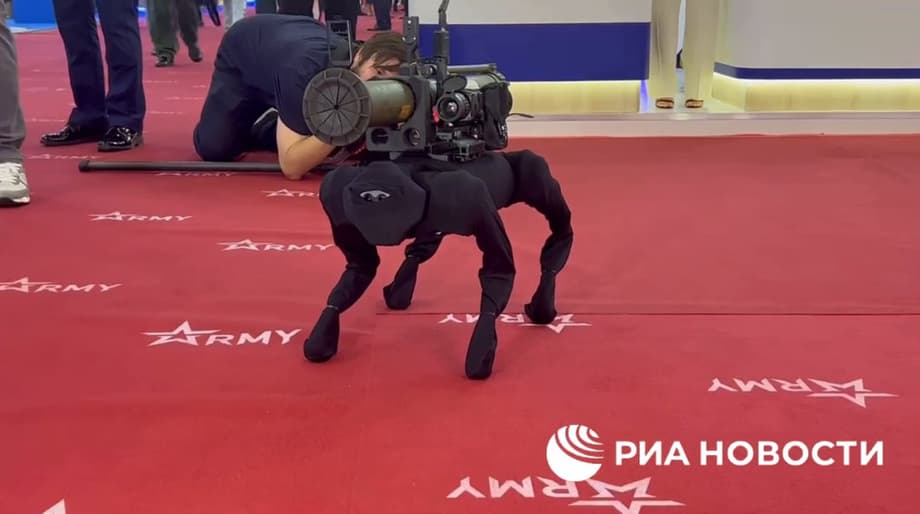
As representatives of the company told RIA Novosti at the time, it was planned to establish the production of this robot dog in Russia on a mass scale. It was noted that the robot is universal: it can be used for peaceful purposes in the emergency zone for reconnaissance, passage through blockages and delivery of medicines. From combat tasks, he is capable of performing tasks of aimed fire, target designation, patrolling and guarding, transporting weapons and ammunition.
However, attentive Russian and foreign journalists later noticed that the Russian M-81 is structurally very similar to the Chinese robot dog-companion Go1 from Unitree Robotic, which is sold on marketplaces such as AliExpress. At the same time, Go1 was very cheap, had a low carrying capacity and was unstable to hacker attacks. Mass production of the M-81 did not happen.
Almost nothing is known about other similar undertakings of Russian scientists and military equipment manufacturers. However, at the same time, a whole range of other robots, related to the performance of reconnaissance tasks, covering, protecting positions with the help of electronic warfare equipment, evacuating the wounded from the front line, delivering ammunition and cargo to the front line, and destroying the enemy, have appeared in the Russian "defense industry" over the past two years.
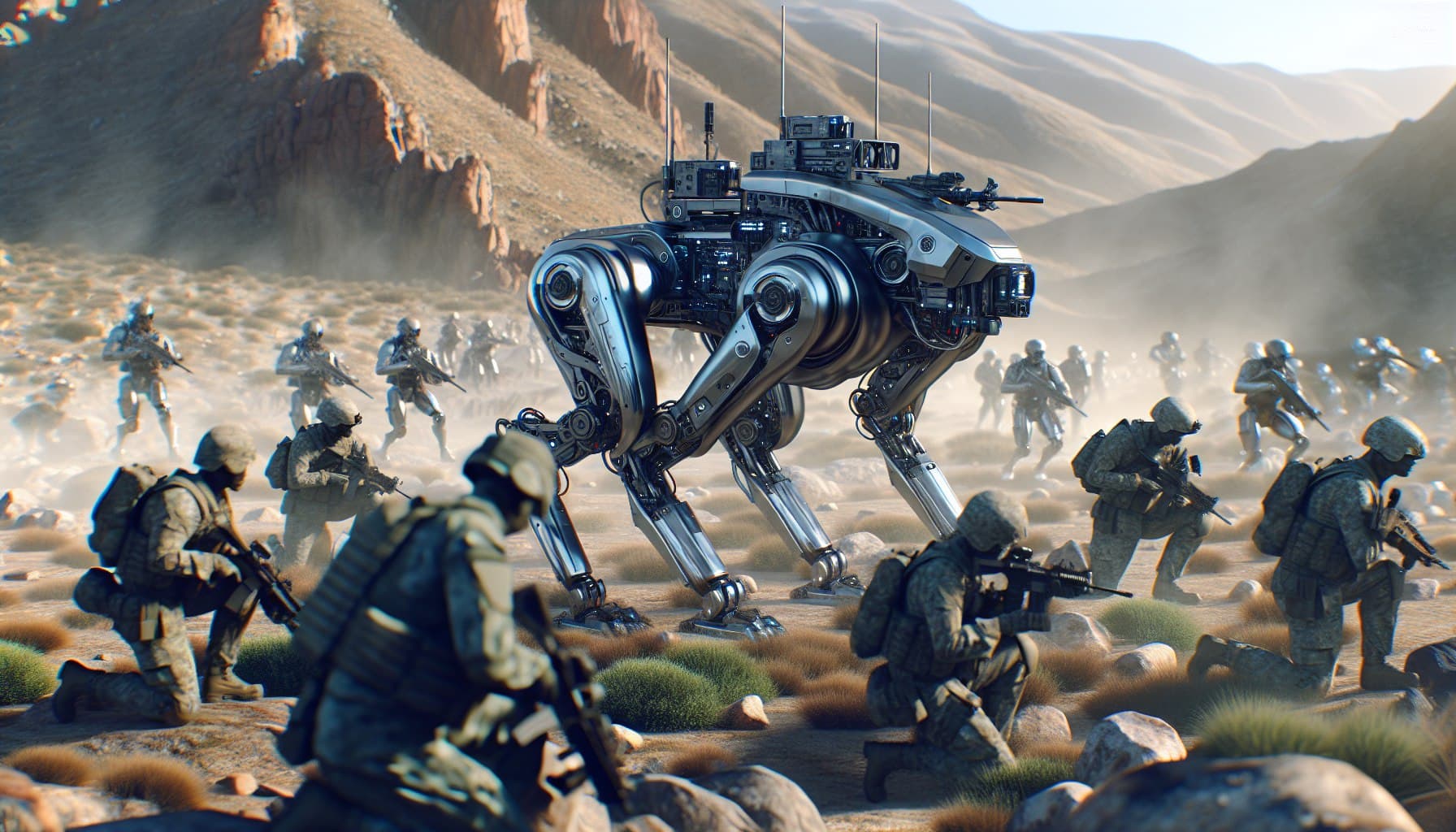
In particular, this is the"Frog" kamikaze robot, the"Turtle" ammunition delivery robot, the "Varan" tracked robot with the"Triton" electronic warfare system. There are also more than a dozen modifications of various robotic cargo platforms.
At the same time, some new military Russian robots have not quite ordinary forms. For example, this is arobot-ball scout with all-round visibility, which was dubbed "gingerbread man", and a robotic platform on a hybrid chassis"Hedgehog-M".
Read materials on the topic:
Robot Zhenya, bionic prostheses and much more: what Skolkovo residents showed at the SPIEF
Helping doctors and patients: "robot cats"-assistants appeared in Moscow hospitals
An anthropomorphic robot lunar rover from Magnitogorsk has been tested
Now on home

Start of deliveries scheduled for 2027

Over 51,000 new motorcycles were sold in Russia in 2025

The car will take at least a year to assemble

The application's audience has reached 20 million users

The model will be included in the list of cars for taxis, price - from 2.25 million rubles

All parking lots of the "Administrator of the Moscow Parking Space" are connected to the service

The cars will be supplied to the Moscow Transport Service Directorate

Deliveries to India may begin in 2028

The technology provides automated search for all types of defects in power units

The plane flew 500 km, accelerating to 425 km/h

The plant stated that the information about the termination of purchases for models 6 and 8 is not true

Scientists are using the "Ekran-M" installation
Articles
-
Russian An-124 "Ruslan" Stuck in Canada for 4 Years and Accrues Millions in Fines
26 Jan 2026
-
Coaxial Propellers: How Counter-Rotation Increases Turboprop Engine Efficiency
25 Jan 2026
-
Kazan Aviation Plant Breaks Old System: Tu-214 to be Assembled Like Cars
25 Jan 2026
-
How Engineers and Technicians Are Paid Today in the Russian Aviation Industry: An Overview with Figures
24 Jan 2026