Aviation enthusiasts are already accustomed to headlines like "TsAGI is developing a new aircraft." This time we are talking about the "Integral MS" project — a concept that is called a "new word" in domestic aircraft construction.

Aviation expert Alexey Zakharov explained why the story with the ambitions of the Central Aerohydrodynamic Institute named after N. E. Zhukovsky (TsAGI) to go into design is repeated not for the first time — and does not always end in success.
From science to "concepts"
Zakharov recalled that in the 1920s and 1930s, TsAGI really designed aircraft, but then the Tupolev Design Bureau worked in its composition. Then, for decades, the institute was engaged in its direct business — strength, aerodynamics, flight dynamics, model blowing and scientific support.
However, in the 1980s, on the initiative of Mikhail Simonov, TsAGI again tried to become a "design center." The idea quickly showed its inconsistency — design bureau specialists were forced to disassemble the mistakes of "innovators" from Zhukovsky, and often elementary ones.
It was not possible to drive the genie back into the bottle – TsAGI really liked to engage in "conceptual design." You can recall the vague "Aircraft 2020" program, which ended in nothing. Then TsAGI was engaged in a supersonic business jet. Now they decided to teach passenger aircraft developers how to design.
"Integral MS": old ideas in a new package
The current "Integral MS" project is built around three key solutions — developed fillets between the wing and the fuselage, directly oval fuselage and mid-wing scheme.
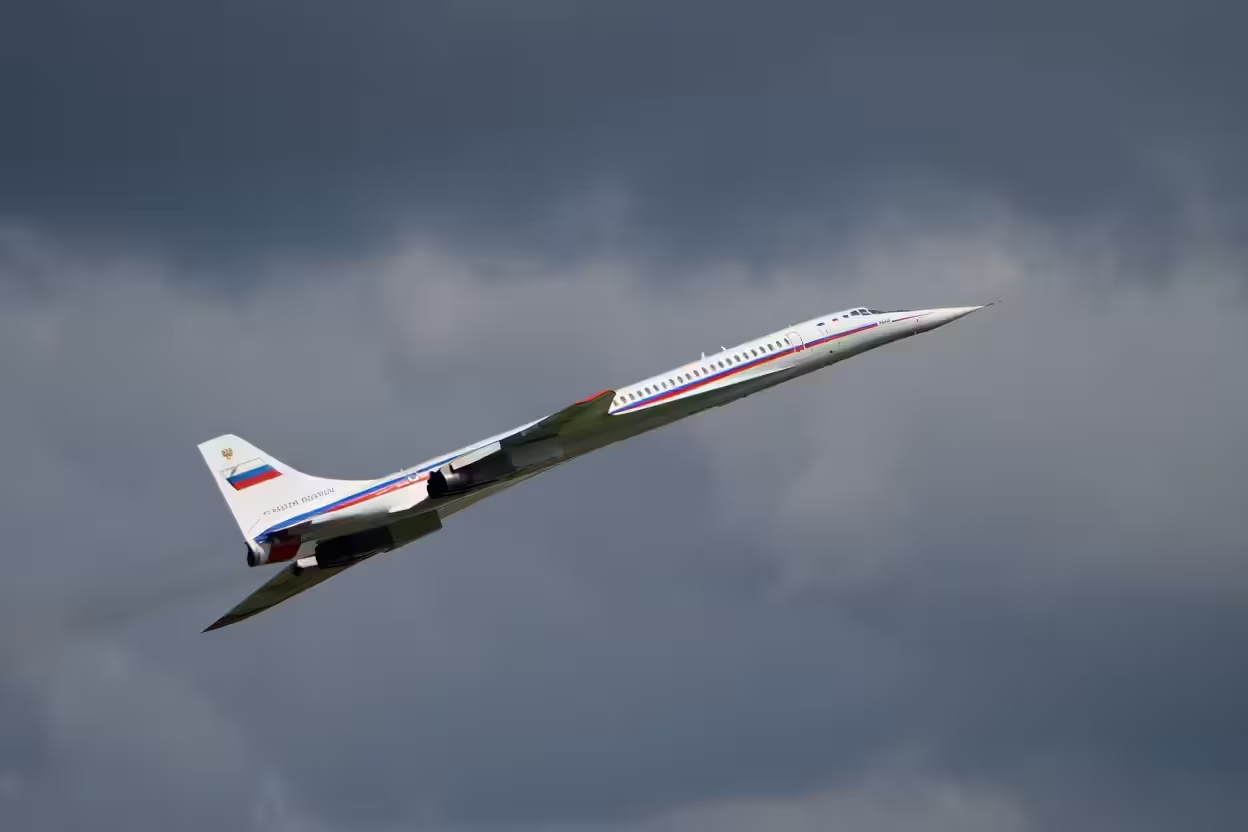
According to Zakharov, all such solutions have already been tested by time — and not always with a positive result.
Fillets "were in fashion" in the first half of the last century — at speeds of 400-500 km/h, they reduce aerodynamic drag. At M=0.7-0.8 there will be no advantages, rather, the resistance will increase. Everything was clear with the oval fuselage back on the Frigate Ecojet project. During its analysis, the specialists of the Ilyushin Design Bureau unequivocally said that the weight costs for the required increase in the fatigue strength of the fuselage would "eat up" all the advantages in aerodynamics.
Zakharov admitted that the mid-wing project is good in theory, but on a passenger plane it will lead to a heavier structure. As a result, all three "pillars" pull the project down, he explained.
When experiments become rakes
The "Integral MS" project, according to Zakharov, has become a clear example of how TsAGI is stepping on the old rakes again.
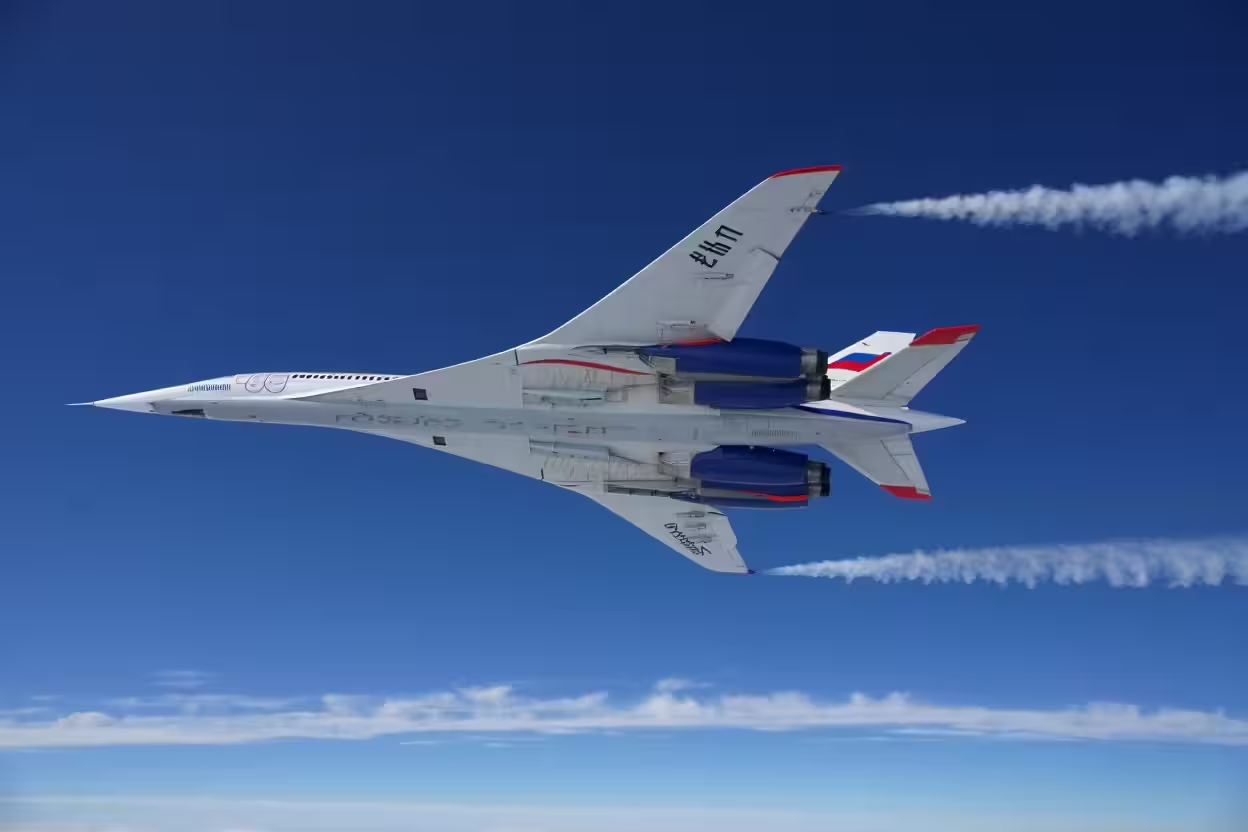
In general, in the "Integral MS" project, the brave designers from TsKIT (Center for Integrated Technology Integration) heartily trampled on the rakes — and have been known for a long time. Maybe it's time to "legislatively" prohibit TsAGI from engaging in "design"? The institute has a lot of tasks without it.
It can be assumed that the "Integral MS" project is unlikely to become a new step forward, Zakharov summed up. Russian aviation now needs not concepts for the sake of concepts, but real machines based on proven science and close cooperation with designers.
Earlier www1.ru reported that ODK избавила авиадвигатели от опасного дефекта: решена проблема помпажа компрессора.
Read more materials:
Now on home

Start of deliveries scheduled for 2027

Over 51,000 new motorcycles were sold in Russia in 2025

The car will take at least a year to assemble

The application's audience has reached 20 million users

The model will be included in the list of cars for taxis, price - from 2.25 million rubles

All parking lots of the "Administrator of the Moscow Parking Space" are connected to the service

The cars will be supplied to the Moscow Transport Service Directorate
Deliveries to India may begin in 2028
The technology provides automated search for all types of defects in power units
The plane flew 500 km, accelerating to 425 km/h

The plant stated that the information about the termination of purchases for models 6 and 8 is not true

Scientists are using the "Ekran-M" installation