Translated with AI from the Russian original.
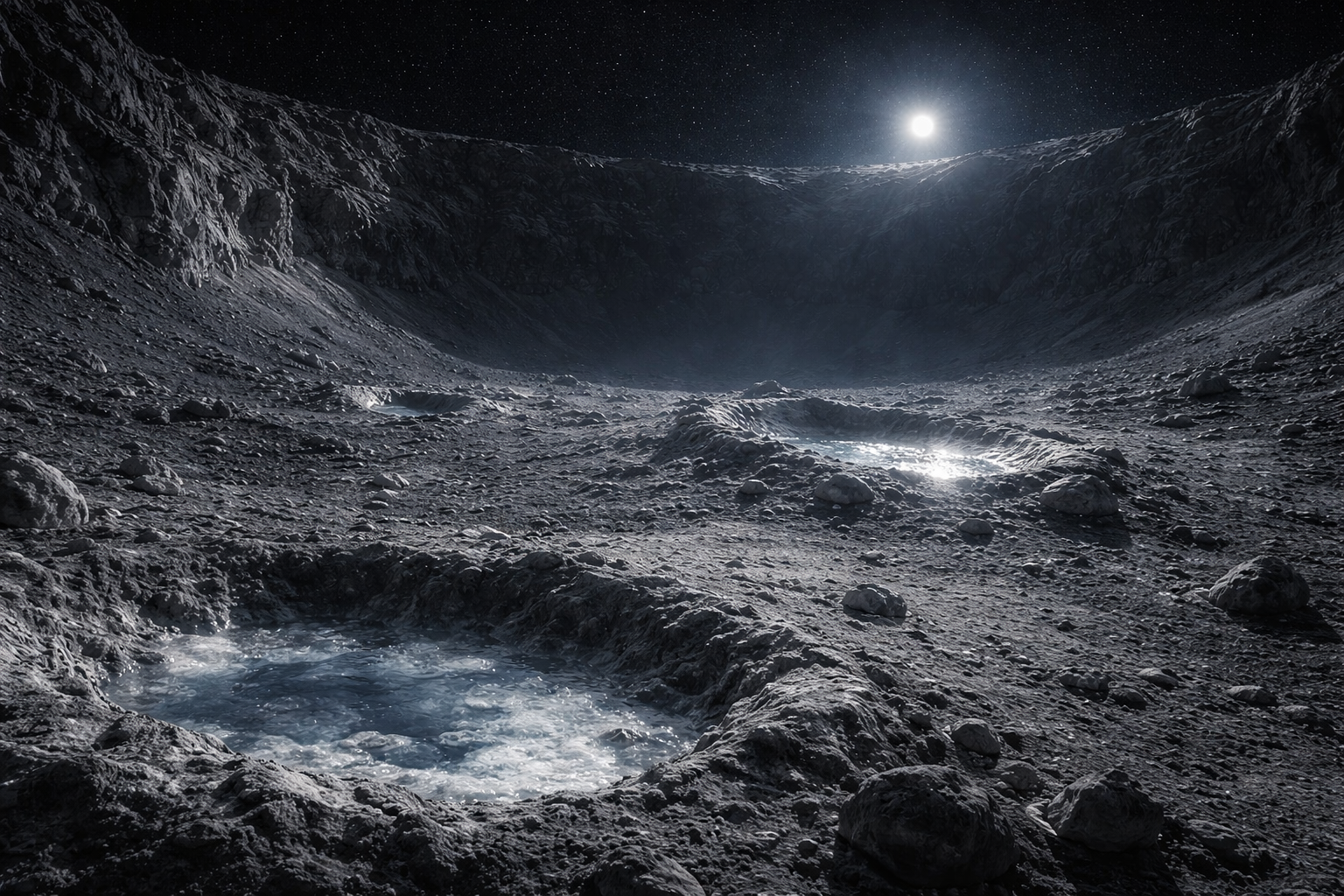
Researchers from GEOKHI RAS, together with colleagues from China, looked into one of the darkest and coldest craters on the Moon — and found something that could become the key to future lunar bases. It is water hidden directly in the soil.
What exactly the scientists found
The study used images from the ShadowCam camera with a resolution of 1.9 meters. The scientists compared the shaded and illuminated areas of the crater floor and reached a key conclusion: signs of water ice are confirmed.
Particular attention was drawn to craters with so-called "lobate ramparts" — their diameter ranges from tens to hundreds of meters. This shape is considered a characteristic sign that the soil may contain a significant amount of ice.
Why this matters
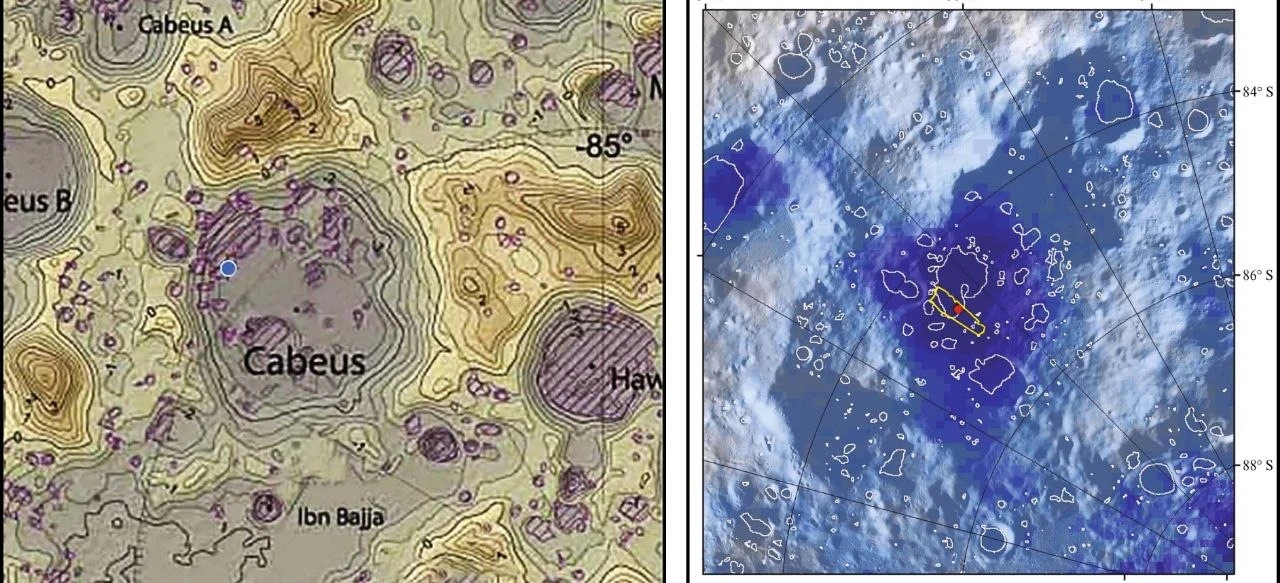
Cabeo Crater is already known to scientists thanks to the LCROSS experiment conducted by NASA in 2009. At that time, a spent upper stage was deliberately crashed into the crater's surface.
Analysis of the ejected material showed that the content of water ice at the crater floor reaches 5.6 ± 2.9% by mass. The impact site for the experiment was chosen taking into account data from the Russian LEND instrument (IKI RAS). This still remains the only direct confirmation of the presence of significant volumes of ice in the near-polar craters of the Moon.
What else the astronomers noticed
On the inner slope of the crater, the density of small craters turned out to be noticeably lower. They are being destroyed due to soil movement under the influence of gravity.
An unusual wavy surface texture was also discovered there, compared to "elephant skin."
Why the discovery matters for the future
The combination of new data and the results of the LCROSS experiment suggests that the floors of the Moon's near-polar craters could become sites for extracting volatile compounds, primarily water.
This water can be used for the needs of future lunar bases. And when split using the Sun's energy into hydrogen and oxygen, it can serve as a source of rocket fuel.
Read more on the topic:
Never miss our newsAdd this site to your preferred sources to see us more oftenAdd on Google

















