Scientists have found a way to reliably isolate one of the most toxic products of nuclear decay—strontium-90—by turning it into a durable mineral-like ceramic. The development was presented by specialists from the Far Eastern Federal University in conjunction with the Ministry of Education and Science of Russia.
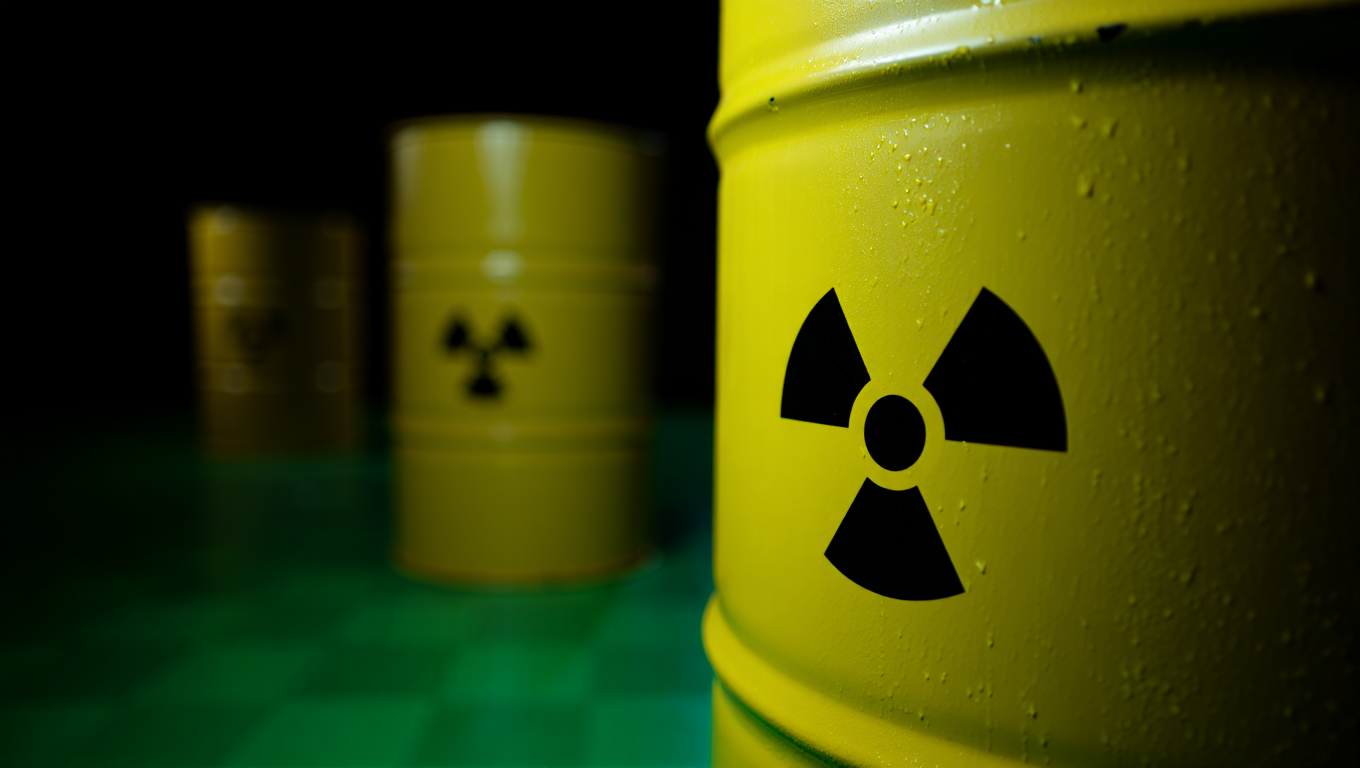
Strontium-90, with a half-life of about 30 years, is particularly dangerous: it easily migrates in the environment and accumulates in the bones of living organisms. Traditional disposal methods—cementation and vitrification—increase the volume of waste and do not guarantee absolute long-term stability.
Russian scientists have proposed a fundamentally different approach: they mixed white clay (kaolin) with strontium carbonate—a simulator of radioactive waste—and treated the mixture with reaction spark plasma sintering.
The technology allows creating a sealed material in five minutes at a temperature of 1000 °C, in which strontium atoms are not simply trapped in the mass, but are incorporated into the crystal lattice of two new minerals—strontium feldspar and sr-gehlenite.
Hydrolytic resistance tests have confirmed the effectiveness of the development: only 0.62% of strontium leached from the ceramic during a month of contact with water. This is an order of magnitude better than the indicators of analogues obtained from pure oxides.
Researchers note that the results obtained do not yet meet the most stringent international standards for leaching rate. Therefore, the team plans to optimize the composition of the mixture and sintering parameters to bring the technology to the level of world requirements.
Read more on the topic:
Never miss our newsAdd this site to your preferred sources to see us more oftenAdd on Google

















