Translated with AI from the Russian original.
Baltic Shipyard, part of USC, has completed an important stage in the construction of the universal nuclear icebreaker "Leningrad" of Project 22220. Specialists of the enterprise, together with partners, have loaded and secured three propulsion electric motors onto the ship's hull—key elements of the propulsion system.
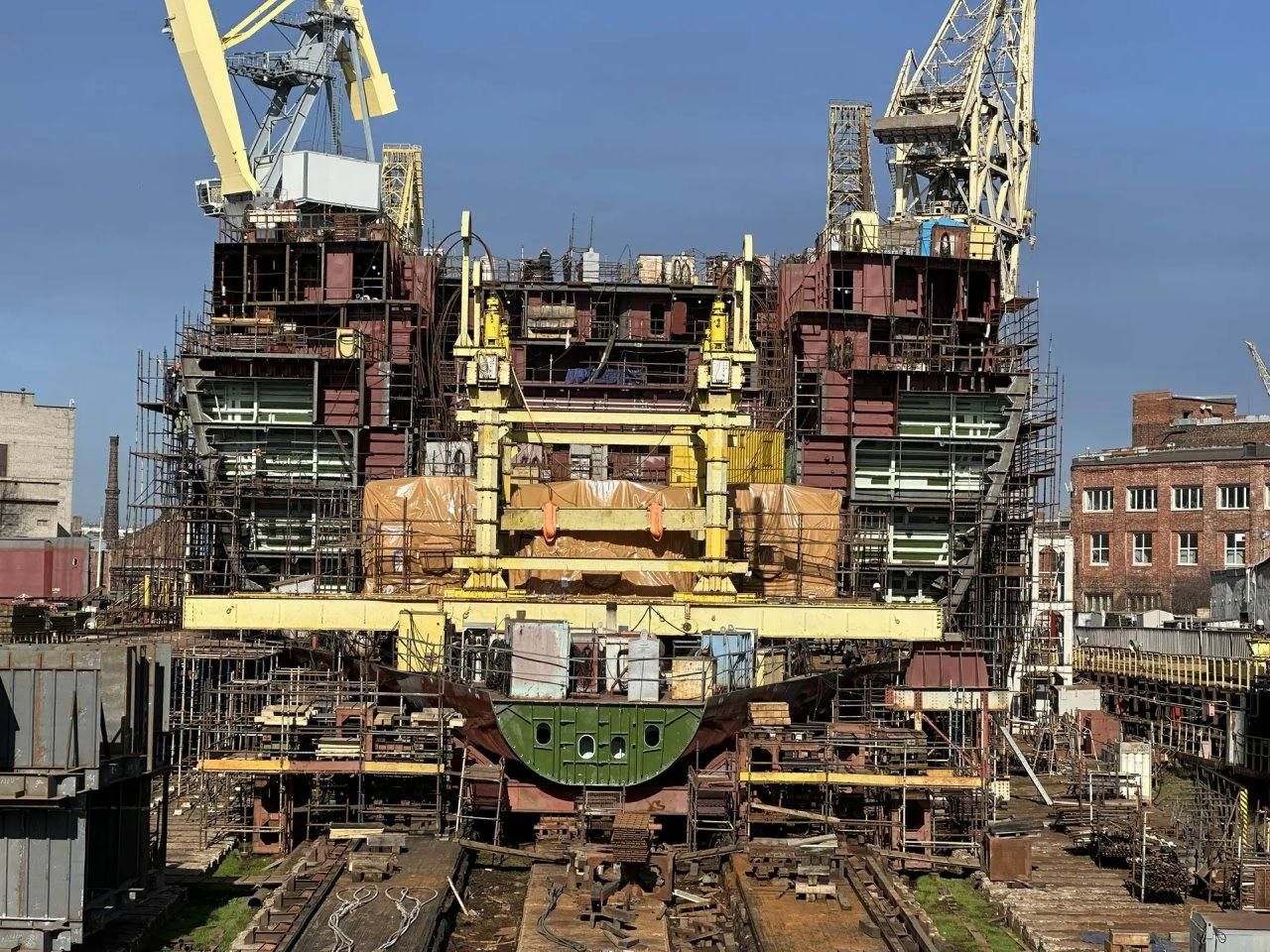
The units have taken their design positions: two are located on the sides, the third in the central part of the icebreaker. Each electric motor weighs 300 tons and develops a power of 20 megawatts. Together, they form a single complex that converts electrical energy from turbogenerators into mechanical rotation of the propeller shafts. This system provides the icebreaker with the necessary thrust and maneuverability in difficult Arctic conditions.
The installation of propulsion electric motors is a technologically complex operation that requires high precision positioning and reliable fastening. After installation, specialists began commissioning and integrating the units into the ship's systems.
In parallel, work continues on the "Leningrad" to finalize the hull and install auxiliary equipment. All processes are proceeding in accordance with the schedule approved for the series of Project 22220 icebreakers.
"Leningrad" will be the fourth serial nuclear icebreaker of this type after "Arktika", "Sibir" and "Ural". The vessel is designed to escort convoys in the waters of the Northern Sea Route and is capable of overcoming ice up to three meters thick.
Read more on the topic:
Never miss our newsAdd this site to your preferred sources to see us more oftenAdd on Google

















