Gazprom has commissioned the facilities of the second phase of development of the Semakovskoye gas field in the Yamalo-Nenets Autonomous Okrug. According to the company, the field has increased the number of production wells, the capacity of the integrated gas treatment unit, the booster compressor station and the power plant for its own needs. The work was completed ahead of schedule, including through the use of block-modular equipment. As a result, production will increase from 7.5 billion to 12 billion cubic meters of gas per year. All extracted gas enters the Unified Gas Supply System of Russia via a 122-kilometer connection gas pipeline.
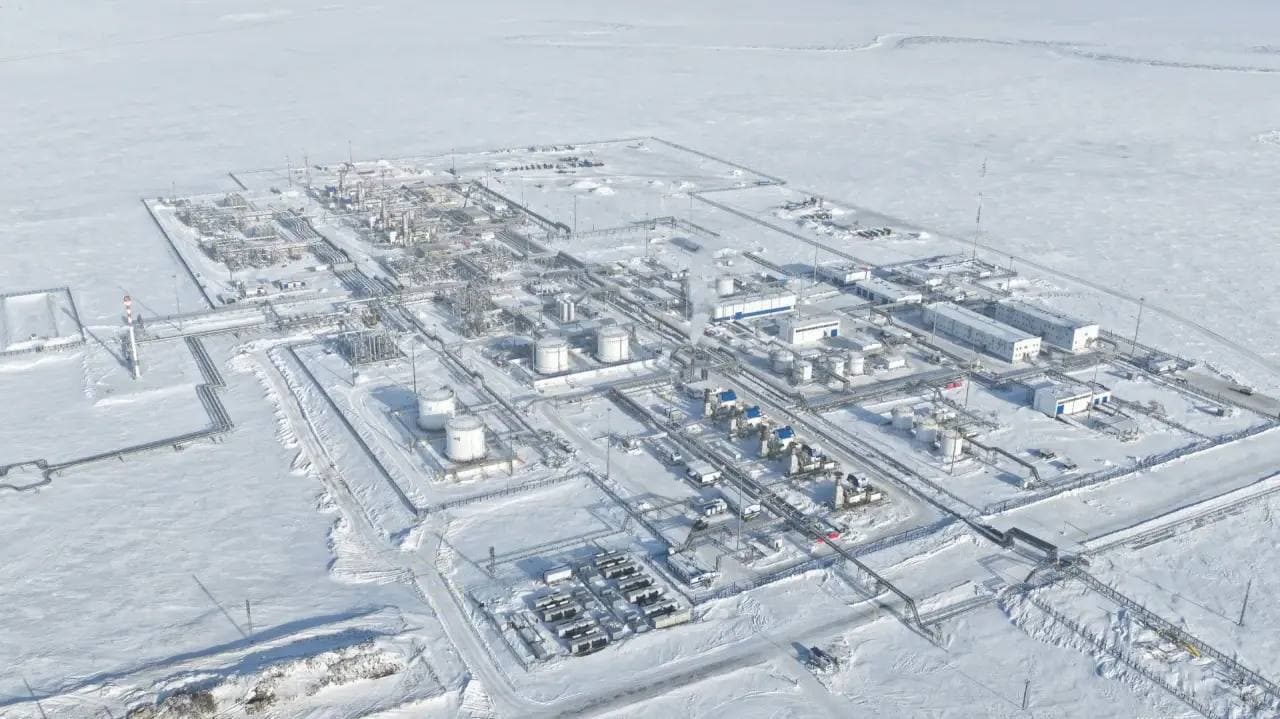
Technological records: ERD wells and production from the shore
High-tech solutions were used in the implementation of the project. For the first time in domestic history, gas production from deposits located in the water area (Taz Bay of the Kara Sea) is organized from the shore using special wells with a large departure from the vertical - ERD wells (Extended Reach Drilling). Several Russian records were set during their construction. In 2025, a well with a barrel length of 6205 meters and a deviation coefficient of 6.38 (that is, the horizontal deviation is 6.38 times greater than the vertical depth) was entered into the Russian Book of Records.
Project characteristics
- Location: YaNAO, water area of the Taz Bay of the Kara Sea
- Production before the second phase: 7.5 billion cubic meters per year
- Production after the second phase: 12 billion cubic meters per year
- Increase: 4.5 billion cubic meters per year
- Connection gas pipeline: 122 km
- Well type: ERD (with a large departure from the vertical)
- Record well: barrel length 6205 m, deviation coefficient 6.38
- Operator: RusGazAlyans LLC
- Start of commercial operation: December 2022
Traditionally, platforms or cluster bases are built on the shelf to extract gas from under the water. Gazprom used ERD well technology, which is drilled from the shore at a large angle and goes into the water area for several kilometers. This reduces capital costs (no platforms are needed) and reduces the environmental burden on the Arctic ecosystem. The deviation coefficient of 6.38 (horizontal distance is 6.38 times greater than the depth) is one of the best indicators in world practice for Arctic conditions. The block-modular design of the equipment made it possible to assemble the facilities faster and in low temperatures.
Read more materials:
- Investments in geological exploration of rare earth metals in Russia will double in 2026 — up to 4.15 billion rubles
- An algorithm for choosing a strategy for exploring ore deposits has been developed by scientists from the Kola Scientific Center of the Russian Academy of Sciences
- Gold, tungsten and molybdenum for 50 billion rubles: a project for the extraction of rare metals has started in Tyrnyauz
Never miss our newsAdd this site to your preferred sources to see us more oftenAdd on Google

















