RT-NEO Irkutsk has completed two weeks of testing a prototype electric garbage truck produced by KamAZ on city routes, according to the company's head, Sergey Sidorov. The vehicle operated in normal mode on regular city routes along with serial special equipment — without greenhouse conditions. Following the tests, KamAZ engineers, together with specialists from RT-NEO Irkutsk, recorded the advantages and disadvantages of the model and outlined improvements for Siberian operating conditions. In the coming years, the company plans to significantly increase the share of electric garbage trucks in its fleet and launch them in the largest settlements in the service area.
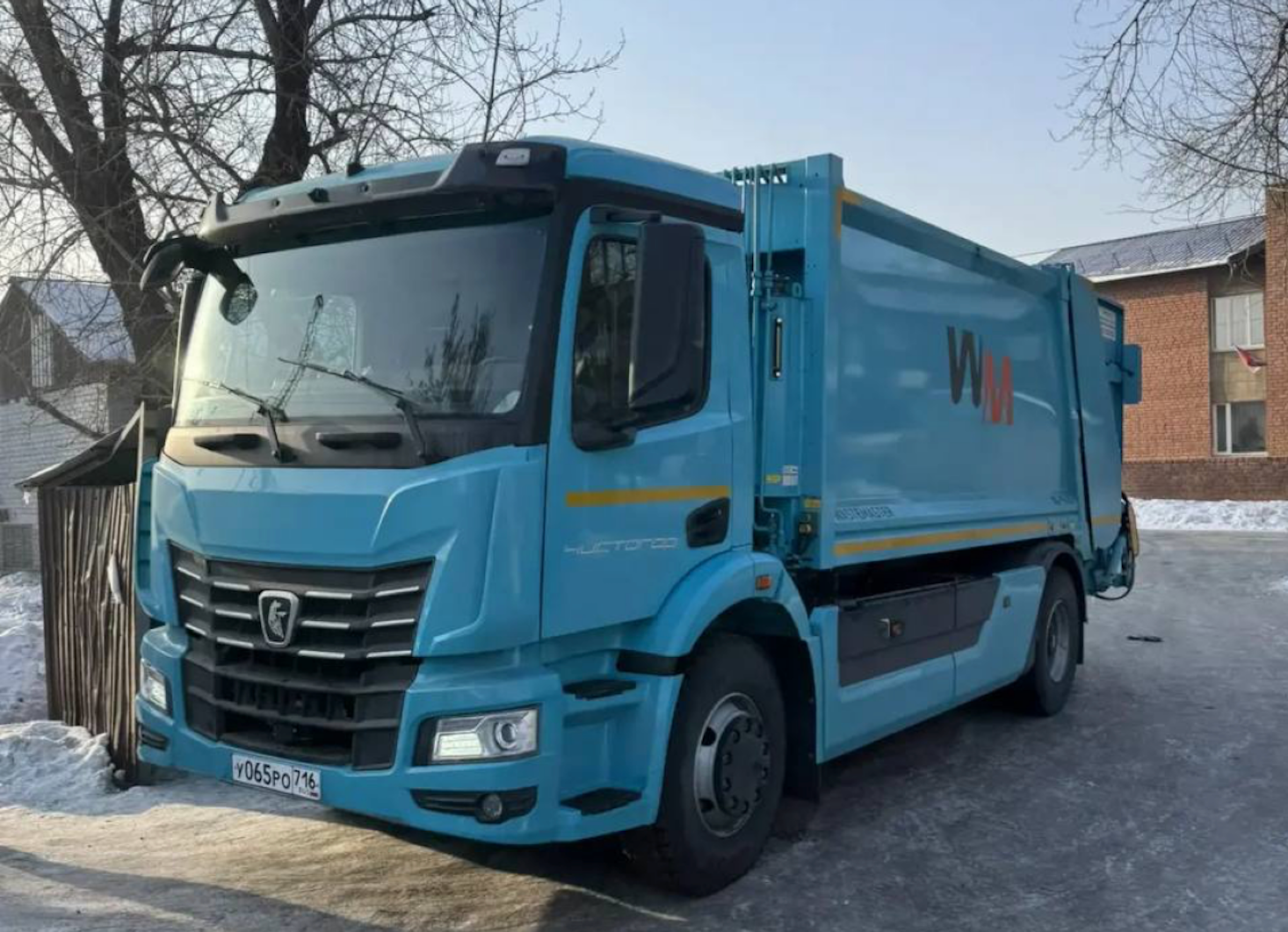
KamAZ Electric Garbage Truck: The Main Advantage is Silence
The key consumer advantage of the electric garbage truck is its silent operation. The electric motor allows garbage to be collected from yards without noise, without disturbing residents' sleep in the early morning hours. At the same time, exhaust emissions in courtyard spaces are eliminated. Both factors are critical for dense urban development, where traditional diesel garbage trucks operate from early morning.
Testing in Siberian conditions is a separate engineering task. Irkutsk is located in a zone of sharply continental climate with frosts down to -30°C and below. The operation of battery systems and garbage truck hydraulics at such temperatures is fundamentally different from testing in the middle lane — that is why RT-NEO Irkutsk insisted on real city routes, not bench tests.
KamAZ is consistently developing a line of electric municipal equipment — KamAZ-6282 electric buses are already in operation in Moscow and a number of other cities. Entering the market of electric garbage trucks is the next step in the electrification of urban municipal transport. The Irkutsk tests provide the manufacturer with data to adapt the equipment to the conditions of Siberia and the Far East — markets where the climatic requirements for equipment are fundamentally stricter than in the European part of the country.
Read more materials on the topic:
- New generation prison van: KamAZ with air conditioning and a portable toilet arrived at the Federal Penitentiary Service
- New high-capacity electric bus MAZ 305E will be presented in 2026
- This is an electric bus: five facts about the KAMAZ-6282, which conquered Moscow and is heading to the regions of Russia
Never miss our newsAdd this site to your preferred sources to see us more oftenAdd on Google