Translated with AI from the Russian original.
Roscosmos showed a new image of the Dumbbell Nebula – one of the most recognizable deep-space objects. The photo shows a huge shell of incandescent gas, once shed by a dying star. It is these objects that help scientists see one of the last stages of life for stars similar to the Sun.
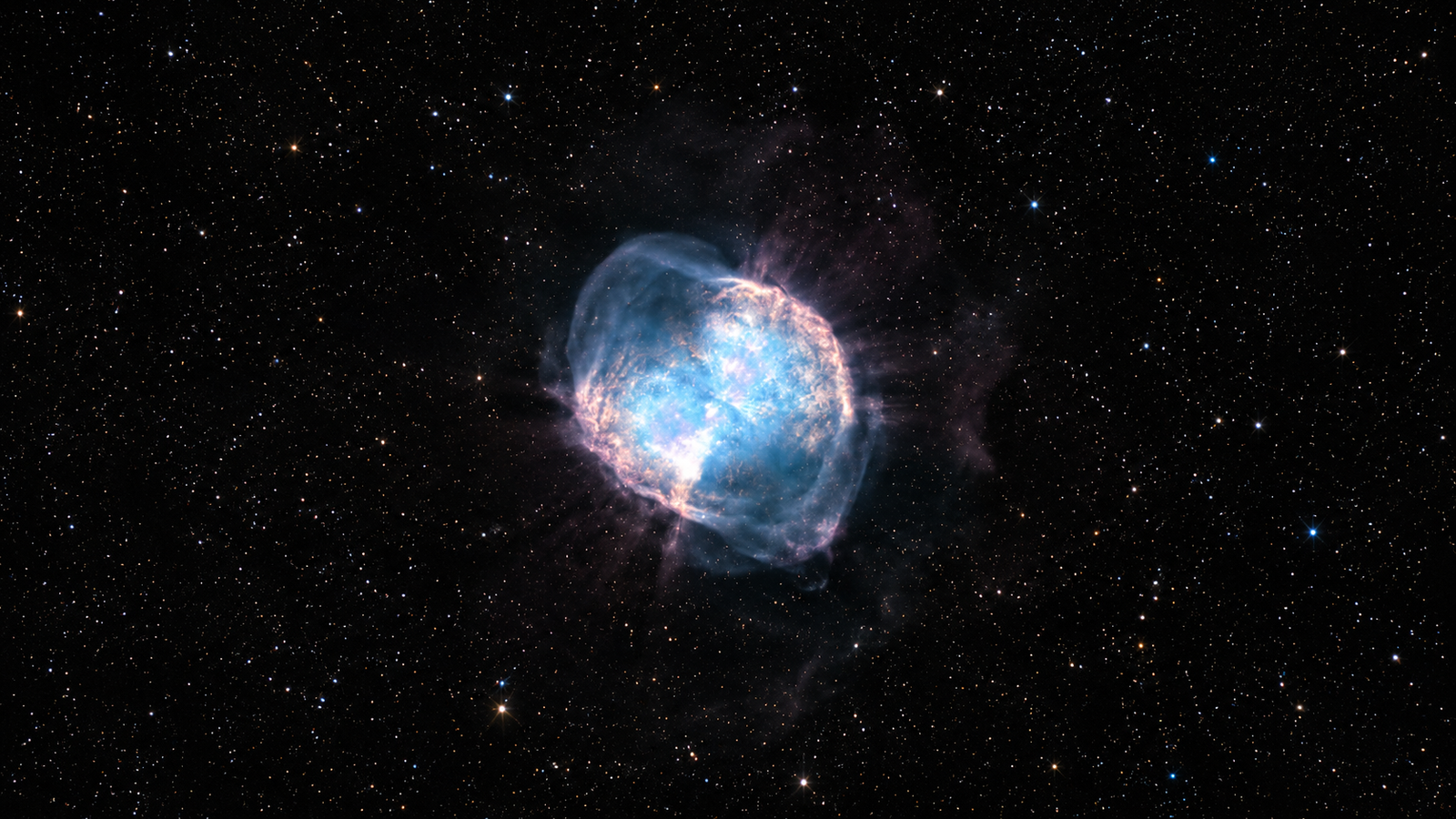
The Dumbbell Nebula was the first planetary nebula discovered by humanity. It was found by French astronomer Charles Messier back in 1764. The object is located approximately 1360 light-years from Earth, in the constellation Vulpecula.
The nebula got its name due to its unusual shape, resembling a sports dumbbell. But in reality, it is a giant cloud of incandescent gas that appeared after a star, in the late stage of its life, shed its outer layers.
Such nebulae are particularly interesting for astronomers because they show what happens to stars at the end of their life cycle. Over time, the central star of such objects turns into a white dwarf.
The new image was obtained using the TAL-200K telescope. To assemble a detailed image, specialists used a series of frames with a total exposure of about 10 hours.
Read more on the topic:
Never miss our newsAdd this site to your preferred sources to see us more oftenAdd on Google

















