In the database of the Federal Institute of Industrial Property (FIPS), a patent for a new turbojet engine designed for stable operation at speeds above Mach 3 was registered on February 2. The author of the development is engineer Vladimir Pismennyi.
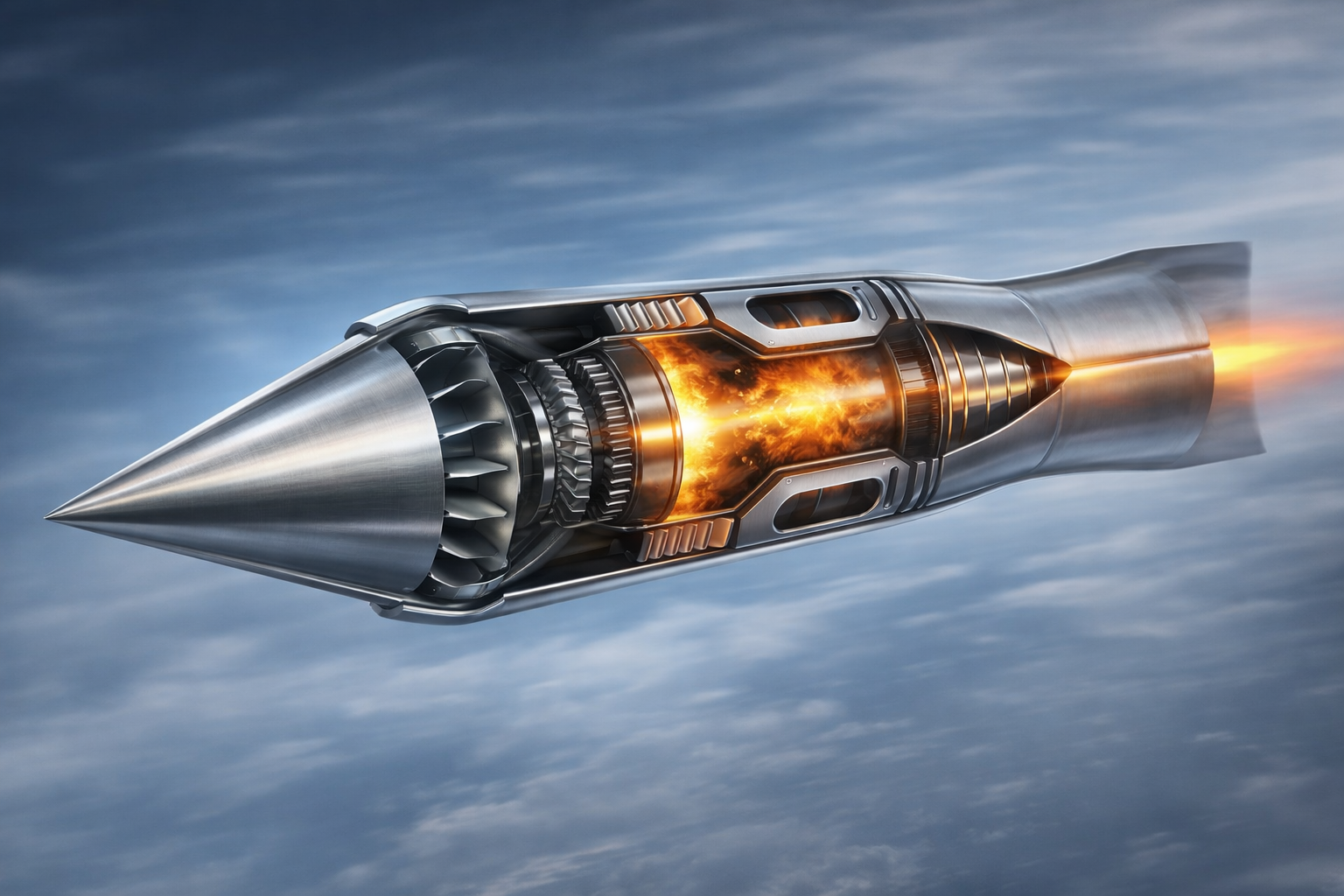
The project is aimed at use in supersonic and strategic aviation, including prospective analogues of the Tu-144, Tu-160, and foreign long-range bombers.
The invention solves one of the key problems of high-speed aviation: the drop in compressor efficiency as flight speed increases. In traditional turbojet engines, air flow decreases during acceleration, which limits acceleration and increases fuel consumption.
How the new design works
In the proposed design, the engine is regulated according to a special law that maintains the optimal corrected rotor speed depending on the air temperature at the compressor inlet. This makes it possible to preserve maximum air flow in all operating modes.
The developer uses the principle of "cold boosting": increasing thrust through the volume of air pumped rather than through a rise in gas temperature. This approach reduces thermal load and energy losses.
Calculated performance
According to the author's calculations, the maximum flight speed with such an engine can reach M=3.7 — about 4,500 km/h.
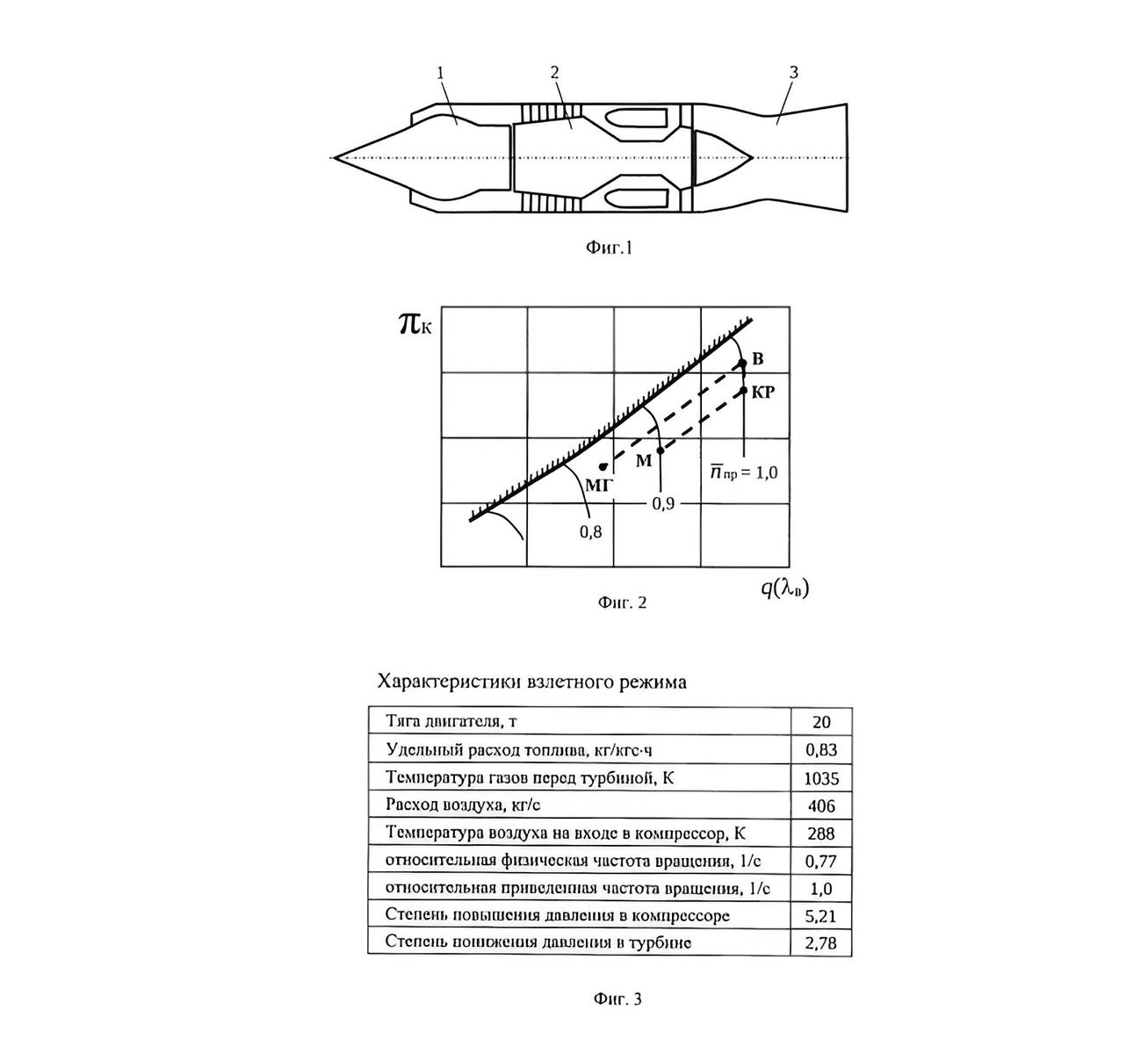
At M=2.5 at an altitude of about 20 km, thrust reaches up to 12 tons with a specific fuel consumption of 1.24 kgf/h.
Efficiency at speeds above M=3 approaches 47%. For comparison, modern civil aviation turbofan engines demonstrate efficiency of about 38%.
Read more materials on the topic:
- A new autonomous generator will save an aircraft engine in the air in the event of grid failure
- An antigravity jet engine with a closed fuel loop was invented in Russia
- Science fiction come true: a birotative aircraft engine without a turbine was invented in Russia
Never miss our newsAdd this site to your preferred sources to see us more oftenAdd on Google