Translated with AI from the Russian original.
An 11th-grade student from Moscow developed and assembled a working prototype of a Stirling engine that converts thermal energy into mechanical and electrical energy. The schoolgirl carried out the project at the Altair Children's Technopark of RTU MIREA.
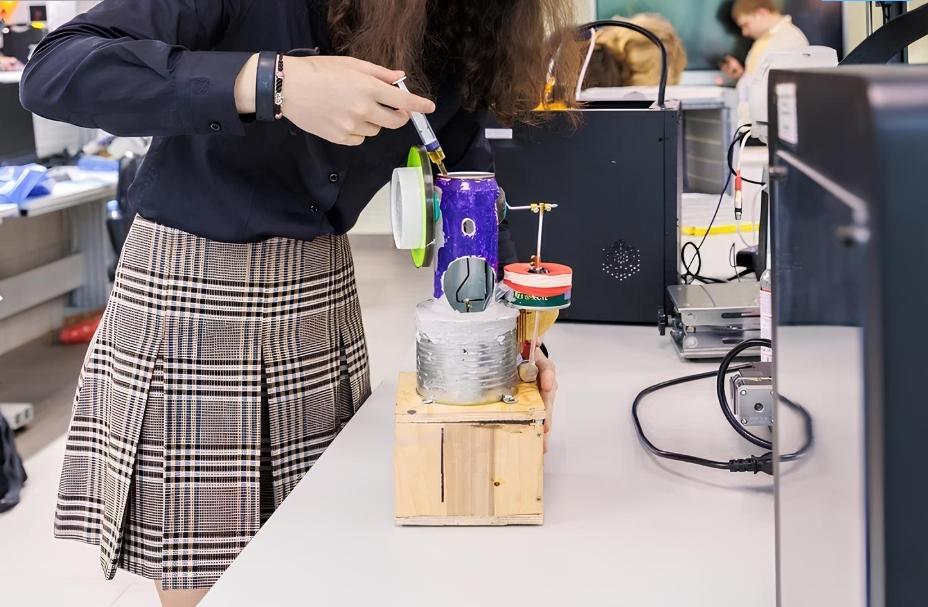
At the heart of the design is a sealed cylinder filled with gas. When heated, the gas expands and drives the piston; when cooled, it contracts. This creates a continuous operating cycle that makes it possible to generate energy from sunlight, smoldering coals, and the temperature difference between air and water.
The engine operates without fuel in the conventional sense and produces no harmful emissions. Any stable heat source is suitable as an energy source. This makes it possible to use the unit in field conditions, autonomous monitoring systems, and scientific expeditions.
The project became a prize winner in the Radio-Poisk, Golden Dozen, and Open World. Start in Science competitions. In the future, the schoolgirl plans to equip the unit with an Arduino-based monitoring system to track temperature, RPM, and energy output in real time.
Read more materials on the topic:
- In Russia, an engine was created that is not afraid of -50°C
- Russian tanks will become even faster: a new system will accelerate engines
- End of an era: Zavolzhsky Motor Plant has discontinued the 2.3-liter ZMZ-406 engine
Never miss our newsAdd this site to your preferred sources to see us more oftenAdd on Google

















