Translated with AI from the Russian original.
FSB border units have modified armored vehicles of the "Tigr" family by installing metal slat screens along the sides, doors, roof, and rear of the body. The modernization is aimed at countering shaped-charge munitions dropped from unmanned aerial vehicles, as well as kamikaze drone attacks.
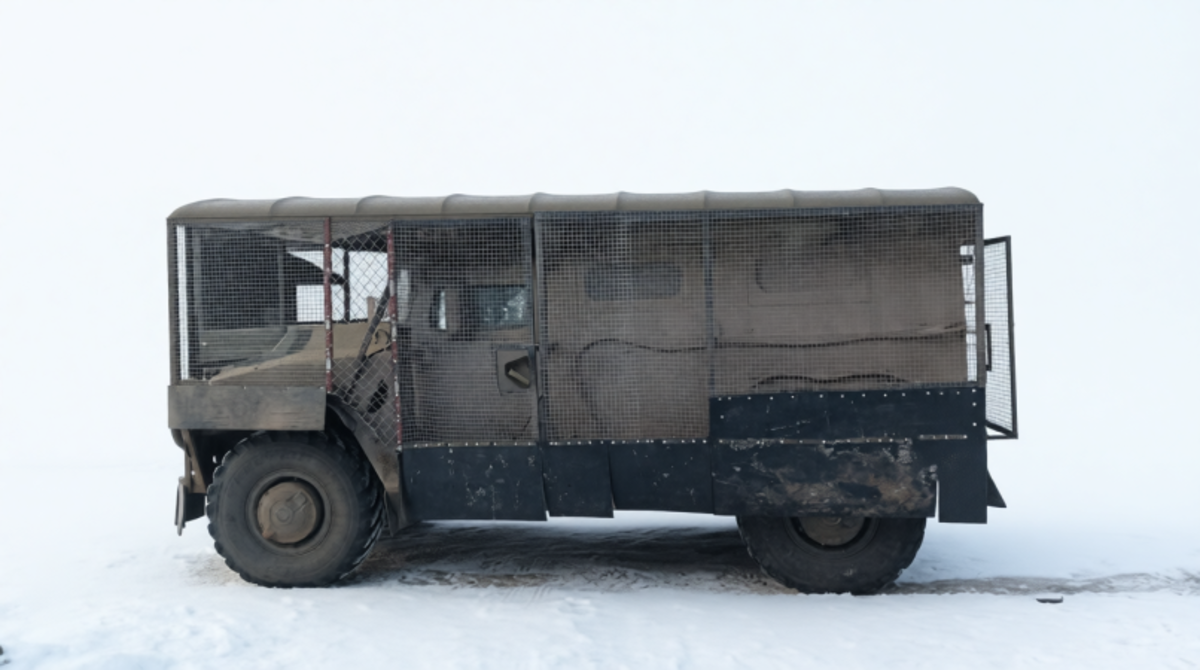
The slat structure operates on the principle of slat armor: its elements trigger the premature detonation of a shaped charge or deform the warhead before it contacts the vehicle's main hull armor. This kind of protection is effective against grenades, rockets, and improvised shaped-charge devices, which are increasingly being deployed from commercial and modified UAVs.
The rear door is integrated with the slat screen, providing protection for the crew during boarding and disembarking. The lower part of the sides has been reinforced with additional panels to improve resistance to fragmentation effects.
Military experts note that this kind of adaptation reflects the evolution of requirements for armored vehicles in hybrid conflict conditions. Slat armor, having proven its effectiveness, is becoming a standard solution for wheeled vehicles operating in areas with a high threat from small unmanned drones.
Read more materials:
- Uraldronzavod began serial deliveries of Upyr-18 strike drones to the Russian army
- The Il-114-300 made a historic flight to India. The aircraft will debut outside Russia at Wings India 2026
- The An-124-100 "Ruslan" delivered a large hydro-turbine wheel to the Bratsk Hydroelectric Power Plant
Never miss our newsAdd this site to your preferred sources to see us more oftenAdd on Google

















