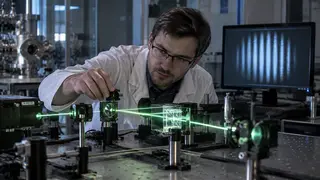
Researchers at South Ural State University have created an innovative thermal barrier coating based on silicate glass and an aluminum alloy, capable of significantly increasing the efficiency of internal combustion engines. As Dmitry Zherebtsov, Senior Research Fellow at the Polytechnic Institute of South Ural State University and Doctor of Chemical Sciences, reported, the new coating with a thickness of 1.34 mm features low porosity (only 1–2%), a smooth surface, and high heat resistance.
The material was obtained using the detonation spraying method: powder particles were accelerated to a speed of 500–1000 m/s by means of a controlled explosive pulse. The starting components used were AK4 aluminum alloy (aluminum content of 91–94%) and ordinary silicate glass.
According to Zherebtsov, neither component alone provided the required characteristics: glass is prone to cracking, while pure aluminum forms uneven "frozen icicles" during spraying. However, in combination they produce a synergistic effect: the glass broadens the radiation spectrum in the gas jet, which promotes more complete melting of the aluminum particles, while the aluminum, in turn, binds the glass fragments, ensuring the mechanical strength of the coating.
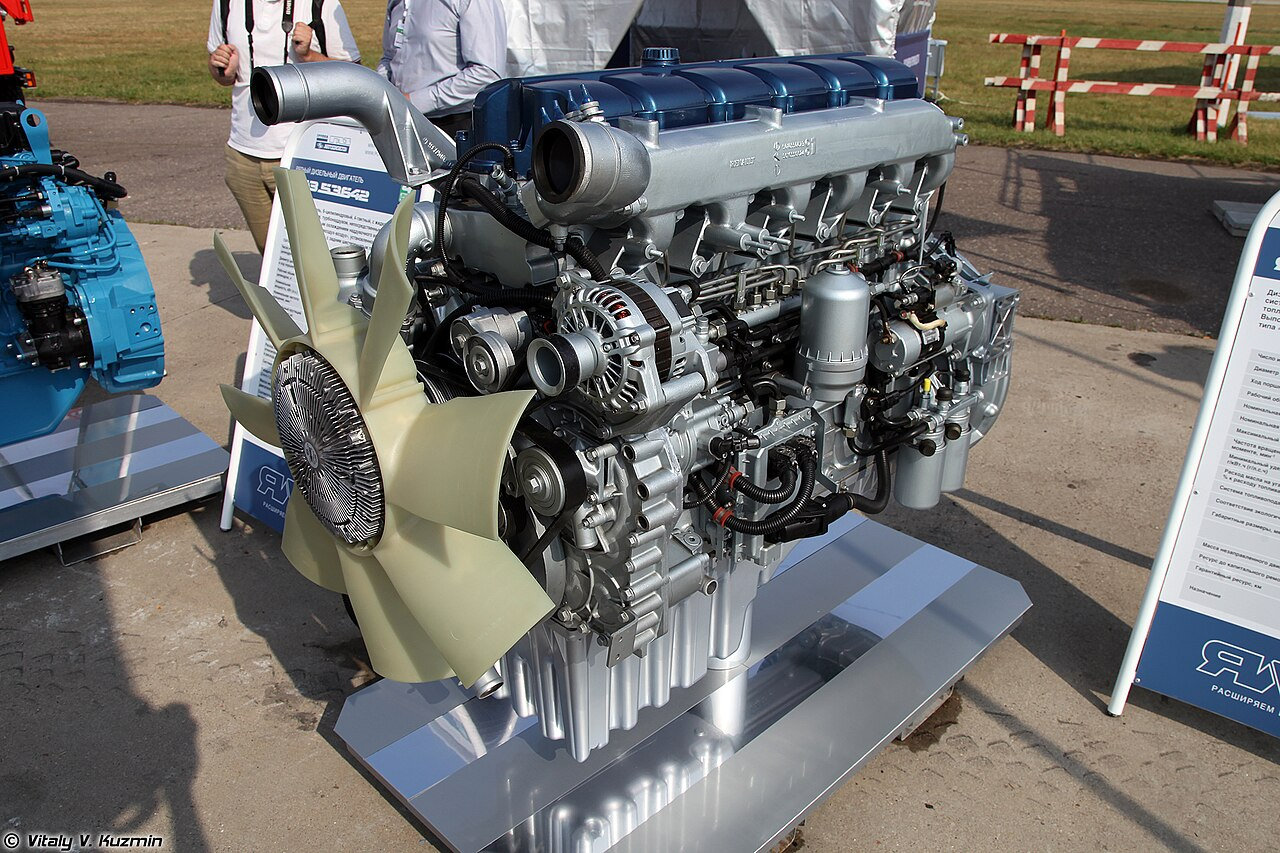
The developed coating functions as an effective thermal insulator, reducing heat transfer from hot combustion products to the metal engine parts, in particular to the pistons. This makes it possible to raise the operating temperature in the combustion chamber, which directly increases the thermodynamic efficiency of the engine and reduces fuel consumption.
Read more materials:
- \"Mechel\" launched production of 100-meter rails for freight trains and HSR trains up to 400 km/h
- RZhD renewed its long-distance fleet by more than 500 railcars
- Carriers of Kh-59M and Kh-25 missiles, Su-30SM2 and Su-24M aircraft, carried out precision strikes in the Baltic
Never miss our newsAdd this site to your preferred sources to see us more oftenAdd on Google