Translated with AI from the Russian original.
PTK Group has published photos of the prototype RSM-2000 "Iskra" rail welding machine for the first time and announced a high potential demand for the new complex from the railway industry.
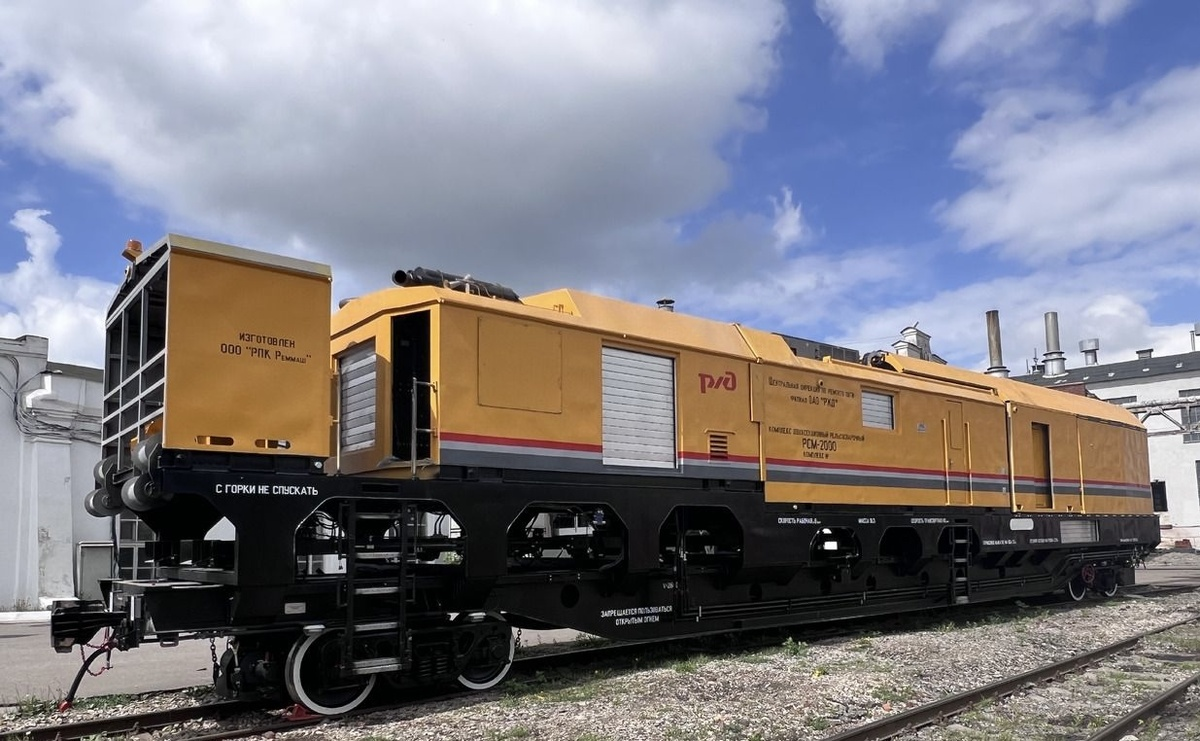
The development is being created as a replacement for the aging PRSM rail welding machines. According to the company's estimates, almost half of the current fleet will be decommissioned by 2033. A significant part of the equipment was developed back in the 1960s and has serious operational limitations. Existing machines cannot operate at temperatures below -15 °C, and welding has to be stopped when trains pass on an adjacent track.
PTK notes that the volume of temporary restoration of continuous welded rail sections on the Russian Railways network increases by approximately 30 thousand joints annually, so the industry needs to switch to a new rail welding technology.
The RSM-2000 "Iskra" was developed according to updated technical requirements of Russian Railways. The complex is designed to operate in a closed protected space both when welding from a rail-carrying train and directly on the track.
The complex consists of two autonomous sections, each of which is capable of performing a full cycle of welding operations. The technological speed of self-propelled movement of the section reaches 6 km/h. The ability to simultaneously weld two threads allows maintaining the pace of track overhaul up to 1100 m/h in accordance with Russian Railways requirements.
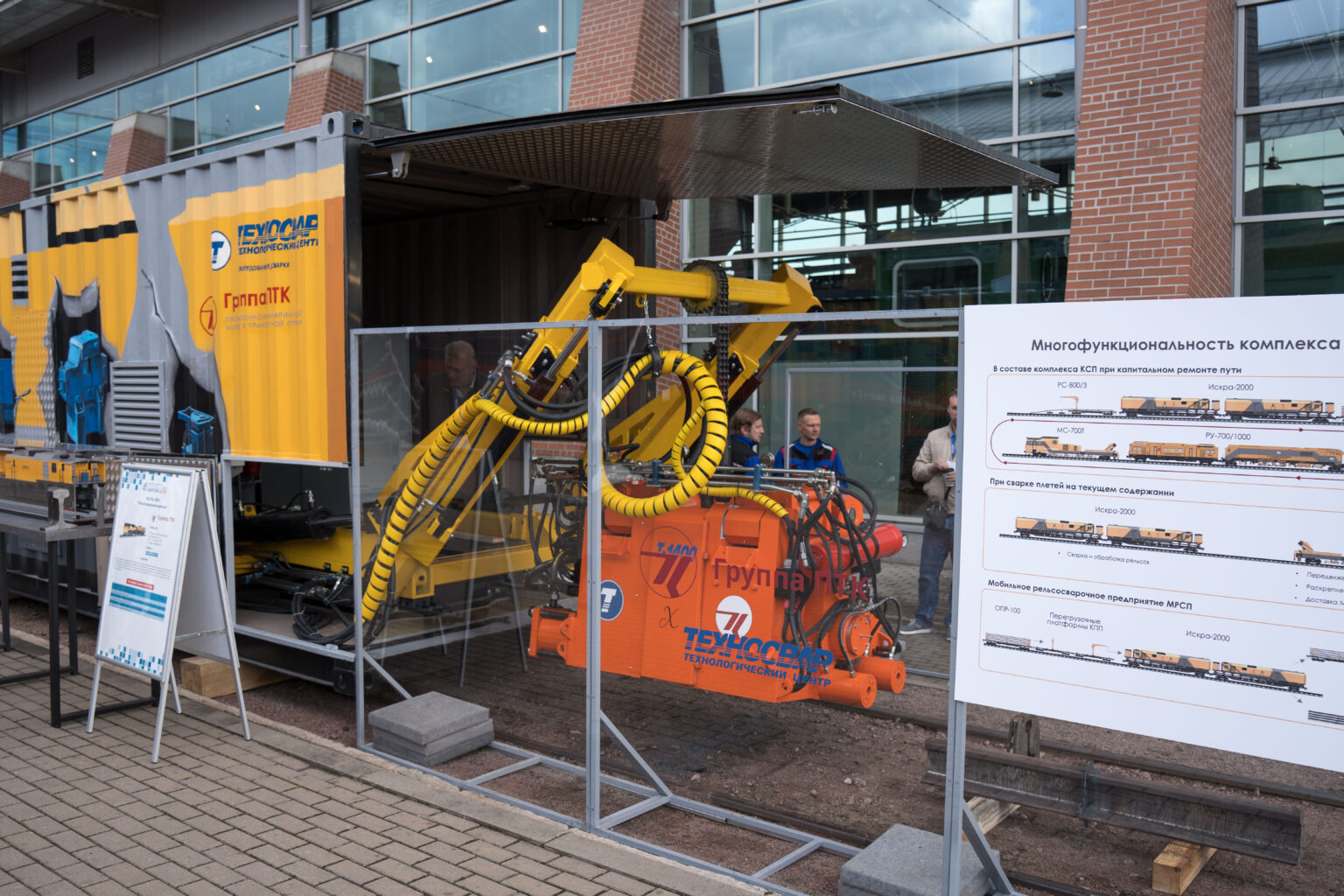
The key element of the complex is a new suspended welding head, developed by PTK in cooperation with VNIIZHT. The upsetting force is 140 t·s, which allows introducing rail sections into the optimal fastening temperature at air temperatures down to -30 °C. The company states that in terms of its parameters, the development corresponds to the level of leading world solutions.
The RSM-2000 "Iskra" is considered one of the main options for rail welding during the construction and further operation of the Moscow — St. Petersburg high-speed railway.
Read more on the topic:
- Uzbekistan to receive three modern TEM9 locomotives from STM
- 109 million rubles for a Soviet locomotive: a legendary TEM-7A put up for sale in Siberia
- Breakthrough in welding: Tver Carriage Works introduced robotic plasma technology
Never miss our newsAdd this site to your preferred sources to see us more oftenAdd on Google

















