Translated with AI from the Russian original.
Russian researchers from MIPT have developed a superconducting diode that reduces energy loss in modern electronic devices. This innovative solution reduces heating during device operation. The development was carried out by scientists from MIPT and the Landau Institute for Theoretical Physics of the Russian Academy of Sciences.
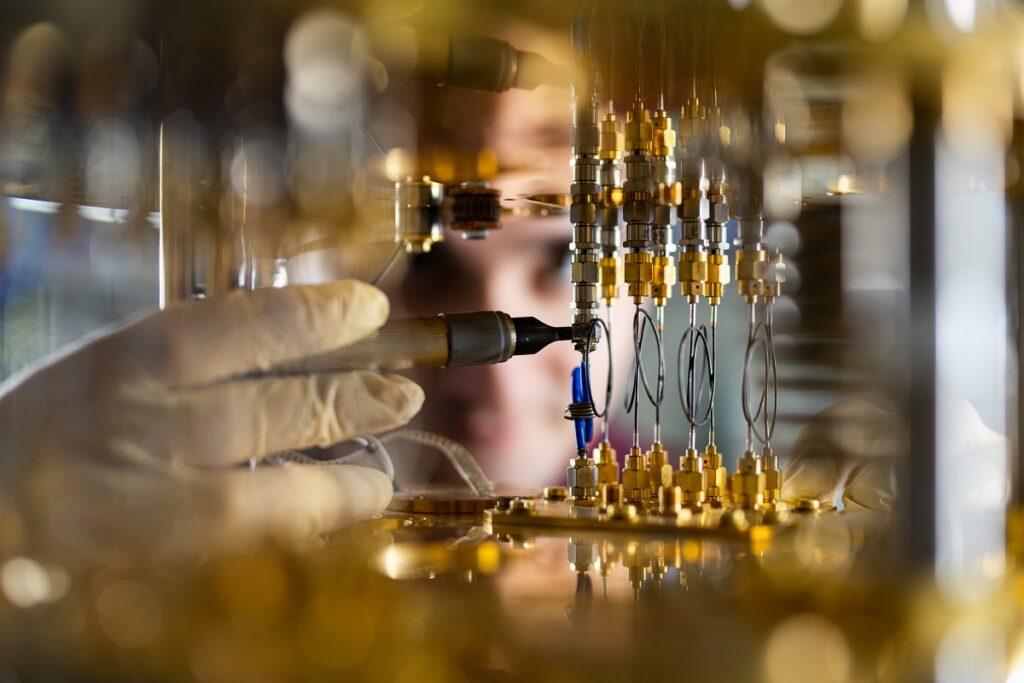
The new diode minimizes energy loss, making it suitable for creating ultra-fast and energy-efficient devices. The discovery will also improve the stability of quantum computers, increasing their performance.
The scientists created a microscopic quantum system (SQUID) by combining two different superconducting elements. Initially, the system's properties were standard, but the situation changed dramatically under the influence of microwave radiation. In the new mode, the diode effect manifested itself dozens of times stronger than before.
We have shown that the true potential of quantum systems is revealed not in statics, but in dynamics. It's like discovering that a car has a hidden nitrous oxide racing function that only turns on on the track. Our work is a step towards creating energy-efficient quantum devices operating at their maximum capabilities.
Superconducting circuits using this effect will be able to transmit and process signals without loss. This is critical for data centers, telecommunications equipment, and high-precision scientific instruments.
Read more materials on the topic:
- Luminous indium-based nanomaterials for future electronics created at MIPT
- New detector from MIPT scientists opens up prospects for creating lightweight communication modules for space satellites
- Breakthrough in optoelectronics: a unique lithographer developed at MIPT
Never miss our newsAdd this site to your preferred sources to see us more oftenAdd on Google

















