Tomsk Polytechnic University (TPU) has developed a new multilayer coating architecture for fusion reactor components. The invention has high thermal stability, the ability to "self-heal" and extend the service life of reactor equipment, the university's press service reported.
Multilayer (nanolaminate) coatings are widely used in the nuclear industry due to their high strength, corrosion resistance and resistance to radiation exposure. However, their performance characteristics under the simultaneous influence of high temperatures and irradiation remain insufficient.
The new architecture is a functionally graded material (FGM), which includes a protective layer of niobium about 3 μm thick, alternating nanosized multilayers of niobium and zirconium about 1 μm thick, an adhesive layer of zirconium 10 μm thick, and a substrate of zirconium alloy with 1% niobium 0.7 mm thick.
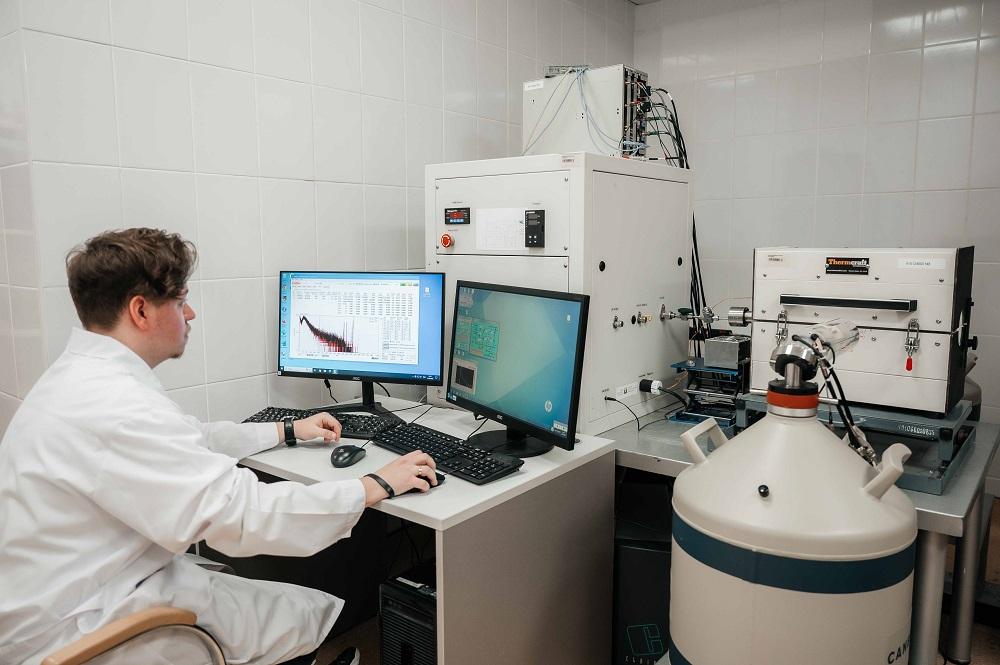
Tests of the new architecture were carried out in situ, on real equipment at temperatures up to 900°C. The study analyzed thermal stability and structural changes using X-ray diffraction, Doppler broadening spectroscopy of the annihilation line, and transmission electron microscopy. This comprehensive approach made it possible to observe the evolution of defects and changes in the crystal lattice of the coating in real time.
Scientists have found that when heated, the coating retains its multilayer architecture and interface density, and the phase transitions remain reversible. This allows the material to retain its properties even in extreme conditions.
Earlier www1.ru reported that TPU developed fluoroplastic coatings to protect chemical reactors from corrosion.
Read related materials:
- NIFI specialists found an alloy to extend the service life of a future fusion reactor
- Thermoregulating coatings for spacecraft created in Tomsk
- Chepetsky Mechanical Plant has resumed production of channels for RBMK reactors
Never miss our newsAdd this site to your preferred sources to see us more oftenAdd on Google