Employees of the Research Institute of Mechanics of Moscow State University named after M. V. Lomonosov set a Russian record for the vertical flight of a water rocket. This was announced by Anton Rogachev, leading engineer of the laboratory of general mechanics of the Research Institute.
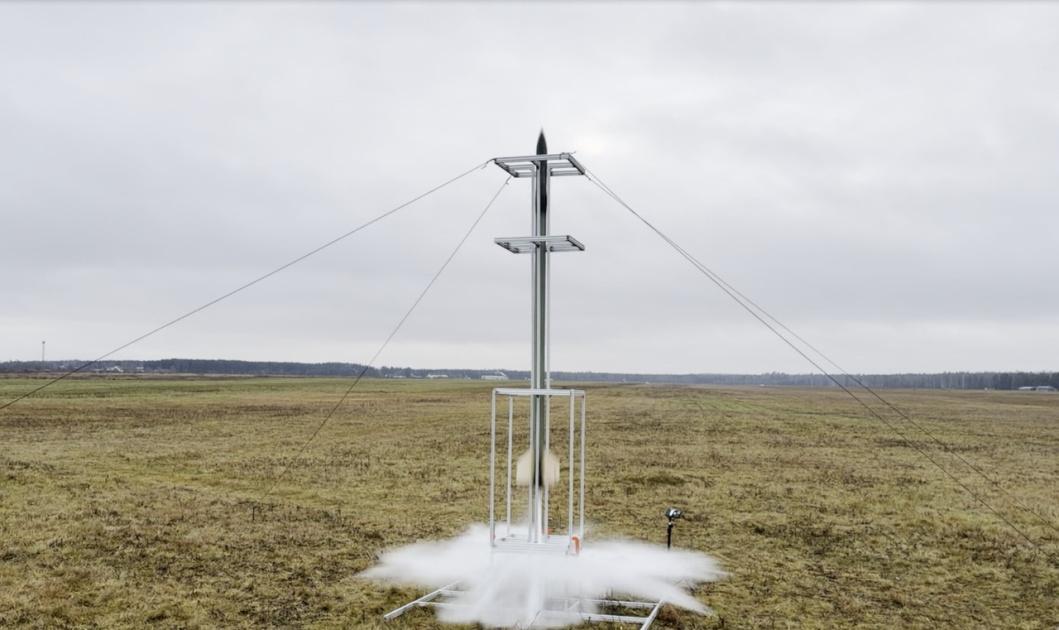
Water rockets are amateur rockets powered by compressed air and water. They are used for educational purposes.
The launch of a 2.5-meter rocket with 4 liters of water on board took place on November 22 at the airfield in Kirzhach (Vladimir region). It is capable of reaching a speed of 110 meters per second and reached a height of 309 meters.
Among Russian water rockets, this is an unconditional record. The maximum height to which various modifications of such rockets have risen before in our country is 70 meters.
The world record for the height of a water rocket flight is 961 meters. It was set six years ago in Australia. However, the theoretical calculations in the experiment did not correspond to the results in practice, so it is impossible to predict their repetition.
In our case, the theoretical calculations correspond to the result - 309 meters.
The rocket launch was carried out as part of the educational project "Rocket to Kilometer". It involves creating educational videos on how to create water rockets.
Earlierwww1.ru reported that the Soyuz MS-28 rocket wastaken out to the Baikonur launch complex.
Read materials on the topic:
- Russia returns to the project of a super-light launch vehicle based on Topol
- The Russian updated Start-1M launch vehicle received a launch site
- Sarmat, Avangard, Zircon, Oreshnik and Burevestnik missiles - are there really "no analogues" to them?
Never miss our newsAdd this site to your preferred sources to see us more oftenAdd on Google

















