Engineers from the Moscow Aviation Institute (MAI) have developed a unique portable complex for the rapid restoration of composite parts of MC-21 aircraft and other aircraft.
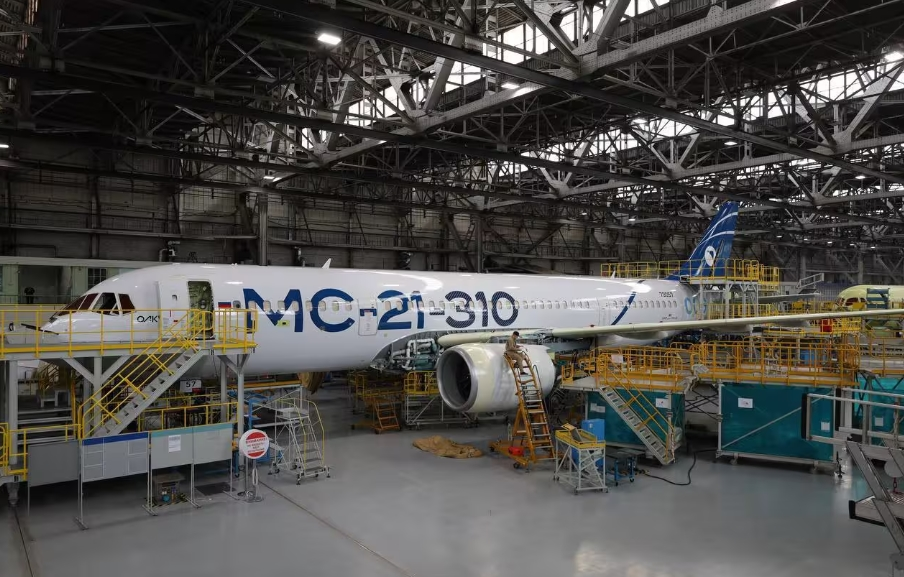
The new equipment, unofficially named the "repair suitcase," allows for the repair of structural damage directly at the site of operation — on the wing, fuselage, or in the aggregate compartments.
Currently, MAI is testing the methodology, conducting test repairs of over 100 panels made of composite materials with subsequent strength studies. X-ray tomography is used to control quality, which allows for the detection of discontinuities or delaminations.
The portable device weighs about 10 kilograms and operates from a regular electrical outlet, making it convenient for on-site work. The complex automatically creates controlled conditions — pressure and temperature-time regime — necessary for curing the composite patch applied to the damaged area.
This technology eliminates the need for drilling holes, which cause stress concentration and accelerated structural failure. As a result, the repair becomes not only faster but also safer for the aircraft structure.
The MAI development will significantly reduce maintenance time and increase the efficiency of aircraft restoration, speeding up their return to service after damage from impacts, hail, or fatigue cracks.
Earlier, www1.ru reported that "ODK-Saturn" has modernized production for PD-8 and SaM146 engines.
Read also:
Now on home

Start of deliveries scheduled for 2027

Over 51,000 new motorcycles were sold in Russia in 2025

The car will take at least a year to assemble

The application's audience has reached 20 million users

The model will be included in the list of cars for taxis, price - from 2.25 million rubles

All parking lots of the "Administrator of the Moscow Parking Space" are connected to the service

The cars will be supplied to the Moscow Transport Service Directorate

Deliveries to India may begin in 2028

The technology provides automated search for all types of defects in power units

The plane flew 500 km, accelerating to 425 km/h

The plant stated that the information about the termination of purchases for models 6 and 8 is not true

Scientists are using the "Ekran-M" installation