Baikal Electronics has announced its readiness for mass production of its new universal microcontroller Baikal-U (BE-U1000).
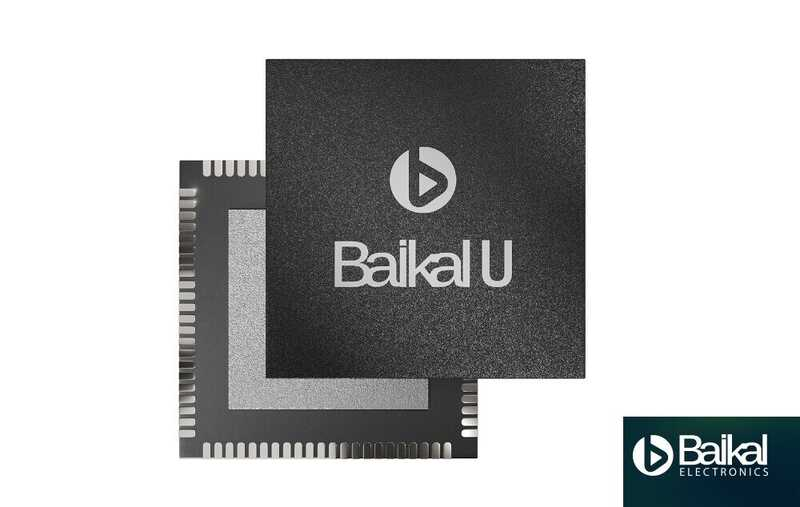
Currently, the device is undergoing registration in the register of the Ministry of Industry and Trade, and we are ready for mass production in almost any quantity, that is, hundreds of thousands or more.
The developer claims twice the performance compared to some competitors and excellent energy efficiency.
Russian engineers have introduced the Baikal-U microcontroller, which is designed to replace popular foreign chips, including STM32F4 and F7. The main advantage of Baikal-U is complete technological independence. It is built on the basis of domestic CloudBEAR processor cores, developed using the open RISC-V architecture. Thanks to this, electronics developers do not have to worry about problems with foreign licenses and possible restrictions.
Read also:
- Bakanov's plan: the head of Roscosmos announced that in the next 10 years Russia will build and launch about 300 rockets
- Construction of the first LNG icebreaker may begin in Kerch
- The length of bridges and overpasses that will be built on the Moscow - St. Petersburg high-speed railway will be 180 km, there will be 239 in total
Now on home

Start of deliveries scheduled for 2027

Over 51,000 new motorcycles were sold in Russia in 2025

The car will take at least a year to assemble

The application's audience has reached 20 million users

The model will be included in the list of cars for taxis, price - from 2.25 million rubles

All parking lots of the "Administrator of the Moscow Parking Space" are connected to the service

The cars will be supplied to the Moscow Transport Service Directorate

Deliveries to India may begin in 2028

The technology provides automated search for all types of defects in power units

The plane flew 500 km, accelerating to 425 km/h

The plant stated that the information about the termination of purchases for models 6 and 8 is not true

Scientists are using the "Ekran-M" installation