The team at the "Game Engineering and Interactive Systems" workshop of the Moscow Institute of Electronics and Mathematics (MIEM) has announced the start of open testing for the second version of the Claw Engine game engine. The project, developed by student teams, is a tool for creating video games using generative neural network technologies that accelerate prototyping and the implementation of complex mechanics.
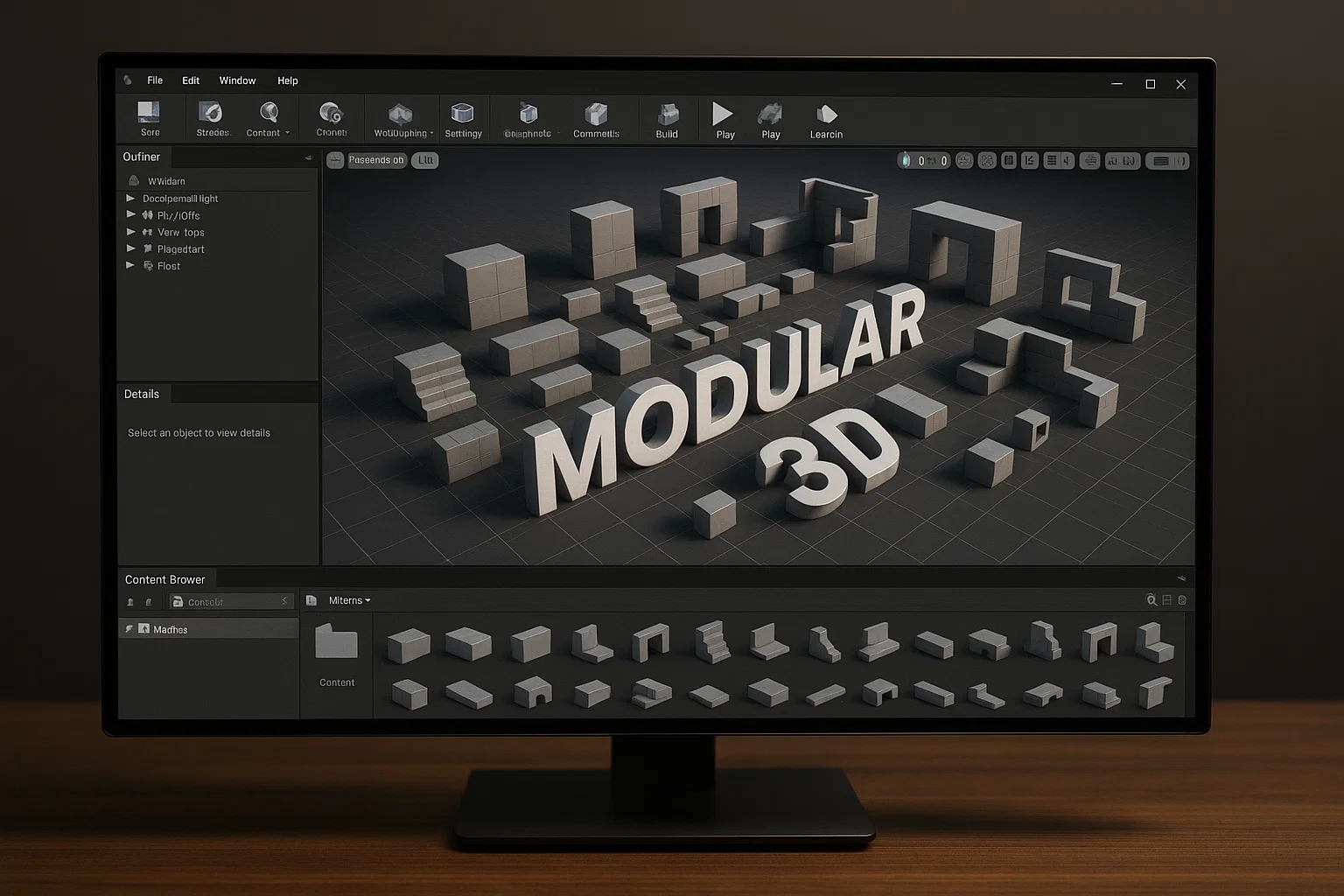
The first version of the engine, released in the fall of 2024, offered basic functions for working with 3D graphics and a simple visual interface. However, Claw Engine 2.0 is already a full-fledged modular platform with support for the C# programming language, a redesigned scene editor, and a performance optimization system.
We are creating an engine in which you can not only assemble scenes, but also implement your own technological solutions - in graphics, behavior, physics. This is an opportunity for students and young developers to build engineering thinking through real work.
The new release includes a unique level-of-detail algorithm that takes into account not only the distance to the camera, but also the connections between objects. This reduces the load on the system and allows projects to run even on weak devices - an important advantage for indie developers and educational projects.
In the near future, the team plans to add a new generation of graphics and physics modules, expand AI capabilities, and implement a plugin system. Claw Engine is already being used in hackathons, training courses, and R&D experiments.
Claw Engine is one of those flagship projects at MIEM where a modern project model is being honed. Today, technological projects require a clear organization of working interaction between numerous project teams solving their task within the framework of creating a single large product. This is how large IT giants work today. In this sense, the "Game Engineering and Interactive Systems" workshop functions as a connecting hub, the main operator of the entire product creation process.
In 2025, the online master's program "Digital Engineering for Computer Games" will be launched at the workshop, where students will not only be able to study game development, but also participate in the development of real technological solutions.
Read more materials on the topic:
Unreal Engine 4 Successfully Launched on the Russian OS "Aurora"
AI System for Automatic Level Generation in Video Games Created by Student from RTU MIREA
New Computer Model Reduces Defects: PNIPU Scientists Improve 3D Printing of Photopolymers