The prospective Russian supersonic passenger aircraft will have an oval fuselage, not a round one like current airliners. This is stated in the documents for the research work "Integral" on the creation of prospective regional and mainline aircraft of a new generation.

The cross-section of the new generation aircraft will be oval, slightly flattened, not round like current ones.
The fuselage itself will partly act as a wing. This will require completely different design techniques, construction methods, and the formation of the power structure. The aircraft needs to be light; if it is strong but heavy, it won't take off.
According to him, it is no longer possible to improve already operating aircraft-technical progress in terms of power plants and layout schemes has already reached its maximum.
This often takes many years, decades, or even more than one decade. It is for this reason that real aircraft that will be created are likely to appear sometime in the 2040s.
Earlier www1.ru reported that Russia in aviation will be able to manage with its own developments: they didn't copy, but made it better.
Read more materials:
The last flying An-22 "Antei" found peace in the museum: one of the largest aircraft in the world
The last flying An-22 "Antei" found peace in the museum: one of the largest aircraft in the world
Now on home

Start of deliveries scheduled for 2027

Over 51,000 new motorcycles were sold in Russia in 2025

The car will take at least a year to assemble

The application's audience has reached 20 million users

The model will be included in the list of cars for taxis, price - from 2.25 million rubles

All parking lots of the "Administrator of the Moscow Parking Space" are connected to the service

The cars will be supplied to the Moscow Transport Service Directorate
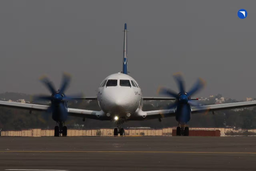
Deliveries to India may begin in 2028
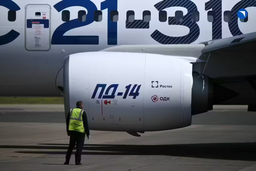
The technology provides automated search for all types of defects in power units
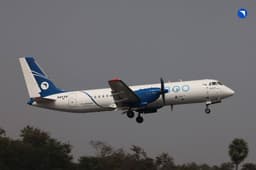
The plane flew 500 km, accelerating to 425 km/h

The plant stated that the information about the termination of purchases for models 6 and 8 is not true
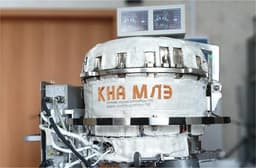
Scientists are using the "Ekran-M" installation